Art & Fashion: 42 posts

The Art of Ukrainian Bead Necklaces

Yesterday, Ukrainians celebrated Vyshyvanka Day, the day of the national embroidered shirt. This traditional garment has so much significance as an embodiment of quintessentially Ukrainian art and sense of beauty that its celebration is a day that many anticipate with pleasure. This week Ukraine’s eastern region of Kharkiv was heavily shelled by Russia, but whenever it was safe, people still came out into the streets wearing vyshyvanka. Certainly, vyshyvanka can be worn anytime and I have many pieces that range from exquisitely embroidered blouses to simple white shirts with subtle decoration.
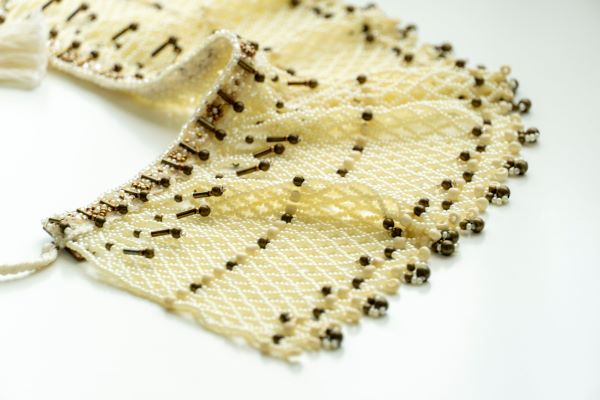
A popular companion to vyshyvanka is a necklace. Ukrainian traditional jewelry is quite elaborate and there are many types of necklaces made of different materials–stones, coral, amber, ribbons, wood, glass. Some of my favorite traditional necklaces are of the beaded style. Gerdan is a wider, longer necklace that looks like a pendant. Kryza is even larger and it  falls like a collar around the neck (that’s the style you can see in the title photo.) Silyanka is a narrow, choker-style necklace.

Continue reading →

Amoami Ukrainian Art Project

My great-grandmother Asya believed that art healed and her collection of embroideries and lace was a testament to her need to create something beautiful. So when I learned of Amoami, a social impact organization using crafts to support refugee women from Ukraine, I became curious about its mission. Based in Spain, Amoami works with Ukrainian refugee women in Europe and the result are lovely crochets.

This adorable bear is crocheted using a Japanese technique called “amigurumi.” The designs are inspired by Ukrainian embroideries and the bears come in different sizes. As such, Amoami provides economic support for the Ukrainian women and creates a comfortable place where they can work, make friends and create their own community. For people who lost everything as they fled, the community is crucial. Finally, crocheting and arts are used as therapy, something that Asya would recognize and approve.

Continue reading →

Art Against War: Ukrainian Artist Petro Magro from Dnipro

For the past few days rescue workers in the town of Dnipro have been searching for survivors of a devastating Russian attack. A missile hit an apartment building, destroying it completely. I spent several summers in Dnipro and I have several friends there, and these news have affected us deeply. Almost a year later and I still haven’t learned to cope with the pain of seeing familiar landmarks scarred by war.

After seeing images of gutted apartment buildings and bombed out streets, I needed to remember Dnipro as a vibrant town in the eastern part of Ukraine. Its name comes from its location on the Dnieper River, and its shores offer beautiful views. I went through my archive of photographs that I took during my travels in Ukraine. It was in Dnipro where I discovered the art of Petro Magro (1918–2010). A native of the region, he captured its landscapes in his impressionistic paintings. I hope that you will enjoy his artwork as much as I did–a reminder of beauty and an antidote to darkness and despair.

Do you have a favorite artist whose works uplift you? 

Continue reading →

Ukranian Petrykivka Ornaments : Holiday Gifts

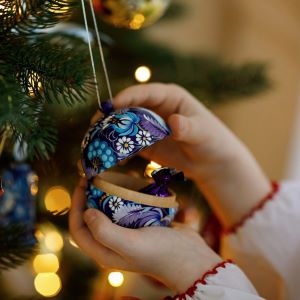
A few years ago I made a memorable journey to Petrykivka in Ukraine. Located near the city of Dnipro in the eastern-central part of the country, the town is famous for its folk painting style, Petrykivsky painting or “petrykivka.” It depicts flowers, leaves, and birds in a variety of baroque forms. The colors are vivid, with red, blue, yellow, and green hues being most traditional. Everywhere I went in the town, I saw bright designs covering walls, fences and street signs, but petrykivka is also used for paintings and decorating everyday objects.

Petrykivka painting has been included in the UNESCO Representative List of Intangible Cultural Heritage, and many artists operate studios in town. Before the war their situation was already precarious, as it is for many artists, but these days it is even more so. Nevertheless, despite the electricity blackouts and other tragic realities of war, they continue to work and produce beautiful artworks.

Continue reading →

The Colorful World of Japanese Kutani Ceramics

The first time I made my own clay pot, I must have been six or seven years old. My mother’s family comes from Poltava, the central region of Ukraine famous for its arts and crafts, and ceramics in the town of Opishnya have a long tradition. My great-grandmother Asya visited the town every summer to select new dishes and pots and she must have taken me along. My memories of that visit are fragmentary, but I recall the softness of the clay, the brilliance of the green glaze, and a slight disappointment that my pot didn’t come out as symmetrical as I thought it should have been. However, that experience made me fascinated with ceramics and the way rough soil can assume the most exquisite of forms.

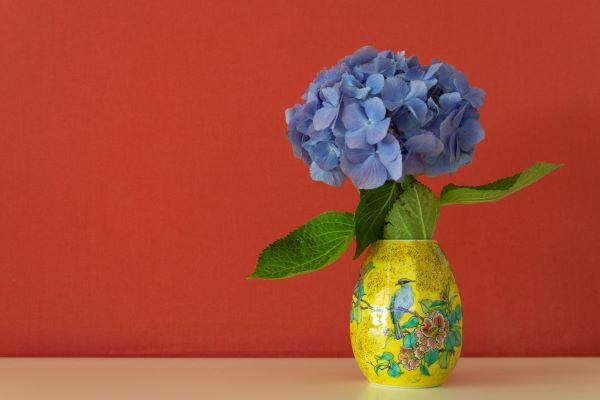
I rekindled my passion for ceramics while working and traveling in Asia. In Japan, the ceramic arts have a strong reputation and many different styles of pottery and porcelain exist, from the natural-looking Bizen ware to the ornate Imari ware. One could travel from the north of the country to the south and discover ceramics studios in every region, each showcasing a specific style of pottery. During one such trip, I discovered the colorful charm of Kutani ware.

Continue reading →

As Seen On

Design by cre8d
© Copyright 2005-2026 Bois de Jasmin. All rights reserved. Privacy Policy