Books: 114 posts

Books and reading lists

Reading Iran: Literature, Food, Poetry, and the Inner Map of a Country

I came to Iran through literature and language. Long before I traveled across the country, I had been reading Persian poetry, studying the rhythm of the language, and trying to understand a place that cannot be approached through headlines alone.

Traveling in Iran deepened that early fascination. I encountered a country of immense cultural density: hospitality and restraint, beauty and endurance, tenderness and control. Iran’s politics are complicated and often painful, and the present moment makes this impossible to ignore. All of the friends in Iran I have been able to reach speak of unimaginable violence and loss. Nearly everyone knows a young person who was killed.

After everything I have experienced in Ukraine, I did not think I could still be shocked. Yet with every new story, I understand more clearly the depth of grief and suffering the country is moving through, often without witnesses. It is precisely in moments like this that reading matters: not as escape, but as a way to resist simplification, to remember that no country can be reduced to crisis alone.
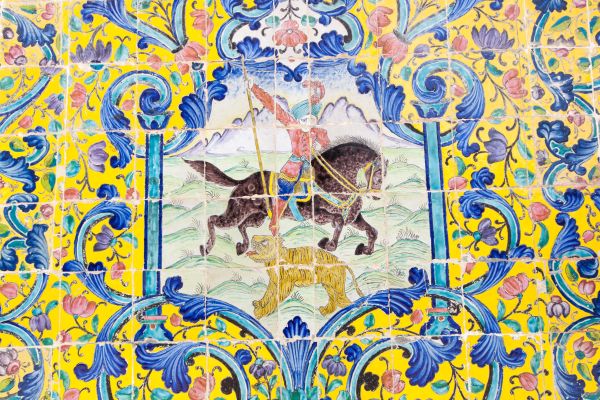
This reading list brings together books from my library. These books are an attempt to understand Iran not as an abstraction or a crisis, but as a layered, ancient, and profoundly human place.

Essentials — where to begin

The Blind Owl by Sadegh Hedayat
A foundational modern Iranian novel. Dark, hallucinatory, and deeply psychological, it explores alienation, obsession, and the fracture between inner life and social reality. Demanding, but essential.
Continue reading →

Scents of Belonging: Perfume and the Geography of Memory

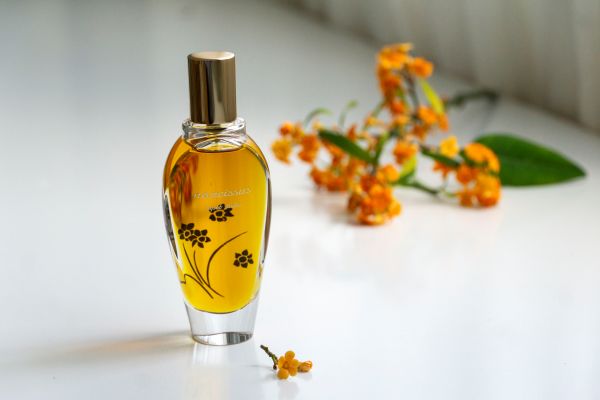
Can scent be tied to national identity? I received this question during a recent interview and the question stayed with me long after the conversation ended. It made me think about how we define ourselves, not only through language or landscape, but through something as invisible and visceral as smell.

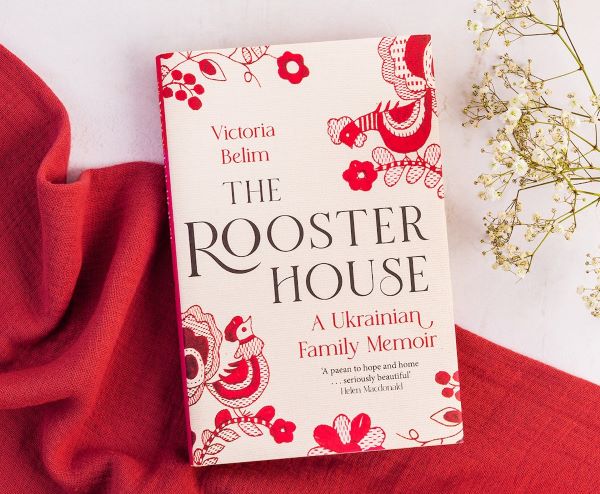
My own story is layered. I was born into a family marked by complexity: Ukrainian, yes, but woven with many diasporic threads, braided through decades of dislocation, migration, and return. I didn’t fully grasp just how intricate this tapestry was until I began researching my family history for The Rooster House. Even after the book was already on shelves, I uncovered new archives and met relatives I hadn’t known existed. That’s how I learned that my mother’s side of the family had Roma and Jewish roots, and that my father’s lineage traced back to Tatarstan.

Since moving from Ukraine to the United States at the age of fifteen, I’ve lived in many places. Brussels has been my home for more than a decade. And yet, the place I return to is always Ukraine. That’s where the smells of my childhood reside. And that’s where scent has always felt like a language I understood instinctively.

Continue reading →

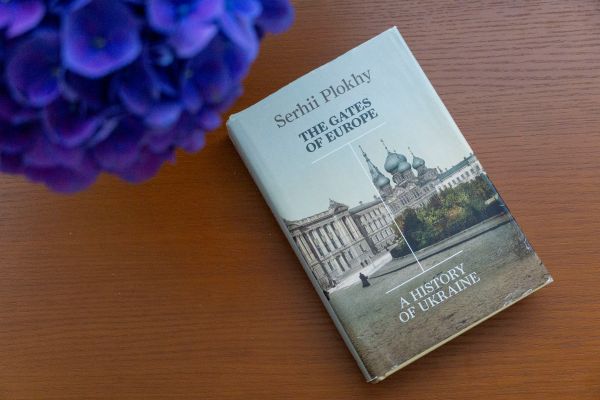
Reading Serhii Plokhy’s History of Ukraine in Wartime Kharkiv

The last time I re-read The Gates of Europe was in Kharkiv. I was waiting for a friend at Makers, a coffee shop and artistic hangout in the city center. Kharkiv is the easternmost city in Ukraine that lies only 30 kilometers from the Russian border. This unfortunate geography makes it a target of near-daily bombardment. Just weeks earlier, Makers had replaced its large oval windows after a night of shelling, but when I sat there reading in its high-ceilinged, sunlit space, it felt like any other café in a busy urban center. Except that my phone kept buzzing with alerts about incoming drones and ballistic missiles.

Serhii Plokhy, a Harvard historian, published The Gates of Europe in 2015, one year after the annexation of Crimea and the start of war in the Donbas. Although the book spans over two thousand years of history, the narrative felt startlingly immediate, like reading the blueprint of a city I was only beginning to understand. Ukraine, in Plokhy’s telling, is not a periphery of someone else’s empire. It is the center of its own story—layered, scorched, reborn. That I was reading the history of Ukraine in Kharkiv, a city that embodies these layers and this capacity for rebirth, felt deeply significant. Clearly, I have a taste for immersive reading experiences.

Continue reading →

Goodbye, Uncle Vladimir

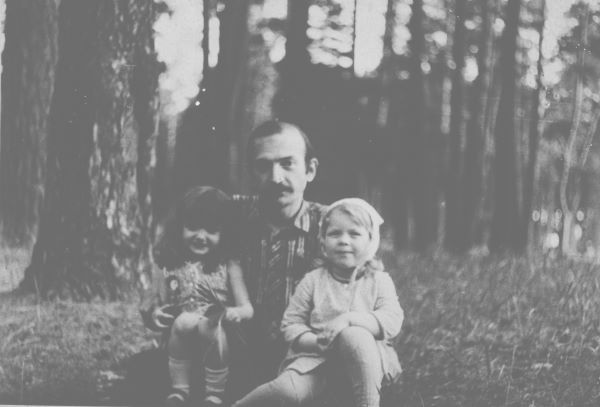
Uncle Vladimir, diadia Volodya, passed away in his sleep in his home in Israel. He was in his 80s. He fell ill with polio when he was a child during WWII. The first doctor he ever saw, a German surgeon in another occupied village, told my grandmother that her son was as good as dead. “Just leave him here.” My grandmother was exhausted after a long journey and her own illness and at first she did. She put her child on a bench and started walking away. Volodya remembers seeing her leave. He didn’t cry. He didn’t call out to his mother. He just held his breath. My grandmother had already lost one son to a fatal disease. Her sister was shot in front of her by the Nazi troops. She remembered feeling nothing but numbness and complete depletion. She walked and walked and then she turned around and ran back to the bench. She picked up her son and returned to the village.

Volodya didn’t die. He survived polio with almost all of his muscles atrophied and his spine twisted. He spent his childhood and teenage years in a wheelchair. Then a friend gave him a bootleg copy of a yoga manual and my uncle studied it until the book fell apart and he stood up on his own. He never learned to walk straight and he never regained control of his right arm, but he enrolled into the university, learned engineering on his own and built his own sound-recording devices. He married and fathered a daughter, my cousin Marina, who eventually moved him to Israel.

Continue reading →

Sindh: Recipes and Stories from a Forgotten Land by Sapna Ajwani

My travels in Pakistan started in Sindh, the third-largest province of the country. The ancient Persians referred to the land east of the river Indus as hind and the word Sindh was their variation on the Sanskrit, Sindhu, meaning ‘river.’ Wherever you are in Sindh, you’re conscious of the great river that still defines the place, its geography and mindset. I would follow the Indus throughout Sindh, and when I finally deviated from its course, I missed the river and its mighty presence. It cast its spell on me as surely as it did on Alexander the Great who conquered Sindh in 325 BCE and referred to the river as Indós.

I miss many things from Sindh besides the river: the friendly disposition of its people, the stunning historical sites that make ancient Greek ruins seem modern, the bejeweled shrines, the sandstone temples. I also missed Sindhi flavors, the unique combination that reminded me more of refined Persian cuisine than the earthy flavors of the neighboring Punjab.

Continue reading →

As Seen On

Design by cre8d
© Copyright 2005-2026 Bois de Jasmin. All rights reserved. Privacy Policy