Coty: 3 posts

Coty L’Aimant : Perfume Review and story

44444

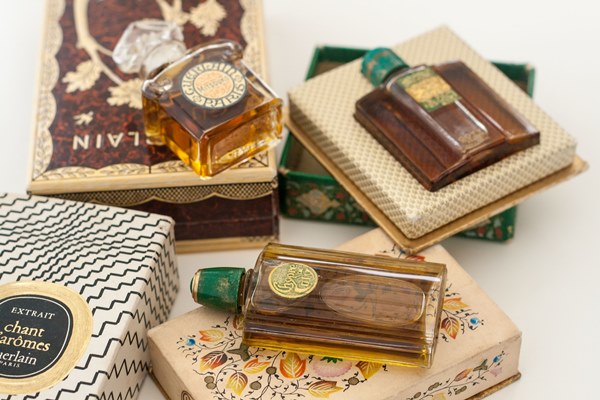
When I first smelled a vintage bottle of Coty’s L’Aimant, I understood why it was once considered Chanel No. 5’s great rival. The fragrance shimmered with aldehydes, yet instead of the icy brilliance I associate with No. 5, it felt warmer, more tender, as if the light were diffused through silk rather than crystal. There was romance in its aura, a quality that seemed less about abstraction and more about embrace.
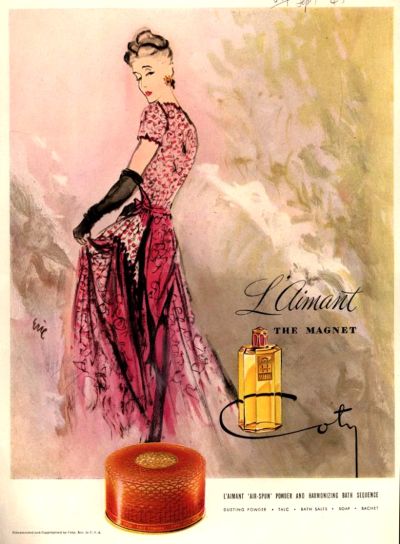
François Coty launched L’Aimant—“the magnet”—in 1927, determined to prove that his house could meet the challenge Chanel had set six years earlier. By then, aldehydic florals were reshaping the landscape of luxury perfumery, and Coty entrusted the task to Vincent Roubert, one of the most gifted perfumers of his time. Roubert composed a fragrance that was both modern and romantic, a scent that embodied Coty’s idea of femininity as magnetic, sophisticated, and irresistibly alluring.
Continue reading →

Revolutionary Perfume : A Brief History of Chypre

55555

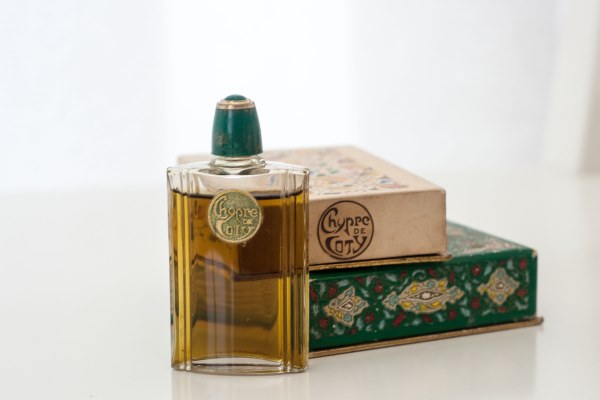
1917 was the year when the Bolshevik Revolution took place. It was also the year when another revolution happened. It wasn’t bloody, its scale was small, but for the history of perfumery it was as galvanizing as the events in Russia for the rest of the world. This revolution was the creation of Chypre by François Coty. The name Chypre referred to the island of Cyprus, which had been famous for its fragrant moss since antiquity, and while chypre-style fragrances, warm and moss-laden, were popular long before Coty’s creation, his Chypre of 1917 was different.

For one thing, Coty wasn’t afraid of making bold statements. To give a heavy note of oakmoss radiance, he used a novel aroma-chemical called isobutyl quinoline. Pure, it smelled pungently of leather and burned rubber, but when used as part of an accord with bergamot, dry woods and moss, its effect became sensual and luminous. Coty then increased the proportion of green notes and added a delicate floral twist. Chypre evoked the Mediterranean sea breeze and lemon orchards and reminded you that even on the most sunlit of days, shadows are present. Dark leather and inky moss provided the dramatic contrast in his composition.

Continue reading →

Coty L’Origan and Francois Coty : Two Legends of Perfume History

55555

Coty_2

Original:

Rated 4.5 out of 5.0

Reformulation:

Rated 4.5 out of 5.0

Star rating: 5 stars–outstanding/potential classic, 4 stars–very good, 3 stars–adequate, 2 stars–disappointing, 1 star–poor.

If one were to enumerate perfumers who wielded great influence over the course of perfume history, François Coty is among them. A person of great talent and creativity, he gave the world fragrances that would serve as inspirations for many perfumers, despite the fact that he did not have formal perfumery training. Born in Ajaccio, Corsica in 1874, Coty realized that in order to expand the perfume market, the high quality product must be presented in beautiful packaging and at a reasonable price. While marketed as luxury, he deemed that perfume had to be affordable for people of every socio-economic class. While La Rose Jacqueminot (1904) was his first fragrance, incorporating new floral bases, L’Origan (1905) and Chypre (1917) would initiate two new genres of perfumery: soft sweet floral and chypre.

L’Origan (1905) cannot be mistaken for anything but a child of its times. Its soft powdery veil embellished with carnation, violet and heliotrope calls to mind gloves and Edwardian silhouettes. A precursor of Guerlain L’Heure Bleue (1912), L’Origan reveals the same bittersweet anisic top notes that sparkle like diamond dust in its powdery cloud. …

Continue reading →

As Seen On

Design by cre8d
© Copyright 2005-2026 Bois de Jasmin. All rights reserved. Privacy Policy