Big White Floral: 45 posts

Heady, “bombshell” blends dominated by white florals like tuberose, gardenia, tiare and jasmine. Often, these fragrances tend to be among the most complimented by virtue of their impressive diffusion

Marc-Antoine Barrois Aldebaran : Perfume Review (and a warning)

33333

I first encountered Marc-Antoine Barrois Aldebaran—a bold new tuberose fragrance by Quentin Bisch—in a small perfume shop in Ternopil, western Ukraine. The concept of buying decants is incredibly popular in Ukraine, and it makes high-end perfume exploration more accessible. I had read about Aldebaran’s launch and, being a devoted lover of tuberose, was immediately curious. Could it rival my benchmark, Frédéric Malle’s Carnal Flower?

I bought a small sample, tucked it into my bag, and tested it later that evening. One spray. That was enough. Aldebaran doesn’t bloom—it detonates.

This is not the “strawberries-and-cream” tuberose of Robert Piguet Fracas, nor the dewy green tendrils of Diptyque Do Son or the fruity-lactonic flirtation of Gucci Bloom. No. Aldebaran leans into the metallic, rubbery, mentholated side of the flower—amplifying its natural pungency, its blue-white chill, and even that faint, gasoline-like bite that tuberose can sometimes hide beneath its petals.

Continue reading →

Aphorismes by Dominique Ropion Innocent Tuberose : Perfume Review

33333

Few perfumers navigate the intersection of creativity and technical prowess as deftly as Dominique Ropion. His track record reads like a résumé designed to impress even the most jaded observer: Dior Dune, Givenchy Amarige, Thierry Mugler Alien and Lancôme La Vie est Belle. I had the privilege of working with Ropion at IFF, where I discovered not only his brilliance but also his generosity as a teacher. Which, of course, makes me a suspiciously biased judge. And yet, years spent smelling everything from the sublime to the regrettable have, I hope, earned me a modicum of distance.

All the same, I couldn’t resist a visit to 27 Rue Marbeuf on a recent trip to Paris, where the Aphorismes by Dominique Ropion boutique gleams like a Fabergé egg in its display case. Ropion has partnered with Habib Al-Sowaidi, founder of Le Royaume du Parfum International, a company known for developing gilded concepts and equally gilded packaging. Judging by the boutique’s hyper-luxurious décor and the prevalence of oud and creamy musks in the collection, the aesthetic here leans toward a particular idea of opulence. Let’s call it “majlis meets Place Vendôme.”

The collection comprises six perfumes, each with names that suggest either simplicity or whimsy: A Rose is a Rose, Crazy Garden, Encens Insensé, Innocent Tuberose, My Clémentine, and Oud à l’Amour. We are told they offer “modern takes on classical fragrance families.” This promise intrigued me. Ropion is not the sort to do things by halves.

And indeed, each perfume is immaculately constructed. The ingredients are superb. The compositions shimmer and glow. They last for hours and leave trails that are as finely calibrated as a line of perfectly placed pearls. Even Oud à l’Amour, the collection’s heavy-hitter, has a transparency that makes it more Veuve Clicquot than vintage port. My Clémentine is a sunny splash of bitter orange with the fizz of champagne bubbles, and it stays that way far longer than physics should allow.

But something was missing. These perfumes are models of elegance and restraint. Impeccable, yes. But I found myself searching for a pulse. Once the blotter was set down, I struggled to recall anything beyond the flawless execution. At first, I blamed myself. Perhaps I had become too critical. But then I smelled Prada Purple Rain and Serge Lutens Cracheuse de Flammes and felt the old jolt of excitement return. So I kept revisiting Aphorismes, searching for the elusive spark.

It came faintly in Innocent Tuberose. Ironically, the most predictable of the group. A lush, creamy white floral that demonstrates why Ropion is a master of this genre. It opens with a refreshing hit of citrus, like an iced finger bowl, before plunging into a riot of petals and musks. A bracing green note of cardamom and blackcurrant leaf cuts through the cream, providing just enough contrast to make the richness feel less like dessert and more like dinner at a Michelin-starred spa.

As the hours pass, what remains on the skin is a soft blur of petals anchored by woody notes that evoke cold roots and moss. It’s still a white floral, still unmistakably Ropion, but tempered, like an indulgence that’s been given a gym membership.

Fans of Frédéric Malle’s Carnal Flower will find Innocent Tuberose an easy pleasure. I should know; I wore Carnal Flower on my wedding day, and I still reach for it with fondness. Does Innocent Tuberose unseat it? Not quite. Where Carnal Flower has those jagged edges that make it human, Innocent Tuberose is smoother, more polished, and perhaps a little too perfect. Like a face that has never known a sleepless night.

And then there’s the price. As always with perfection, it doesn’t come cheap.

Aphorismes by Dominique Ropion Innocent Tuberose includes mandarin, grapefruit, bergamot, orange blossom absolute, ginger, cardamom, pink pepper, cassis, muguet, tuberose, ylang ylang, jasmine sambac, lactones, Cashmeran, cypriol, vetiver, ambergris, musk. Available directly from the boutique and Jovoy in Paris. Very expensive.

Why Do We Like Floral Perfumes?

One of my favorite childhood pursuits was to make perfume. At least, that’s what I called it—my great grandmother’s description was “pestilence.” I scoured the flower beds, collected rose, carnation and dahlia petals, soaked them in water and waited until they turned into a fragrant brew. Eventually, the whole lot would rot and smell more beastly than beautiful, but undaunted I persevered. Faced with a garden that her great granddaughter pillaged on a daily basis, Asya gave me a bottle of perfume called White Lilac and hoped that my interest would eventually fade.


Years later, and I’m still fascinated by floral scents. Their variety is immense, from jasmine to marigold, from rose to ylang ylang. More than any other family, florals are susceptible to change as technology evolves. The aroma-material called hedione has changed the way we perceive floral perfumes. Its lemony freshness decorates almost all floral accords–and fragrances in all other perfume families. For instance, you can notice hedione in classics like Christian Dior Diorella or in modern blends like Penhaligon’s The Favourite.

Continue reading →

Tuberose Perfumes for Men and Women – The Most Voluptuous of Flowers

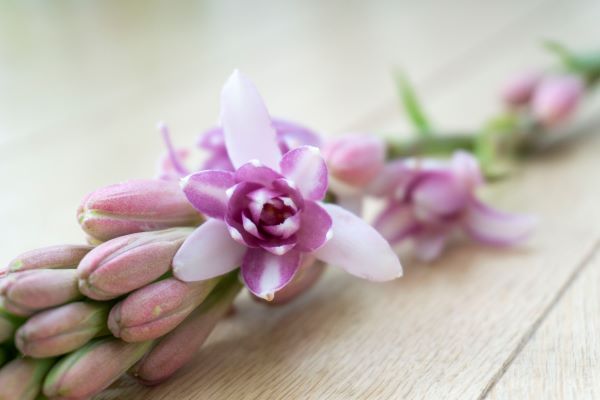
What flower evokes all things lush and sensual to you? To me, it would definitely be tuberose. This blossom has many elements that make it complex and voluptuous, from the sweetness of its fruity facets to the creaminess of its coconut facets. Tuberose contains lactones, hence the coconut effect, but it also includes indoles, aroma-molecules that lend it a particularly smoldering and intriguing character. So nuanced is tuberose absolute that with few adjustments it can be made into a proper perfume. On the other hand, so distinctive is tuberose that a clever blend of coconut and another white floral can give a believable tuberose effect to a floral bouquet.

Talking about tuberose, I think that it makes sense to expand the discussion and include a few more excellent examples as well as to highlight tuberose scents that would work for men. This note lends itself to experimentation.

Continue reading →

What Does Orange Blossom Smell Like?

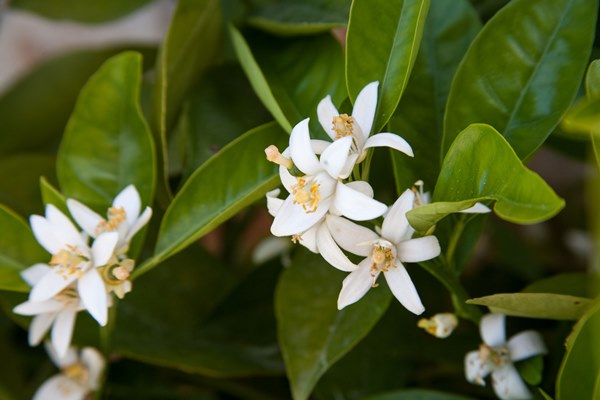
Orange blossom is one of the most popular floral notes in perfumery. It can star in any family and add its special twist to almost any accord. If you like delicate and fresh, you might enjoy orange blossom in Annick Goutal Néroli and Jo Malone Orange Blossom. If dark and somber is more of your mood, then Caron Narcisse Noir and Serge Lutens Fleurs d’Oranger will fit the theme.

Orange blossom in perfumery comes from the bitter orange tree, and it’s called neroli if it’s steam-distilled and absolute if it’s extracted with solvents. (You can read my article for more detailed comparisons and examples of fragrances with these two materials). Both of these materials are expensive, although not as much as rose or jasmine essences. Neroli has a green accent that makes it perfect for colognes, mossy blends and fresh marine compositions, while the smoky twists of orange blossom absolute lend it complexity and drama that unfolds well in the similarly spiced, incense-embellished perfumes.

Continue reading →

As Seen On

Design by cre8d
© Copyright 2005-2026 Bois de Jasmin. All rights reserved. Privacy Policy