Culture: 426 posts

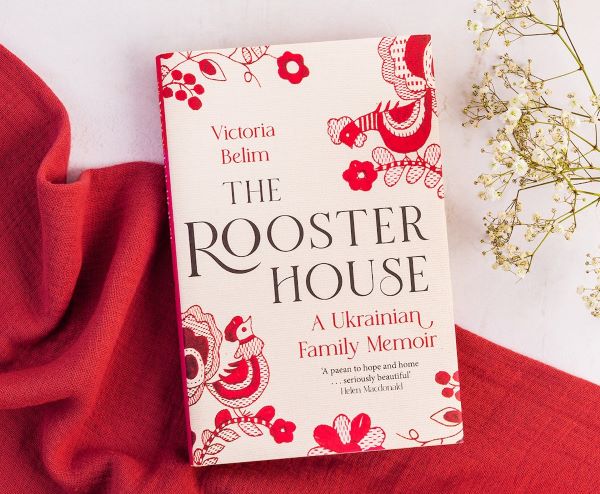
Art, travel, books, history. About my book, The Rooster House.

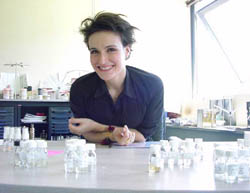
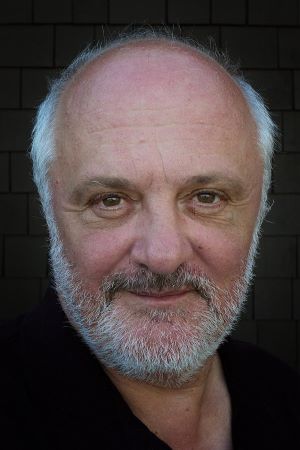
Christopher Laudamiel : Perfumer on Science and Perfumery

Laudemiel

“In music, a “ti” note will always sound like a “ti,” independently of the note played before and the one played after. This is close to impossible in perfumery. Even after 30 years of successful creations, experienced perfumers are down to trial and error when combining notes. This is explained by basic chemistry principles such as the second principle of thermodynamics. To predict the influence of a material in a mixture containing 60 other ingredients is difficult because of the real versus ideal chemical potentials in thermodynamics. The possibilities are endless, 1000 to 2000 scents are available to use in a fragrance, and they may be dosed at different magnitudes within the fragrance depending on the desired effect. Also, a molecule from one supplier smells different than the same molecule from another supplier due to the smallest amount of impurities derived from different synthesis routes or starting materials. In terms of natural molecules, a bergamot from South Eastern Italy smells different than a bergamot from South Western Italy. The nose, even a layperson’s, is very sensitive.” Excerpt from interview (thanks to Anya for sending the link).

Christopher Laudamiel is the creator of fragrances like Slatkin Fig & Absinthe, Clinique Happy Heart, and Michael Kors Island.

Jean-Paul Guerlain on Classical Fragrances

Jp_guerlain_from_musee_grasse_site

Talking about his favorite classical fragrance, Jean-Paul Guerlain, the perfumer for the house until his retirement in 2002, mentions “Lanvin Arpège under its original formula, Fahrenheit and Eau Sauvage by Christian Dior, Chanel No. 5, Nina Ricci L’Air du Temps and Pleasures by Estée Lauder.” “A classic perfume is determined by the quality of the raw materials you put in it and by its elegance, distinction and originality,” Guerlain says. “Above all it has to be memorable.”  An excerpt from a Reuters article (03/27/01).

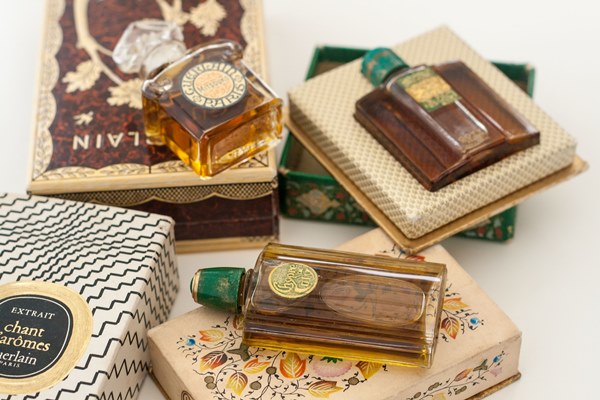
My favorite Guerlain fragrance has always been Après l’Ondée, a beautiful melancholy composition of iris and bitter almond note of heliotropin, ornamented by a dusky Guerlainade accord of tonka bean and vanilla. I would love to hear what is your favorite Guerlain fragrance.

Photo from Grasse Perfume Museum.

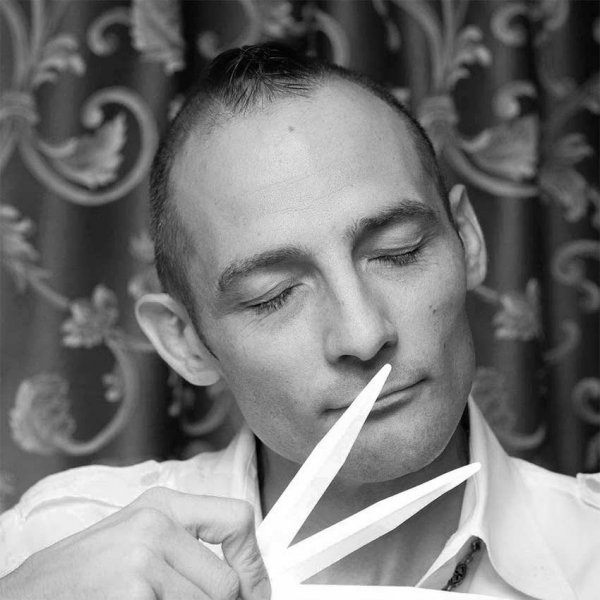
Perfumer Jean-Claude Ellena : “I prefer salty and bitter”

Jean_claude_ellena

Jean-Claude Ellena, the current Hermès nose, is a creator of an amazing range of fragrances, from elegant Van Cleef & Arpels First and vivid Balenciaga Rumba to ethereal The Different Company Divine Bergamote. Here is an excerpt from one his interviews, in which he discusses the materials he loves.

“I admit that there are some materials I dislike, with which I feel uncomfortable, vanillin, heliotropin, all that is sweetened in general. I prefer salty and bitter. Anyway, I always made sure not to confuse cuisine with perfumery. Among my favorite ingredients are hedione, of course, helional, and those which I like to call “trace” materials, because they are so expressive: violet leaf, lovage, and everlasting flowers.”

Perfumer Mathilde Laurent

Laurentmathilde

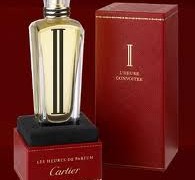
Mathilde Laurent is the ISIPCA graduate. She is a talented creator of such fragrances as Guerlain Aqua Allégoria Pamplelune (1999), Guet-Apens (1999), No. 68 (2002), and Shalimar Eau Légère (2003). She is currently employed as a bespoke perfumer for Cartier. Of her profession she says that “what one does not say enough on the trade of a perfumer is that not only it requires much patience and perseverance, but also that it is a permanent training.”

Photo and quote from Société Française des Parfumeurs.

Edmond Roudnitska on The Art of Perfume

Roudnitska

“Not all perfumes are works of art (no more that all musical compositions are masterpieces) or incline one to grant them artistic status for the simple reason that they are more and more composed industrially and less and less by professional artists. As a result of this industrialization, which tends to replace true creative perfumers with prolific “mixers” and also vulgarizes the product, we have entered a period of artistic decadence with profit being the excuse for any kind of deformation of the product no matter how blatant” (see the full article here).

This statement by Edmond Roudnitska, a perfumer who was, first and foremost, an artist, inspired me to ponder, if perfume has a status of art, what are the criteria to judge its artistic merits? If the formula is an artwork, can it be reformulated?  Or is it just a luxury commodity good? These are tough questions, and I do not have ready-made answers, however I would love to hear other opinions and to explore this topic further.

If you were to name a fragrance that should have a status of art, what would it be?

Photograph: Edmond Roudnitska, from art-et-parfum.

As Seen On

Design by cre8d
© Copyright 2005-2026 Bois de Jasmin. All rights reserved. Privacy Policy