ukraine: 84 posts

Writing About Perfume as the World Burns

One summer evening in Kharkiv, I was writing a perfume review when the air raid sirens began. The sound was now part of the city’s fabric, as ordinary and as terrible as the smell of bread from the bakery on the corner. I paused, listened for the thud that might follow, and then turned back to my draft. A question pressed against me: What am I doing, writing about perfume as the world burns?

It’s a question I’ve asked myself many times over the past years. Perfume can seem like a frivolity, a luxury for calmer days. But the more I’ve lived through, the more convinced I am that it is not just a product. Perfume is a cultural layer, a record of our rituals, desires, migrations, and exchanges. It carries the memory of places and the touch of history on the skin. Every bottle is both a work of art and a fragment of anthropology.
Continue reading →

The Scented Archive: Why Smell Belongs in Our History

We rarely think of scent as part of archives and historical records. The past is treated as visual, textual, factual — something we read or look at. But our lives are full of smells: the minty tang of toothpaste, burnt toast, the brine of sweat on public transportation, the coolness of a florist shop we pass on the way to work. These are not incidental. They are the scaffolding of memory. What we forget with our minds, the nose remembers.

I think often about this partial amnesia. What has been lost because it couldn’t be catalogued? How many women’s lives, marked by the scent of boiled milk, starch, soap, lily of the valley, have slipped away without trace? How many communities vanished, taking with them their voices, customs, foods — and scents. In Ukraine, I witnessed towns being flattened, homes scorched, and with them the quiet archives of everyday life. And elsewhere too, in places like Gaza, Sudan, Yemen, Syria, wars and displacements continue to erase not only histories but atmospheres, the very breath of places.

Continue reading →

Scents of Belonging: Perfume and the Geography of Memory

Can scent be tied to national identity? I received this question during a recent interview and the question stayed with me long after the conversation ended. It made me think about how we define ourselves, not only through language or landscape, but through something as invisible and visceral as smell.

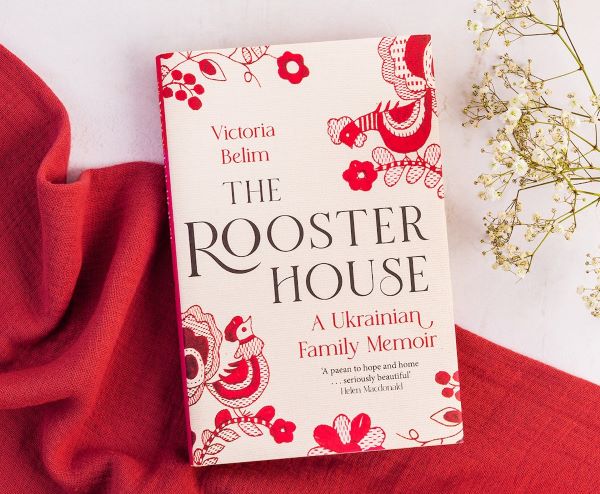
My own story is layered. I was born into a family marked by complexity: Ukrainian, yes, but woven with many diasporic threads, braided through decades of dislocation, migration, and return. I didn’t fully grasp just how intricate this tapestry was until I began researching my family history for The Rooster House. Even after the book was already on shelves, I uncovered new archives and met relatives I hadn’t known existed. That’s how I learned that my mother’s side of the family had Roma and Jewish roots, and that my father’s lineage traced back to Tatarstan.

Since moving from Ukraine to the United States at the age of fifteen, I’ve lived in many places. Brussels has been my home for more than a decade. And yet, the place I return to is always Ukraine. That’s where the smells of my childhood reside. And that’s where scent has always felt like a language I understood instinctively.

Continue reading →

Reading Serhii Plokhy’s History of Ukraine in Wartime Kharkiv

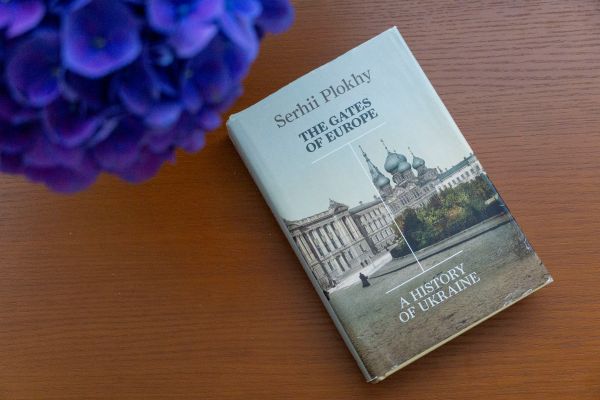
The last time I re-read The Gates of Europe was in Kharkiv. I was waiting for a friend at Makers, a coffee shop and artistic hangout in the city center. Kharkiv is the easternmost city in Ukraine that lies only 30 kilometers from the Russian border. This unfortunate geography makes it a target of near-daily bombardment. Just weeks earlier, Makers had replaced its large oval windows after a night of shelling, but when I sat there reading in its high-ceilinged, sunlit space, it felt like any other café in a busy urban center. Except that my phone kept buzzing with alerts about incoming drones and ballistic missiles.

Serhii Plokhy, a Harvard historian, published The Gates of Europe in 2015, one year after the annexation of Crimea and the start of war in the Donbas. Although the book spans over two thousand years of history, the narrative felt startlingly immediate, like reading the blueprint of a city I was only beginning to understand. Ukraine, in Plokhy’s telling, is not a periphery of someone else’s empire. It is the center of its own story—layered, scorched, reborn. That I was reading the history of Ukraine in Kharkiv, a city that embodies these layers and this capacity for rebirth, felt deeply significant. Clearly, I have a taste for immersive reading experiences.

Continue reading →

Win Fragrance Prizes While Supporting Ukraine’s Young Talent

Since 2024, I’ve spent about six months in Ukraine, much of it traveling along the eastern and southern border. Sometimes, when I share photos of markets, sunlit streets, or old facades still standing proud, I get the question: Where’s the war?

We’re used to the stock images: bombed-out buildings, women crying before rubble, soldiers caked in mud. But war doesn’t always look like that.

War is the grinding exhaustion of nights spent listening for air raid sirens. It’s planning your day around the threat of missiles. It’s the constant worry for your family’s safety. It’s losing your home and scrambling to pay rent somewhere else.

And sometimes, war is a photograph of a talented teenager who will never get to grow up.

Veronika KozhushkoNika—was only 18 when a Russian missile struck Kharkiv in August 2024. She was already recognized as a gifted young artist—writing poetry, painting, exploring graphic design. Friends called her fiercely intelligent, endlessly curious, deeply woven into the city’s literary and art scene. She had plans. She had promise. She had so much life ahead of her.

Continue reading →

As Seen On

Design by cre8d
© Copyright 2005-2026 Bois de Jasmin. All rights reserved. Privacy Policy