Ukraine: 66 posts

Scents of Belonging: Perfume and the Geography of Memory

Can scent be tied to national identity? I received this question during a recent interview and the question stayed with me long after the conversation ended. It made me think about how we define ourselves, not only through language or landscape, but through something as invisible and visceral as smell.
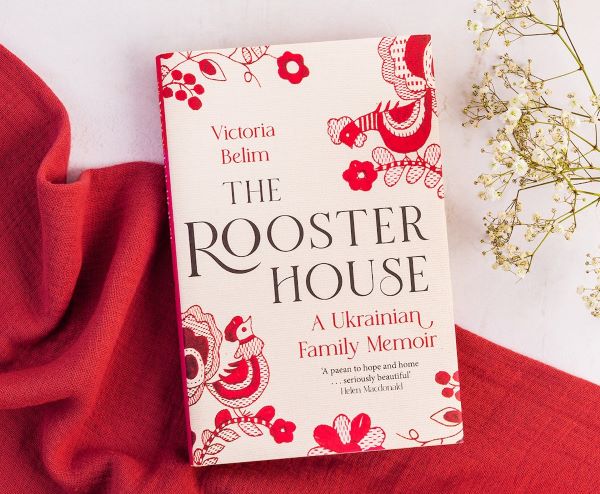
My own story is layered. I was born into a family marked by complexity: Ukrainian, yes, but woven with many diasporic threads, braided through decades of dislocation, migration, and return. I didn’t fully grasp just how intricate this tapestry was until I began researching my family history for The Rooster House. Even after the book was already on shelves, I uncovered new archives and met relatives I hadn’t known existed. That’s how I learned that my mother’s side of the family had Roma and Jewish roots, and that my father’s lineage traced back to Tatarstan.

Since moving from Ukraine to the United States at the age of fifteen, I’ve lived in many places. Brussels has been my home for more than a decade. And yet, the place I return to is always Ukraine. That’s where the smells of my childhood reside. And that’s where scent has always felt like a language I understood instinctively.

Continue reading →

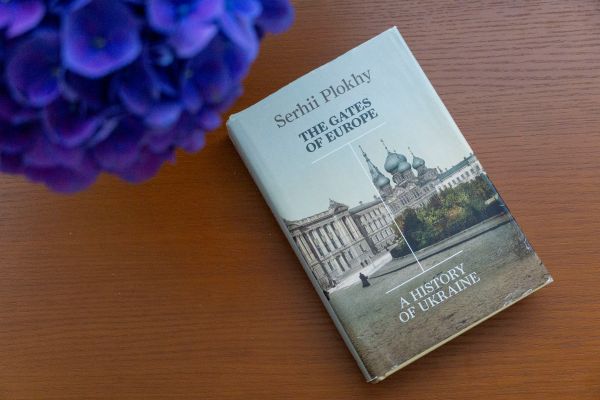
Reading Serhii Plokhy’s History of Ukraine in Wartime Kharkiv

The last time I re-read The Gates of Europe was in Kharkiv. I was waiting for a friend at Makers, a coffee shop and artistic hangout in the city center. Kharkiv is the easternmost city in Ukraine that lies only 30 kilometers from the Russian border. This unfortunate geography makes it a target of near-daily bombardment. Just weeks earlier, Makers had replaced its large oval windows after a night of shelling, but when I sat there reading in its high-ceilinged, sunlit space, it felt like any other café in a busy urban center. Except that my phone kept buzzing with alerts about incoming drones and ballistic missiles.

Serhii Plokhy, a Harvard historian, published The Gates of Europe in 2015, one year after the annexation of Crimea and the start of war in the Donbas. Although the book spans over two thousand years of history, the narrative felt startlingly immediate, like reading the blueprint of a city I was only beginning to understand. Ukraine, in Plokhy’s telling, is not a periphery of someone else’s empire. It is the center of its own story—layered, scorched, reborn. That I was reading the history of Ukraine in Kharkiv, a city that embodies these layers and this capacity for rebirth, felt deeply significant. Clearly, I have a taste for immersive reading experiences.

Continue reading →

Win Fragrance Prizes While Supporting Ukraine’s Young Talent

Since 2024, I’ve spent about six months in Ukraine, much of it traveling along the eastern and southern border. Sometimes, when I share photos of markets, sunlit streets, or old facades still standing proud, I get the question: Where’s the war?

We’re used to the stock images: bombed-out buildings, women crying before rubble, soldiers caked in mud. But war doesn’t always look like that.

War is the grinding exhaustion of nights spent listening for air raid sirens. It’s planning your day around the threat of missiles. It’s the constant worry for your family’s safety. It’s losing your home and scrambling to pay rent somewhere else.


And sometimes, war is a photograph of a talented teenager who will never get to grow up.

Veronika KozhushkoNika—was only 18 when a Russian missile struck Kharkiv in August 2024. She was already recognized as a gifted young artist—writing poetry, painting, exploring graphic design. Friends called her fiercely intelligent, endlessly curious, deeply woven into the city’s literary and art scene. She had plans. She had promise. She had so much life ahead of her.

Continue reading →

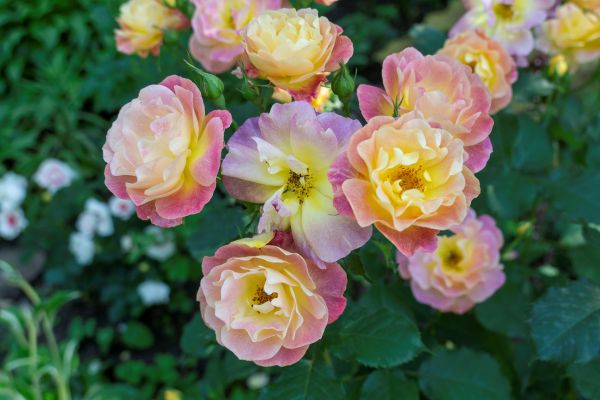
Postcard From Kharkiv : The Roses of Saltivka

Saltivka smells of linden and roses. If you’ve heard of Saltivka, you might think this sentence is absurd. Saltivka—a sprawling housing estate  on the edge of Kharkiv—was once home to half a million people. That was before February 2022, before war made it one of the first places to burn. Northern Saltivka, just kilometers from the Russian border, became synonymous with devastation. I remember sobbing in those early days, watching images of bombed buildings and bloodied playgrounds loop across every screen.

But today, in June 2025, Saltivka smells of linden and roses.

I have stopped crying at ruins. After three years of traveling across Ukraine, my senses have dulled to destruction. But when I arrived in Saltivka and inhaled the scent of linden blossoms, something shifted. The air was thick with molten sweetness. I met Natalia Mykhalchenko, a writer from Donetsk who now calls this neighborhood home. She led me through the streets: shattered schools, boarded-up buildings, rocket-scored walls. And amid this, the unmistakable scent of roses.

Continue reading →

The Scent of a City: Notes from Lviv

Lviv smells like stories whispered in old stairwells, like candle smoke in quiet churches, like coffee simmering on hot sand. I arrived in this city not just as a visitor, but as someone listening—to cobblestones underfoot, to the way a bakery smells when it rains, to the perfume of lilacs drifting over rooftops shaped by centuries of change.

This city once belonged to the Kingdom of Galicia–Volhynia, then to Poland, then to the Austro-Hungarian Empire. It’s called Lwów in Polish, Lemberg in German, Leopolis in Latin. Each layer left its trace: in architecture, language and scent.

There’s a particular kind of fragrance here that blends the sacred and the sensual. In the morning, it’s fresh bread and sun-warmed stone. By afternoon, it becomes beeswax, tobacco, ink, roasted apples. The churches exhale frankincense and dust; the cafés—cinnamon and chocolate.

Continue reading →

As Seen On

Design by cre8d
© Copyright 2005-2026 Bois de Jasmin. All rights reserved. Privacy Policy