chypre: 16 posts

Love Letter to Chypre

Cool, inky, powdery, nutty, dark… It’s hard to explain what’s so compelling about the smell of moss, but Patricia attempts it here and shares her love for all things mossy and chypre.

It was many years before I learned that my favorite perfumes, for the most part, fell into a group called “chypres.” I had no idea that they had anything in common, except that I loved the combination of cool and elegant with dark and almost feral notes, the sacred and profane all rolled into one. Chypre, I found out later, referred to a distinctive accord based around several different elements, but as Victoria mentions in her article on the history of chypre, the important chypre ingredient is oakmoss.
miss-dior-ad

The oakmoss is exactly why chypres are not without controversy. Due to restrictions by the  IFRA (International Fragance Association) on the use of oakmoss because of its status as an allergen, the formulas of beloved old favorites have been radically altered. Enter synthetic oakmoss and the resultant buzz in the perfume community about dramatic change of beloved chypres like Guerlain Mitsouko, Chanel No 19 and Parfum Grès Cabochard.

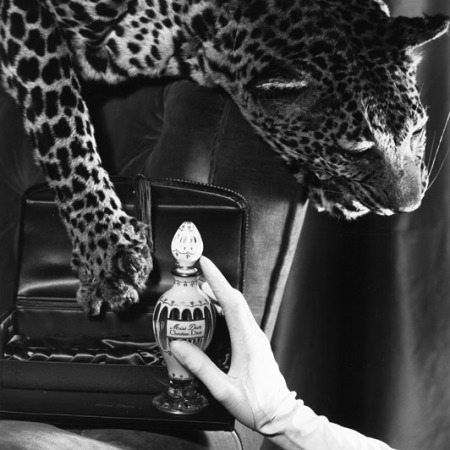
But my story begins much earlier when a mother gifted a bottle of Miss Dior to a young teen who wasn’t quite sure what to make of it. Was it pretty? It was. Was it sharp and nose-wrinkling? It was that, too. Miss Dior had already been around for a couple of decades when she found a place on my dresser top and had already enchanted many with her love-me-love-me-not quality. The green and peppery opening in Miss Dior progresses from gardenia and jasmine to a creamy drydown of sandalwood and dark leather. In the end, the teen decided that it was true love, and my fascination with all things mossy was born.

Continue reading →

Charenton Macerations Christopher Street : Perfume Review

44444

The first thing I noticed about Charenton Macerations Christopher Street was that it was a proper, old-school chypre (a perfume based on an intricate combination of citrusy, floral and mossy notes).  At  long last, I should add. It was composed by Ralf Schwieger, author of Lipstick Rose for Frédéric Malle and lately several fragrances for Atelier Cologne and Etat Libre d’Orange.

water

Charenton Macerations is a new indie brand created by fragrance consultant Douglas Bender, and Christopher Street is the debut perfume from this indie outfit. The notes of Christopher Street are supposed to give an olfactory picture of this New York neighborhood, and to that end one might want to read the brief as given on the Charenton Macerations Web site. Early on, Bender wished to “…combine classical floral elements with more subversive tones of metals, smoke, watered down alcohol, wet woods, clove, burnt coffee, and dark tea” that would represent, well, a lot of things having to do with the history of Christopher Street and its casts of characters.

Continue reading →

Estee Lauder Private Collection : Perfume Review

55555

Today’s guest post is brought to you by Anne-Marie. She is a museum curator and historian living in Canberra, Australia. Her mother wore Yardley’s April Violets for over fifty years, and this is what sparked Anne-Marie’s interest in perfume. You  can also find Anne-Marie’s reviews at Beauty on the Outside.

“Oh, it’s from my private collection.”

Thus would Estée Lauder reply when people asked her about the intriguing perfume was wearing. It could not be bought. At first she shared it only with Princess Grace of Monaco and the Duchess of Windsor (Wallis Simpson). In 1973 Mrs Lauder was finally persuaded to put the fragrance on the market and she kept the name, Private Collection.

Whether or not this is true, Private Collection is a brilliant example of fragrance marketing. Its story makes me think of Givenchy’s L’Interdit, a bespoke fragrance created for Audrey Hepburn and launched commercially in 1957. We are told that Estée Lauder tried to keep Private Collection “to herself”, just like Hepburn, who upon heard the proposal to release her fragrance cried, “But that is my perfume, I forbid it! (Mais c’est mon parfum, je vous l’interdis!)”

Continue reading →

Guerlain Chant d’Aromes : Fragrance Review

44444

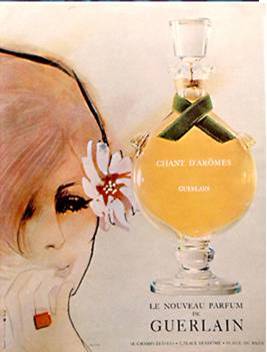
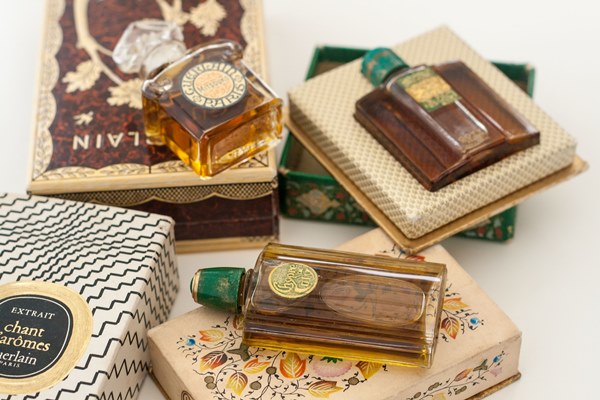
Guerlain marketed Chant d’Arômes in 1962 as a fragrance for a woman who wears perfume only for herself. In an interview with Elle Magazine, perfumer Jean-Paul Guerlain described his muse Marie-Monique as “a proper, ladylike young woman. I chose spring flowers like honeysuckle and gardenia, embellished them with mandarin and bergamot and added a touch of jasmine and a hint of ylang-ylang.”

Chant daromes color ad

Chant d’Arômes is a delicately rendered floral chypre, with a strong accent of peach and sweet orange. The inky richness of oakmoss and the milky sweetness of sandalwood serve as interesting contrasts to the pastel hued heart of honeysuckle and jasmine. It is at once innocent and alluring.

Continue reading →

Guerlain Parure : Perfume Review

44444

Parure means a matching set of necklace and earrings. The fragrance was created by Jean-Paul Guerlain in 1975 for a woman who loved jewelry but could not find a scent she liked. Thus, he created a scintillating perfumed necklace to adorn her.

Par

Sensual and elegant, Parure opens up on the dark richness of plum and rose, accented with bergamot. The musky jasmine fills out the heart of Parure, while the bittersweet moss and spicy woods form a plush base. Parure in extrait de parfum (now discontinued) is richer and more voluptuous that the eau de toilette, with the plum note more assertive and pronounced.

Parure includes notes of plum, bergamot, greens, fruits and hesperides; lily of the valley, rose, orris, plum, lilac, jasmine, jonquil and narcissus; oakmoss, spices, amber, leather and patchouli.

Chypre Classification

A little bit on the chypre fragrance family: The origins of the term are conventionally attributed to François Coty’s Chypre (1917), which was inspired by the scented flora of the island of Cyprus (Chypre, in French). While Chypre disappeared a few years after its inception, the trend was set by Coty and the term became a generic one. The term is usually reserved for compositions featuring bergamot in the top notes and oakmoss as well as iris, musk and amber—and some might argue patchouli as well–in the base, which lends them an interesting interplay of sensations. The group has evolved to include chypre floral animalic, chypre fruity, chypre floral and chypre green categories.

As Seen On

Design by cre8d
© Copyright 2005-2026 Bois de Jasmin. All rights reserved. Privacy Policy