Culture: 426 posts

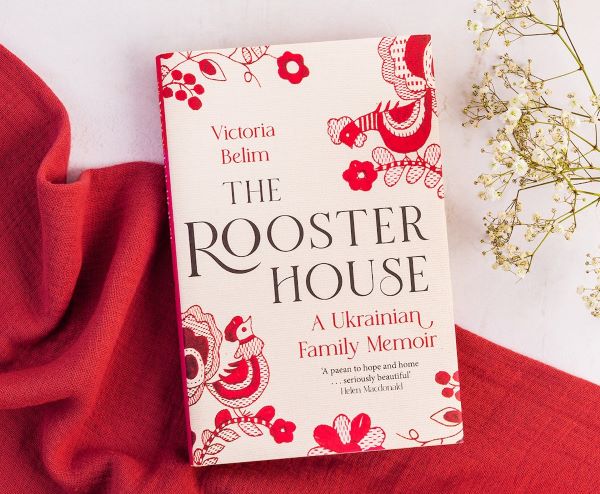
Art, travel, books, history. About my book, The Rooster House.

Damask Roses and Roses of Damascus

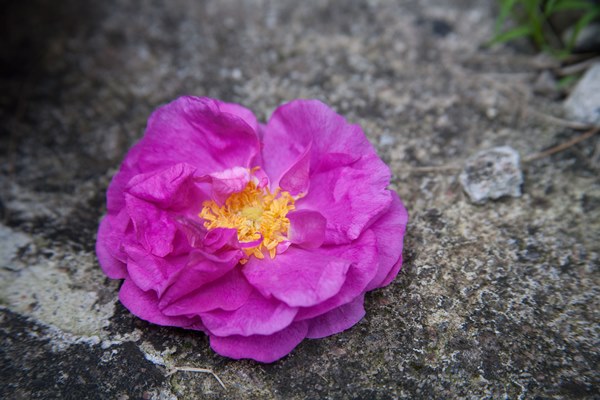
Occasionally I come across articles mentioning “roses from Syria” as “a precious” ingredient in perfumes. One of the pieces even appeared in a newspaper that runs daily reports on the war in Syria. But real world events don’t enter into the fantasy bubble of beauty writing, with absurd and morbid results.  We’re conditioned to think of perfume as something so rarefied and intangible that for all we know angels pick the flowers and blend essences in their celestial realms. The thought that a country, which has been at war for five years, might have difficulty growing roses doesn’t cloud the writers’ imaginations.
rosa-damascena

Until the war, which started in 2011, Syria produced 80 tonnes of roses, some of which were distilled on site and some exported to be processed in Europe. Syria wasn’t as large a producer as Turkey, Bulgaria or Morocco, but its roses had a delicious raspberry nuance. The last commercial sample I was able to get in 2011 still smells of sun warmed fruit and spicy honey. Damascus and the other rose growing provinces have suffered tremendously during the war, especially the area held by the revolutionary army and targeted in the heavy bombing campaigns by the Syrian regime.  People have fled from the fighting, leaving plantation owners with few work hands and resources. As a one-time distiller told a reporter of The Express Tribune, “Today there are barely 250 grams (half a pound) of oil available to buy in the whole market.” What are the chances that it makes its way into a perfume produced by a luxury brand?
Continue reading →

Perfume in the Library: Hafez’s Rose and A Wine Cup

Oh, come let’s scatter rose petals and fill the cup with wine;
let’s tear the ceiling of the universe and create a new one.
If the army of woes is intent on shedding the lovers’ blood,
Cup-bearer and I will ride together and uproot the army’s foundation!
We’ll pour rose water in the bowl of purple wine;
we’ll in censer pour the sweetness of the scented wind. (ghazal 129)**

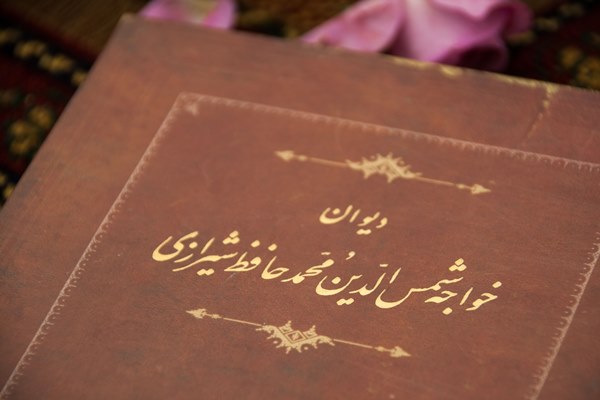
I’m reading Hafez in Shiraz. The marble steps are cool, and the autumnal sunlight thick as honey clings to the blue tiled dome of Hafeziye, a poet’s tomb. Hafez was born in this city known for its culture, sensuality and pleasure-loving ways, and even today Shirazi are proud to reinforce their reputation as sybarites with a sly sense of humor. It’s a regular weekday, but at Hafeziye there is the aura of an endless fest. A group of students reads poetry. A turbaned man in the flowing dress of a mullah pays his respects at the tomb. Two heavily made up young women with prominent post-surgery bandages on their noses pose for a selfie.  Couples exchange glances, verses and phone numbers. Somehow, I think that Hafez wouldn’t mind.
hafez-divan

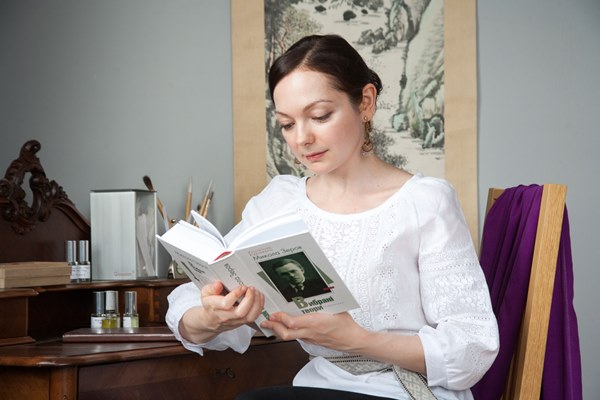
“Color your prayer rug with wine,” writes Hafez, one of the most remarkable poets and mystical thinkers. Remarkable for his imaginative allusions, for his unveiling of hypocrisy and for his limitless passion which pours out in his verses through metaphors of love, perfume and wine.

Continue reading →

Perfume in the Library : Lolly Willowes and Le Temps d’Une Fete

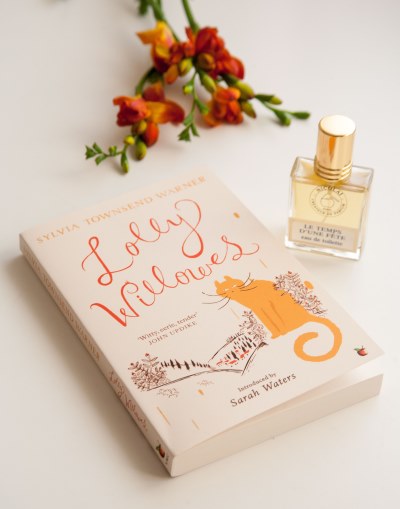
The heroine of Sylvia Townsend Warner’s novel, Lolly Willowes, rebels against society’s expectations. It’s a common enough theme, except that her rebellion takes an unconventional turn. Laura Willowes’s father dies when she’s twenty-eight, and the family council decides, against her wishes, that she should leave the country estate where she grew up and move to London. Treated as “a piece of family property forgotten in the will,” she becomes attached to her older brother’s household, where she’s expected either to marry or be useful as Aunt Lolly. She steadfastly refuses to do the former, and eventually she shocks her relatives by announcing that she will live on her own in a village called Great Mop. To safeguard her freedom, she becomes a witch.

lolly-willowes

Townsend Warner paints Laura’s transformation from Aunt Lolly to her own self through a series of events, most of which involve small sensory pleasures, out of which “she had contrived for herself a sort of mental fur coat.” They include second-hand bookshops, soaps, roasted chestnuts eaten in bed and cut flowers. Her relatives look down upon such frivolous–in their eyes–expenses, but for Laura they become an antidote to her dull, senseless life and catalysts for her awakening.

Continue reading →

Perfume in the Library : Danilo Kis and De Profundis

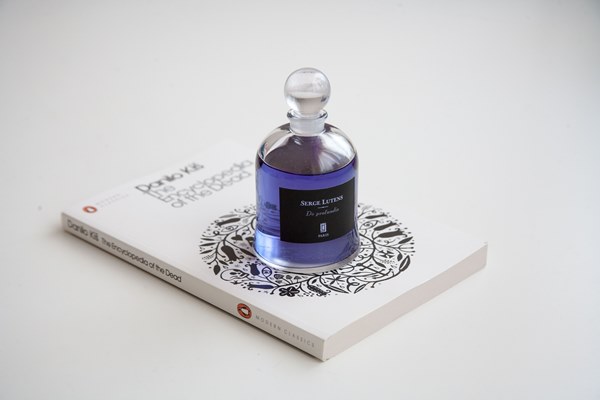
There are two reasons for me to bring Danilo Kiš’s The Encyclopedia of the Dead into my scented library. First of all, his short stories were recommended by a Bois de Jasmin reader, Maja. Second, Kiš (pronounced as Kish) is a master at describing the intangible and the evanescent. Born in Subotica, Danube Banovina, Kingdom of Yugoslavia, Kiš (1935–1989) came from a family that he described as “an ethnographic rarity,” an artifact of the disappearing world–his father was of Hungarian Jewish origin, while his mother came from Montenegro. The lack of precision and neatly defined categories that mark the countries on the crossroads, the borderlands, are sometimes seen as problematic. But Kiš’s work, with its complex panoply of inspirations and traditions, shows that nebulous boundaries can produce many riches.

danilo-kis-lutens

The Encyclopedia of the Dead, written in 1983, contains 9 stories. Kiš insisted that he was writing neither science fiction nor fantasy, placing himself in the magical realism tradition of Jorge Luis Borges. There are references to many different writers such as James Joyce, Bruno Schulz, Vladimir Nabokov, Ivo Andrić and Miroslav Krleža, but inspiration from Borges is the main leitmotif. Some stories answer Borges’s puzzles, others take up Borges’s challenges–“let us imagine that someone shows a story instead of telling it…” (Borges, “Averroës’ Search”).

Continue reading →

White on White : Vyshyvanka and Poltava Embroidery

My favorite piece of clothing is a white linen shirt. The tailoring is plain–a straight, loose bodice is framed by a rounded collar and full three-quarter sleeves. In Ukrainian it’s called vyshyvanka, which means “an embroidered shirt,” and indeed the ornamentation is what makes this simple garment unique. The embroidery runs near the collar and falls onto the front of the bodice. It covers the sleeves so thickly that in some parts the fabric is hardly seen. The stitches become the bands of stars, snowflakes, lace and guelder rose, kalyna, a plant that in the symbolic language of Ukrainian art speaks of beauty and happiness. On my shirt, kalyna is abstract enough to be either flowers or berries, and it is intertwined with sinuous leaves and wispy stems. In the artist’s rendering of bile po bilomu, an embroidery technique native to Poltava, only one color is used to capture all of the nuances that in nature are given by a diversity of hues. The color is white.

white-shirt2

Bile po bilomu, or “white on white”, is among the oldest and most complicated embroideries, combining up to twenty different techniques and using drawn thread and counted stitch patterns to create an ornament full of light and shimmer. The artist who created my shirt is Nadia Vakulenko, one of the leading embroidery masters in Ukraine and a teacher at the Reshetylivka Arts Lyceum. Reshetylivka is a small town located in the Poltava region of central Ukraine. I first came here looking for any trace of my great-grandmother Olena and to learn about Ukrainian textile arts. The two aims were closely related, because Olena not only was one of the most creative people in our family, leaving behind several cookbooks and countless knits and embroideries, she also worked at Reshetylivka’s Clara Zetkin carpet factory.

Continue reading →

As Seen On

Design by cre8d
© Copyright 2005-2026 Bois de Jasmin. All rights reserved. Privacy Policy