Culture: 426 posts

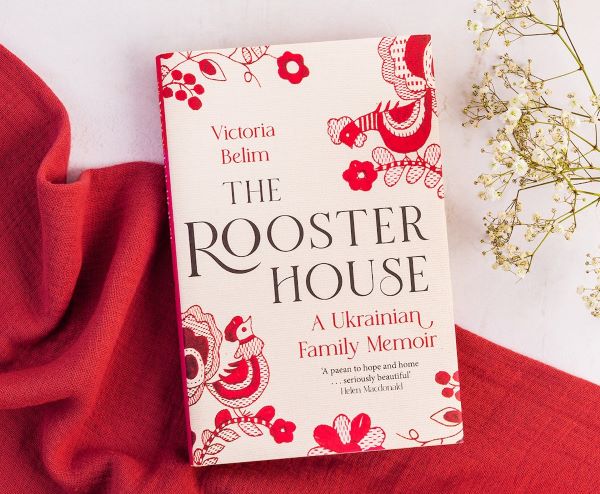
Art, travel, books, history. About my book, The Rooster House.

Perfume in the Library : The Pillow Book

When the Japanese courtier Sei Shōnagon started writing what is now known as The Pillow Book at the end of the 10th century, it was mostly done to alleviate the desperate boredom women experienced at the court. Their movements were circumscribed, and they mostly spent their days behind screens, observing while not being observed. Sei Shōnagon has a keen eye for detail and a sharp tongue, which is why even at the remove of many centuries, her book beguiles and entertains. How can one keep a straight face when she complains about dull tweezers (or mothers-in-law) and suggests that priests should be good looking because it would make listening to their sermons more agreeable.

pillow-book

Some of my favorite passages are of Sei Shōnagon in her lyrical mood. She describes scenery, sounds, textures and scents with such precision that I too feel the crinkly silk under my fingers and smell the spicy sweetness of incense.

To wash your hair, apply your makeup and put on clothes that are well-scented with incense. Even if you’re somewhere where no one special will see you, you still feel a heady sense of pleasure inside. [26] Things that make your heart beat fast (translated by Meredith McKinney)

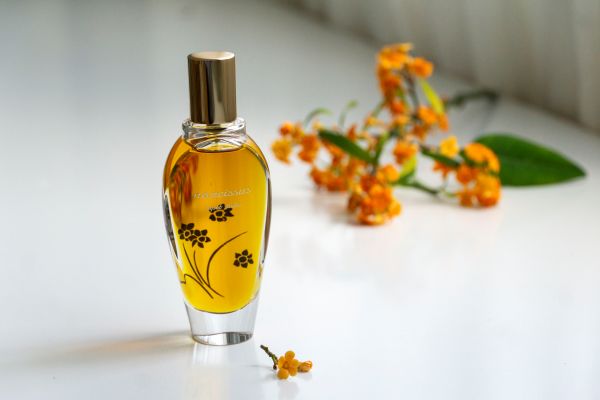
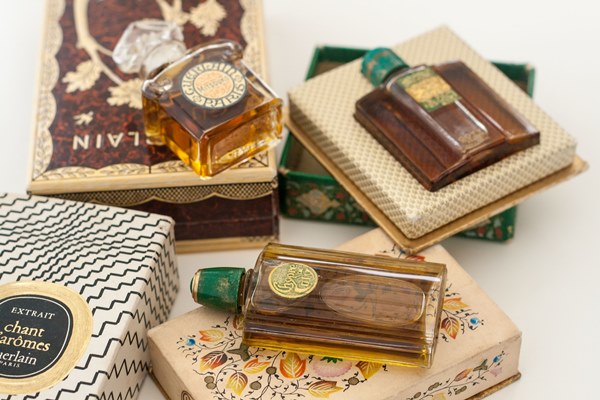
Recently, I found a fragrance that reminds me of Japanese incense. It’s Eau de Rochas, a citrus cologne with a chypre layer. The choice may be unexpected, but once the fragrance softens from its initial sizzle of zest and rind, it becomes softly shaded and warm. The experience made me discover two things. First, Japanese incense is chypre, an accord of moss and woods, turned into smoke. Second, finding a scent to capture the facets of a favorite book enhances the experience greatly.

But of course, many of you know that, and in our previous discussions on the subject of perfume and books, you have shared some of your favorite combinations. I’d love to hear more.

Extra: The Smell of Books :: Perfume and Books: A Scented Story :: The Story of the Porter and The Ladies of Baghdad :: Virginia Woolf Mrs Dalloway :: Things that Make One’s Heart Beat Faster

Photography by Bois de Jasmin
The Invention of Minimalism

A group of students was standing in front of the Mark Rothko painting taking notes as the museum guide talked about the artist’s life and his inspirations. I would have walked past the crowd had the curator not suddenly dropped one phrase, “As we all know, minimalism in art was invented in the West.” I was admiring Rothko’s use of vermilion red, an intense hue that made me think of Indian kumkum (the crimson powder Hindu women use to draw a mark on their foreheads) and Russian lacquers, when the West claimed Minimalism.


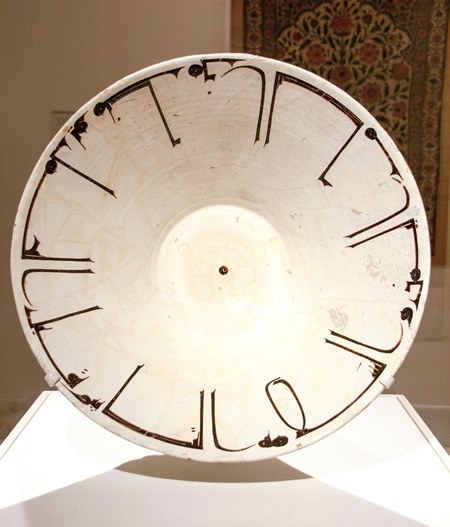
nishapur-bowl

Leaving aside the absurdity of referring to Rothko as a “minimalist”–a label he would have rejected outright, it’s senseless to separate artistic achievements by arbitrary parameters. To see why, one should leave the halls devoted to 20th century art and walk through, say, the expositions usually housed in the Eastern wings. If the museum in question is the Met in New York, then the Department of Islamic Art is where I would take you.

Continue reading →

A Boy With A Fotokor

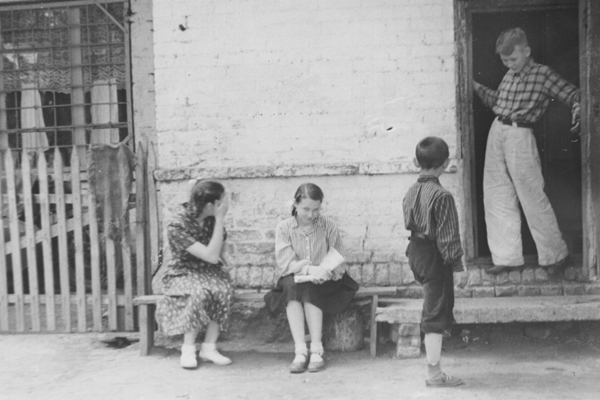
Vladimir, my father’s older brother, developed a passion for photography in unconventional circumstances. Having survived polio, which he caught during World War II, Vladimir suddenly couldn’t move. The disease had ravaged his muscles, leaving him crippled, and while he couldn’t join other children playing, he observed their games from his chair. Then a neighbor, a military captain, gave him his first camera. It was a Fotokor-1, a folding bed plate film camera from 1934, and taking a cue from its name–Fotokor means “photo journalist”, foto korrespondent in Russian–a thirteen year old boy began to photograph everything around him. Eventually, Vladimir grew strong enough to move around unaided, but photography has remained his lifelong interest, which he passed on to me.

girls

This is the Kyiv of the early 1950s. Vladimir takes pictures in the streets of the city–of girls jumping rope, of boys teasing girls, of girls taunting boys, of boys doing naughty things, of soldiers marching, of women waiting in line, of kids having fun, of life as it carries on in a place still marked by war. The photos of Vladimir himself were taken by his younger brother, Valery, although he directed the composition. A small selection I made for you gives a unique, candid glimpse into the Soviet Union of the postwar period as well as the world of one feisty boy.

Continue reading →

Why I Love Japanese Magazines

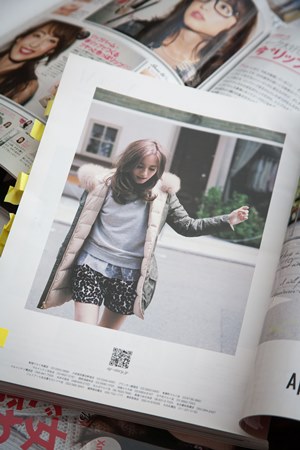
I had originally planned something completely different for today, but having spent the past several days working on a grueling technical report, I devoted this weekend to my neglected pile of Japanese magazines. And so I bring you this.

japanesemag120160822

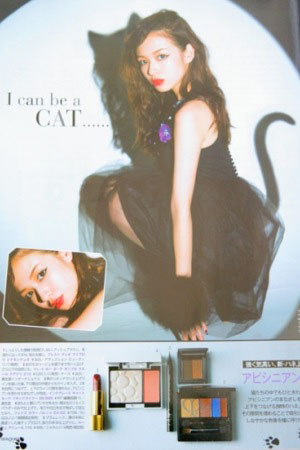
It wouldn’t surprise me if Japan produced more types of magazines than any other country. There are publications catering to all interests and lifestyles, no matter how obscure. A magazine about nothing but makeup? Sure! A digest that shows you how to turn yourself into a gothic Lolita? Why not!

Continue reading →

Reading for Late Summer Days

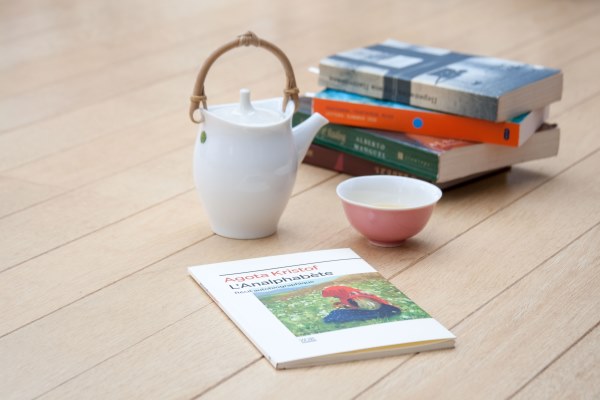
It’s the time of les vacances in Brussels. The streets are quiet. The parks are deserted, especially during the week. This summer tourists have taken the warnings of their home countries to heart and have mostly stayed away. I have the city to myself. So I take a book to a park, sit on the grass and read. (It’s a rare luxury in these parts, a fact demonstrated by the distinct lack of outdoor scenery in my picture. It started raining just when I had time for a photography session.)

books summer recommendations

The question then becomes what book to pick. A romance, a detective novel or a great classic? Walt Whitman once commented that the only reason he didn’t become overwhelmed by a steady diet of Sophocles, Homer, Aeschylus, and Dante was “likely because I read them… in the full presence of Nature, under the sun, with the far-spreading landscape and vistas, or the sea rolling in.” My selection is less lofty–simply some of my new and old favorites.

Agota Kristof The Illiterate

It’s fitting that I discovered the work of a Hungarian writing in French while reading a book by an American author writing in Italian. In her explorations of self and language, In Other Words (see my review), Jhumpa Lahiri mentioned being touched by Kristof’s experience. Kristof was born in Hungary and moved to Switzerland in 1956 as a refugee, and while she gained safety, she ended up in a social desert as she lost her language. The Illiterate is a series of stories about her love of reading, her family, her writing. They are tragic but also hopeful, and I related to them. I didn’t cross a frontier as an infant and didn’t have to work at a Swiss watch factory while writing poetry in my spare minutes, but having left the place where I was born, relatives, friends, and the familiar language(s), I can understand the anguish.

Continue reading →

As Seen On

Design by cre8d
© Copyright 2005-2026 Bois de Jasmin. All rights reserved. Privacy Policy