Culture: 426 posts

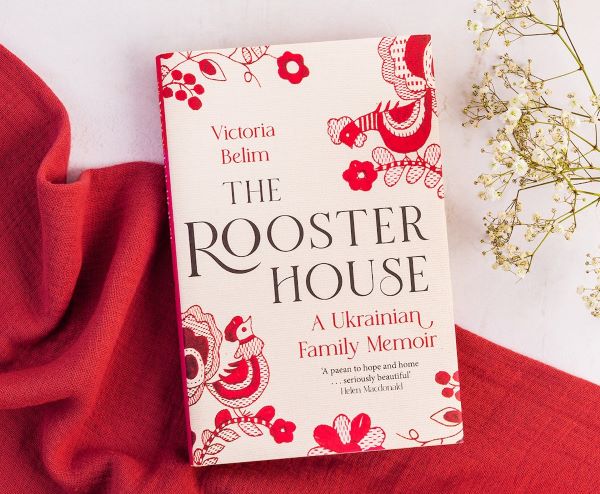
Art, travel, books, history. About my book, The Rooster House.

In Tribute to Lviv: Lonely Mozart in Lemberg and Reflections on Solitude

On Thursday, Russia launched a missile attack on Lviv, a city in western Ukraine, about 60 km from the Polish border. A jewel of Renaissance art, Lviv has a long history. Today it stands in mourning, grieving over the lives lost in the bombardment. Some of its beautiful buildings are in ruin. A few years ago, I spent a memorable time in Lviv with my mother and fell in love with the city. Below is my tribute to its fin-de-siècle allure–and the nostalgic beauty that unities Lviv with another gorgeous city on the other side of the border, Kraków.

In 1808 Franz Xaver Wolfgang Mozart, the youngest son of the famous composer, traveled to Lemberg. Today it’s Lviv, a city in western Ukraine, but when the eighteen year old pianist was packing his sheet music and books and setting off on his journey, it was located in Galicia, an entity created by Joseph II after the partition of Poland in 1772. (It was the same Joseph that commented about the Marriage of Figaro, “too many notes, Mozart.”) While young Mozart was aware that he was trading Vienna for the provinces, he was in dire straits. Lemberg seemed like a promising place for a pianist to build his career and return to the capital. Mozart ended up staying for more than two decades.
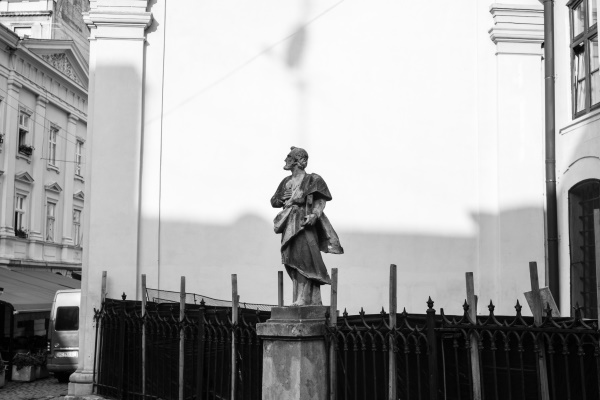
Young Mozart’s early letters to his family were filled with mentions of his “loneliness [Einsamkeit].” He acutely felt the Galician isolation and complained that his inspiration was deserting him. He envisioned all of the brilliant conversations he could have experienced in Vienna society, the music, the books, the arts, and despaired of finding anything similar in Lemberg. Franz Mozart’s output over his lifetime was indeed small, yet, what becomes obvious is how much he drew on the local surroundings and how creatively he interpreted them.
Continue reading →

The Rooster House New York Times Review

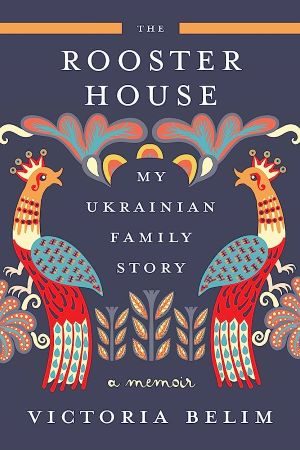
I’m delighted to share that my book The Rooster House is now available in the USA and Canada. It has been released by Abrams Press on June 27th and it’s now on the bookshelves around the country. The New York Times ran a review of my book earlier this week.

“When something of ours, something we took for granted as being ours, is destroyed before our eyes,” writes the Ukrainian-born journalist Victoria Belim, early in her absorbing memoir, “we are destroyed along with it.” “When Going Home Becomes a Fact-Finding Mission,” The New York Times, June 27, 2023

Continue reading →

The Rooster House Now in Stores

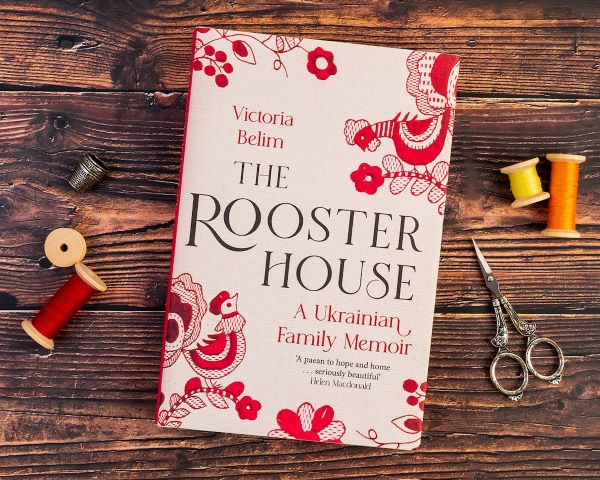
My book The Rooster House was published yesterday by Virago Press. It’s being released during a trying time for my country. Even though its story begins in 2014, my book explains the context in which the Russian invasion takes place. It does so by focusing on ordinary people and their voices. While the book recounts Ukrainian history through a personal story, it celebrates four generations of remarkable women who held our family together through the most trying circumstances. As The Rooster House reveals, Ukrainian history is full of tragic events, but it is also a testament to the resilience and strength of Ukrainians. My great-grandmother Asya and my grandmother Valentina possessed incredible emotional resources, which made them able to protect their family and take care of their land.

As I wrote my memoir, I sought to capture my grandmothers’ lessons in seeking beauty and deriving support from creative pursuits like embroidery or gardening. For this reason, Ukrainian culture and art form the leitmotif of The Rooster House, and I take the reader on a journey with me through descriptions of Ukrainian scents, foods, nature, and arts. My memoir is an invitation to stroll through our cherry orchard in Bereh and become more intimately familiar with the elements that make up the colorful and diverse Ukrainian identity.

Continue reading →

The Original Miss Dior : Catherine Dior

Today’s article is written by Joan Ramirez, an ESL educator and author. Right now she is writing a historical suspense series that begins in occupied Paris in WWII and continues to present day. She is researching her new novel and the material in the article comes from the work she has been doing in the preparation. Perfume will have a role in the novel.

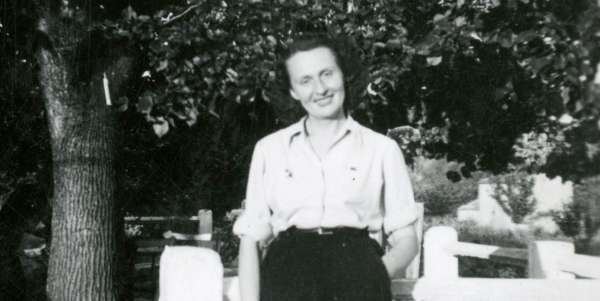
While she was the sister of Christian, the brilliant creator of the fashion House of Dior, Catherine Dior was a class act in a league of her own choosing. Born Ginette Dior on 2 August 1917, she later took Catherine as her name. At the age of fourteen, Catherine lost her mother, Madeleine Dior, to septicemia following an operation. She’d developed her love of fragrance from her mother. Her father, Maurice Dior, lost the family’s fortune in the Wall Street crash of 1929. The young Catherine had to accompany her father from her grand childhood home in Normandy to a small farmhouse in Provence.

Christian and Catherine were in Provence by the time Paris fell to Nazi occupation and France signed the Armistice on June 22,1940 with Germany. On a fateful day in November of 1941, Catherine bought a radio in Cannes. It enabled her to listen to Radio Londres, a station operated from the BBC by members of the Resistance to their supporters in occupied France. Around that time Catherine met Hervé des Charbonneries, an early member of the Resistance and fell in love. By the end of the year, Catherine joined him in a Parisian Resistance network.

Continue reading →

Amoami Ukrainian Art Project

My great-grandmother Asya believed that art healed and her collection of embroideries and lace was a testament to her need to create something beautiful. So when I learned of Amoami, a social impact organization using crafts to support refugee women from Ukraine, I became curious about its mission. Based in Spain, Amoami works with Ukrainian refugee women in Europe and the result are lovely crochets.

This adorable bear is crocheted using a Japanese technique called “amigurumi.” The designs are inspired by Ukrainian embroideries and the bears come in different sizes. As such, Amoami provides economic support for the Ukrainian women and creates a comfortable place where they can work, make friends and create their own community. For people who lost everything as they fled, the community is crucial. Finally, crocheting and arts are used as therapy, something that Asya would recognize and approve.

Continue reading →

As Seen On

Design by cre8d
© Copyright 2005-2026 Bois de Jasmin. All rights reserved. Privacy Policy