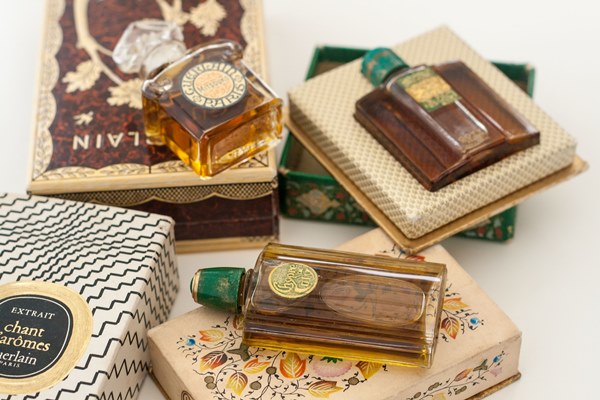
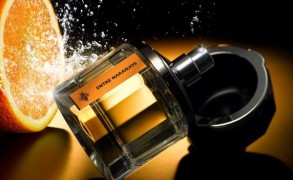
Modern Classics : Tea Colognes and Bulgari Eau Parfumee au The Vert

Eau Parfumée au Thé Vert is an unexpected modern classic. It wasn’t even meant to be displayed outside the Bulgari  boutiques, where its role was to be an elegant extra next to the house’s jewelry collection. Yet such was its allure and originality that it became one of the perfume trendsetters. And it made Bulgari into a perfume house of note. I tell the story of Eau Parfumée au Thé Vert in my newest FT column, Tempting Tea-Inspired Perfumes. But first I take you on my honeymoon to Kerala.


Munnar, a hill station in India’s southwestern state of Kerala, is one of the country’s largest tea producers. Ensconced in the Western Ghats mountain range, the town is surrounded by plantations that cascade down the hills and hide in misty ravines. I was in Munnar for my honeymoon, and my recollections of long, languorous walks around the tea gardens, the tolling church bells and the opulence of garlands at the Sri Subramanya Temple are laced with the scent of tea leaves. Crushed in my fingers, they smelled green and tannic; when carried by the morning breeze, the aroma resembled violets and driftwood. To continue, please click here.

The other fragrances in the Modern Classic series were Serge Lutens’s Féminité du Bois and Lolita Lempicka.

Researching the article made me realize how many excellent and distinctive perfumes feature the tea accord. Next week I will share a selection of favorites to complement my choices in the article above.

Image via FT

Roses, Tobacco and Places in Between : Kapka Kassabova’s Border

“Today, the Valley of Roses near the main rose-producing [Bulgarian] town of Kazanlak (from the Turkish kazan, cauldron) still produces fifty per cent of the world’s rose attar… The other fifty per cent is produced by Turkey. Like Oriental tobacco, the rose is a bitter love story between Bulgaria and Turkey. When Bulgaria broke away from the Ottomans in the 1870s, workers from the rose industry travelled south across the border with cuttings from the Valley of Roses and planted them in the soil of Anatolia. They must have really loved their roses.”

The story of rose damascena is one of many shared by Kapka Kassabova in her odyssey across the borders on Europe’s southern edge, between Turkey, Bulgaria and Greece. In the times of ever hardening borders reinforced by barbwire and prejudice, reading Border: A Journey to the Edge of Europe (public library) is an unsettling experience. How can mere lines on the map have the capacity to cut into people’s lives and haunt their thoughts?

That borders haunt is something I’ve experienced myself. I’ve been fascinated with maps ever since I was a child, sleeping under a large map of the world. A large part on it, colored dark pink, was the Soviet Union, with Ukraine, a jagged diamond sitting on its western border.  “Ukraine” meant “the borderland.” I was born in Kyiv, and finding the city in the middle of the diamond, my finger traced a journey west–Lviv, Krakow, Prague, Vienna. But past Lviv, near the village of Shehyni, a thicker line started, and the dark pink space yielded to a mosaic of colors. I may not have understood the post-WWII arrangement, spheres of influence and the Iron Walls, but I knew one thing with certainty–I couldn’t cross the line at Shehyni. The border was there to keep me in. The more I became aware of it, the more I wanted to see what was happening za kordonom, behind the border. The more I was deterred, the more it entranced me.

Continue reading →

Deciem NIOD CAIS : The Copper Peptide Review

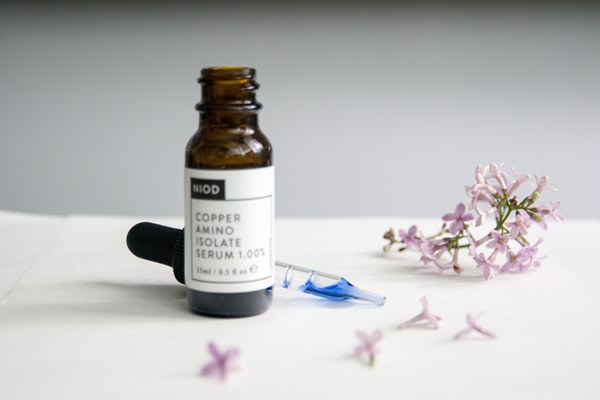
I woke up one day to discover that all beauty bloggers slathered blue liquid on their faces and spoke in a string of acronyms. What did NIOD stand for? Or CAIS, for that matter? Five days and 45 euros later I was to find out for myself. NIOD is one of the brands of Deciem, the same company that makes my favorite skincare, The Ordinary. CAIS is Copper Amino Isolate Serum. I selected the 1% concentration.

The online praises for CAIS reached a fever pitch by the time I had learned of it. It was supposed to activate body functions, although the collective wisdom couldn’t figure out which ones. It was to produce results on the fifth day, although NIOD said that the serum “departs from the traditional thinking of addressing visible aspects of skin aging individually and instead forms a foundation to respect skin health.” As you can see, much remained mysterious about this blue potion before I got my hands on it, but it sounded tantalizing enough to take the plunge. Moreover, I had such faith in Deciem that I was willing to overlook their befuddling descriptions.

Continue reading →

What Does The Word Mitsouko Mean?

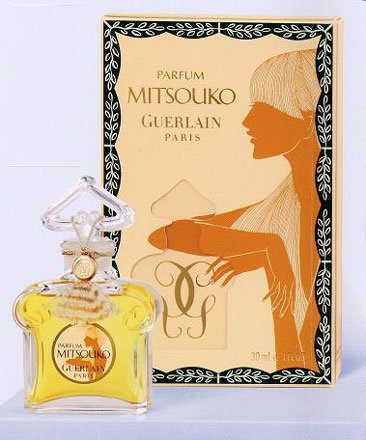
Of the legendary fragrances, Guerlain classics have some of the most beautiful names and stories to go with them. Shalimar and Shah Jahan’s gardens in Lahore. L’Heure Bleue and the streets of Paris at dusk. Après L’Ondée and a sudden May downpour. And there is Mitsouko. The fragrance created in 1919 was inspired by two extraordinary successes of its time–a perfume and a novel, Coty’s Chypre and Claude Farrère’s La Bataille. Farrère was a close friend of Jacques Guerlain, and a few years earlier Farrère mentioned Jicky in his novel Opium Smoke–“Jicky poured drop by drop onto the hands blackened by the drug.” This image delighted Guerlain enough to return the favor by baptizing a new creation after Mitsouko Yorisaka, a character in La Bataille (The Battle).

Farrère’s novel sold more than a million copies in its day, but the perfume inspired by it survived the test of time better. Much of Farrère’s work, La Bataille included, doesn’t excite. It’s a novel of conventional value and somewhat stuffy, nostalgic style inspired by Pierre Loti’s Madame Chrysanthème, Farrère’s commander during his stint with the French navy. To Farrère’s credit, unlike Loti, he attempted to present Japan as an evolving modern society, rather than a place of ikebana and geishas. The background for the story is the Russo-Japanese war of 1905, in which Japan wiped out the Russian fleet and demonstrated that the Meiji era reforms put it on equal footing with the Western powers. Farrère had spent three days in Nagasaki and had done his own research, but in the end, the plot suffers too much from melodrama and clichés borrowed from Loti, without Loti’s refined style.

Continue reading →

Modern Classics Gourmands and Lolita Lempicka

Among some perfume lovers gourmand fragrances are the equivalent of chick lit, somehow seen as pleasant, entertaining but a guilty pleasure nonetheless. Although the fragrance shops are full of boring blends that smell like candy factories, this genre is far from dull and embarrassing. Not only do the sweet accords have a long tradition–visit the Osmothèque and ask to smell Parfums de Rosine’s Le Fruit Défendu, a banana sundae extravaganza from 1916, they also can be as complicated or as simple as a perfumer’s imagination allows. To defend this maligned genre, I bring to you the next installment in the Modern Classics series, Gourmands and Lolita Lempicka. My new FT column is all about indulgence and pleasure, without a shade of guilt.

Lolita Lempicka arrived in the wake of Angel in 1997. It is a perfume for those who want to avoid the jejune prettiness and cloying sweetness of many gourmand fragrances, while offering an indulgence. The heart of Lolita Lempicka is a clever pairing of patchouli (a nod to Angel) and iris. In a brilliant twist, the cool character of iris inflects all layers of the composition, rising like a soft mist over the confection of liquorice, Amarena cherries and praline. To continue, please click here.

The previous fragrance in the Modern Classic series was Serge Lutens’s Féminité du Bois.

Please let me know about your favorite gourmand perfumes. Do you have any sweet fragrances that are appropriate for the warm weather?

Photography by Bois de Jasmin.

As Seen On

Design by cre8d
© Copyright 2005-2026 Bois de Jasmin. All rights reserved. Privacy Policy