Cuir de Lancome : Fragrance News

Lancome_la_collection

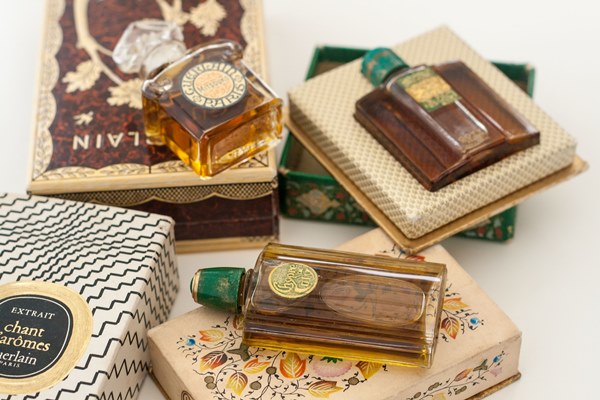
Révolte was a fragrance that Lancôme launched in 1936, a striking leather blend that did not attempt to downplay its dark animalic side. Even when relaunched as Cuir (Révolte was considered too controversial of a name,) it remained brooding and dusky. Now, it has joined Lancôme’s La Collection, a glimpse into the house’s archives, which already offered us Magie, Sagamore, Sikkim, Climat and Mille et Une Rôses. The fragrance has been launched in the Middle East already (I received a bottle from a friend who traveled through Dubai,) and I expect that it will soon end up on the counters States-side. Michael Edwards’s Fragrances of the World guide lists the notes of bergamot, mandarin, iris, jasmine, aubepine, birch, styrax and saffron. Although I am yet to give it a thorough test, but it is a very elegant leather fragrance decorated with a radiant floral accord.  A more detailed review is to follow soon.

Prediction of Perception : Fragrance Chemistry

Angewandte

Over the past few years, I have found myself reading more and more of Angewandte Chemie, a weekly peer-reviewed journal. Besides its interesting editorial content, covering all fields of chemistry, it tends to publish very interesting findings in the area of chemistry as it relates to the fragrance and flavor industry. The issue 18 is devoted to such a topic—the scent prediction. The cover of the magazine is scented with the lily of the valley fragrance. The choice is appropriate, since the interdisciplinary team headed by Reinhold Tacke of University of Würzburg, Philip Kraft of Givaudan Schweiz Inc., and Hanns Hatt of University of Bochum demonstrates in the article the ability to predict the odor intensties of molecules Bourgeonal and Lilial (which tend to be used for as part of the lily of the valley accords in perfumery) and their silicon analogues on the basis of their stereoelectronic properties. As the researchers note, “Our computer calculations are exclusively based on the surface shape of the scent molecules, which is defined by their electrons… These results thus unambiguously prove that it is this electronic surface structure of a molecule that determines the interaction between a scent molecule and its olfactory receptors—and thus defines its fragrance.”

Although the article requires some knowledge of chemistry in order to follow the argument, it is nevertheless a fascinating and highly recommended read. See the feature about it on Leffingwell as well as a detailed overview published in Innovations Report. The full text can be acquired from Interscience.

Citation: Leszek Doszczak, Philip Kraft, Hans-Peter Weber, Rüdiger Bertermann, Annika Triller, Hanns Hatt, Reinhold Tacke. Prediction of Perception: Probing the hOR17-4 Olfactory Receptor Model with Silicon Analogues of Bourgeonal and Lilial, Angewandte Chemie International Edition. Volume 46, Issue 18 , Pages 3367 – 3371.

FiFi Awards 2007 Finalists Announced

Fifi_awards

The Fragrance Foundation has announced the top five finalists in each of 20 award categories on Friday, April 27th. “The winners will be presented at the 35th Annual FiFi Awards & Celebration event on Thursday May 31st in the Winter Garden at The World Financial Center in New York City.” The top five finalists have been selected out of the top ten semi-finalists.

Fragrance of the Year – Women’s Nouveau Niche
•Armani Privé Cuir Amethyst (unisex) – Giorgio Armani Parfums
•Delices de Cartier – Cartier North America
•Kenzo Amour – Kenzo Parfums
•The Scent of Peace – Bond No. 9 New York – Laurice & Co.
•Tom Ford Black Orchid – Tom Ford Beauty

Continue reading →

Perfumer & Flavorist Magazine May Issue : Perfumers, Niche and Jean Carles

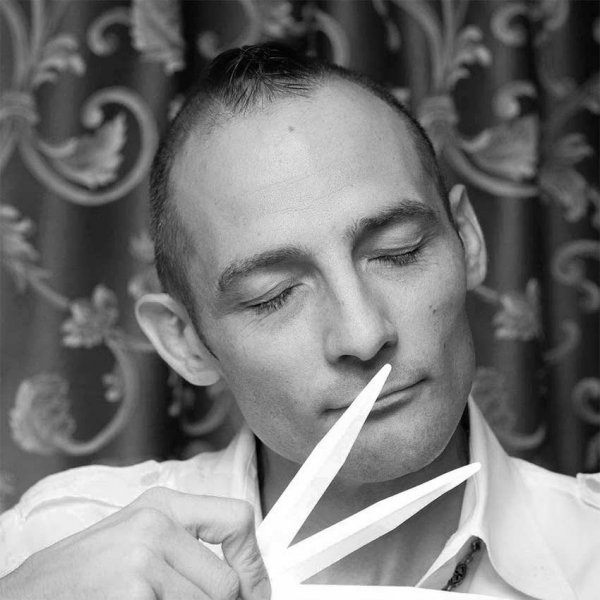
The May issue of Perfumer & Flavorist Magazine is filled with very interesting articles. A preview of the events taking place at the World Perfumery Congress, which takes place on June 5-9, 2007 is offered on page 14. Nobi Shioya, the founder of niche house S-Perfume and Made by Blog is interviewed in the article Sculpting Scent on page 18. On working with perfumers he says, “I’m so used to those types of people [musicians, artists and designers]… but when I first met perfumers like Alberto Morillas or Thierry Wasser–from the outside they were … very classical [European] types; but once I started to speak with them, their personalities were more striking than any other artists that I knew.”

In the piece Exposing the Perfumer (page 38), Michelle Krell Kydd is exploring what it means to be a perfumer in the 21st century, especially given the advent of the internet technology. She interviews senior perfumer Carlos Benaim of International Flavors & Fragrances, Jean-Pierre Subrenat of the World Perfumery Congress, Jean Guichard of Givaudan’s perfumer school, and Frédéric Malle of Editions de Parfums, among others. For a perfume lover who enjoys delving deep into the topic, the article includes two updated charts of the famous Jean Carles method, which is used to study the aroma-materials.

Amouage Gold : Fragrance Review

55555
Amouage_gold

Star rating: 5 stars–outstanding/potential classic, 4 stars–very good, 3 stars–adequate, 2 stars–disappointing, 1 star–poor.

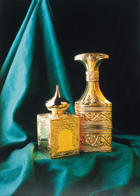
When the house of Amouage was established in 1983 by the Sultan of Oman, the renowned perfumer Guy Robert essentially received carte blanche when it came to creating the signature Amouage fragrance. Now known as Amouage Gold, it is a perfume epitomizing luxury and opulence, a composition of traditional Omani ingredients, yet created in the grand style of French perfumery. Robert, whose creations include Hermès Equipage, Doblis and Calèche, Christian Dior Dioressence, and Madame Rochas, is a master of the gilded and elegant compositions that evoke mirrored ballrooms and Strauss waltzes. Likewise, Gold is a polished and luminous fragrance that dazzles without ever losing its refined quality. …

Continue reading →

As Seen On

Design by cre8d
© Copyright 2005-2026 Bois de Jasmin. All rights reserved. Privacy Policy