Lotus and Water Lily Perfume Notes
Lotus
“On the day when the lotus bloomed, alas, my mind was straying, and I knew it not. My basket was empty and the flower remained unheeded.
Only now and again sadness fell upon me, and I started up from my dream and felt a sweet trace of a strange fragrance in the south wind.
That vague sweetness made my heart ache with longing and it seemed to me that is was the eager breath of the summer seeking for its completion. I knew not then that it was so near, that it was mine, and that this perfect sweetness had blossomed in the depth of my own heart,” by Rabindranath Tagore.
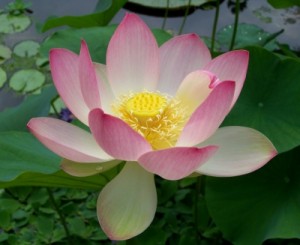
Seeing a lotus pond in full bloom makes me understand why lotus (Nelumbo nucifera) is a symbolic flower in the Buddhist tradition. While its roots are in the silt, the flowers are pure and radiant above the waters, reminding its followers to rise above the mire of the earthly desires.
Blue, pink and white varieties have a delicate perfume, which is soft, sweet and fruity, with a hint of anise. However, making lotus absolute is a difficult task, because waxy petals produce little absolute. About 75,000-100,000 blossoms are needed to make one kilo of absolute. Each flower is handpicked from the ponds on the third day after the blossoms open. Wait for a couple of more days, and the fragrance will be weaker. After the flowers are picked, the flowers are separated from the stem and loaded into the extracting units. Several washings with hexane are required in order to remove the waves, pigment and essential oil from the flowers. The resulting product is called concrete, and it requires treatments to be separate from hexane. Before the absolute is obtained, a delicate painstaking process of chilling, filtering and vacuum distilling of the alcohol from the absolute must be undertaken.