Perfume Notes: 112 posts

Articles on perfume ingredients and fragrance terminology

Hedione Luminous Jasmine : Fragrance Ingredient

Jasmine_grand What makes a perfect jasmine perfume? Jasmine absolute contains more than 300 different components, and traditionally, inspiration comes from the constituents identified. The aromachemicals would be combined in such a way as to replicate the fruity, flowery and animalic facets of jasmine, with additional green notes for capturing jasmine sambac. The effect of hedione (Firmenich tradename, also known as methyl dihydrojasmonate) on jasmine notes can be compared to a sunray hitting a flower. Given its ability to lend a radiant, warm quality to the floral notes, the perfume history of the last thirty years is incomplete without a discussion of hedione.

The name Hedione is derived from the Greek word “hedone,” which means pleasure–a fitting moniker for this luminous and compelling note. The material was discovered by Firmenich researcher Edouard Demole as he was analyzing the composition of jasmine essence. Hedione combines remarkably well with various perfumery materials, and its first significant usage of 2% was seen in Christian Dior Eau Sauvage, created by Edmond Roudnitska in 1966. A layer of luminous jasmine against the backdrop of herbs, patchouli, woods and coumarin makes Eau Sauvage revolutionary in its ability to interpret floral notes in the domain of masculine perfumery. …

Continue reading →

Patchouli : Perfume Note

If there are smells that have an aura of particular time and place indelibly ingrained in their olfactory image, patchouli is certainly one of them. For many, especially those who grew up in the sixties, it is a smell of headshops, its earthy darkness masking the smell of marijuana. It is a smell that shows up in any blend bearing a reference to India. It is deemed as too earthy, too heavy, too overwhelming, too inappropriate for haute parfumerie. It is a misunderstanding, of course, because patchouli is one of the most unique scents and the basic building block of the many perfumery genres.

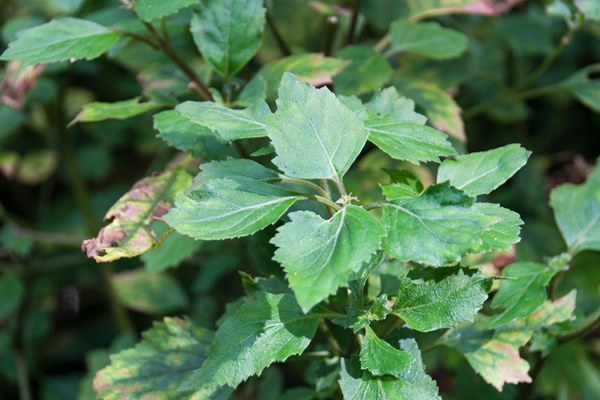
Patchouli (Pogostemon patchouli) is a two-three foot perennial bush with purple flowers, a member of the mint family native to the East and West Indies. The name patchouli originates from a word in Tamil, the southern Indian language, paccilai, which means “green leaf.” Leaves contain the oil, which is steam distilled either from fresh or dried leaves.

The scent of patchouli contains the same earthy element that is also present in vetiver, making it a dark and rich scent. It has an interesting structure, comprised of sweet herbaceous top notes, rich winey heart and balsamic woodsy base. The quality of oil will determine whether it will uphold its negative stereotype of musty and mossy or whether it will envelop one in an almost tangible cloud of sweet golden dust. The oil is often aged, which changes its olfactory profile, with a rich fruity note mellowing the spicy dryness. Experiencing a high quality patchouli oil is something a true fragrance lover should undertake, because it is one of the most fascinating essences. It is hardly a conventionally polite and elegant scent, however it is very haunting. The first rush of effervescent sweetness paired with the dark balsamic spiciness is quite memorable.

The usage of patchouli in perfume has been increasing since the 19th century. Recognizing its insect-repellant properties, the traders of silk and cashmere used patchouli leaves to fold inside their wares. Upon receipt of the products in Europe, the scent of patchouli would have permeated the fabric, thus adding an additional layer of allure to the precious and exotic items. Indeed, in the 19th century, patchouli become an integral part of various Indian fabrics made for export, which led producers of unauthentic paisley shawls to layer them with patchouli leaves, thus being able to pass them off as genuine. Empress Eugenie, the wife of Napoleon III was among the first to favour shawls to protect her against chill, without obscuring the beauty of the gowns designed for her by Worth. Soon, patchouli redolent shawls become fashionable in the 19th century France, paralleling the rise of patchouli as a fragrance ingredient.

In perfumery, patchouli is often used a base note in chypre, oriental and powdery fragrances, marrying particularly successfully with sweet floral tartness of bergamot, chilly sweetness of lavender, voluptuousness of rose and smoothness of sandalwood (Morris 1984, 242). In aromatherapy, it is often employed to treat stress and fatigue.

Fragrances dominated by patchouli: Byblos Patchouli, Bond No.9 Nuits de Noho, Caswell-Massey Aura of Patchouli, Dana Tabu, Etro Patchouly, Gobin Daudé parfums Jardins Ottomans, Jalaine Patchouli, Keiko Mecheri Patchoulissme, L’Artisan Parfumeur Voleur de Roses, L’Artisan Patchouli, L’Artisan Fragrances Patchouli Patch, Lorenzo Villoresi Patchouli, Lush Karma, Mazzolari Patchouly, Molinard Les Scenteurs Patchouli, Montale Patchouli Leaves, Santa Maria Novella Patchouli, Serge Lutens Borneo 1834, Thierry Mugler Angel.

Some fragrances containing patchouli: Azzaro Pour Homme, Balenciaga Homme, Bond No. 9 Bleecker Street, Caron French Cancan, Caron Tabac Blond, Chanel Coco Mademoiselle, Christian Dior Dune, Christian Dior Miss Dior, Christian Dior Miss Dior Cherie, Clinique Aromatics Elixir, Coty Chypre, Givenchy Gentleman, Guerlain Jicky, Guerlain L’Instant Pour Homme, Guerlain Quand Vient l’Eté, Jean Patou Câline, Jean Patou Enjoy, Lalique Eau de Lalique, L’Artisan Timbuktu, Maître Parfumeur et Gantier Parfum d’Habit, Miller Harris Terre de Bois, Montale Aoud Lime, Parfums de Nicolaï Maharadhah, Prada, Rochas Lui, Serge Lutens Fumerie Turque, Serge Lutens Muscs Koublaï Khän, Serge Lutens Un Bois Sepia, Thierry Mugler A*Men, Viktor&Rolf Flowerbomb, Yves Saint Laurent Rive Gauche Pour Homme, Yves Saint Laurent Kouros.

References: Morris, Edwin T. 1984. Fragrance: The Story of Perfume from Cleopatra to Chanel. E.T. Morris and Co., New York.

Cedarwood : Perfume Note

God gave Solomon wisdom and very great insight, and a breadth of understanding as measureless as the sand on the seashore… He described plant life, from the cedar of Lebanon to the hyssop that grows out of walls. 1 Kings 4:29, 33.

Since Biblical times, cedar of Lebanon (Cedrus libani) was among the most prized for its scent properties. Indeed, as Morris notes, Lebanon comes from the Akkadian word lubbunu, which means incense (55). Besides being used in incense blends, cedar was a wood of choice of the aromatic architecture reserved for palaces and temples. Sargon II (722-705 B.C.) used it for his Khorsabad palace, while King Solomon selected cedar for the construction of his temple.

My first encounter with the scent of cedar was through a couple of sticky cones my father brought from Siberia, where he unsuccessfully tried to hit the gold mine by working in the diamond industry. They rattled when shaken and contained small seeds. I remember keeping the cones in a small box, which eventually became permeated with their sweet resinous scent. Every time I would open it, I envisioned tall cedar trees of Siberian forests cloaked in white snow that protected its domain from adventurers like my father.

In perfumery, there are several main sources of cedarwood oil, not all of which are technically cedar. Atlas cedar (Cedrus atlantica) is steam distilled from the wood of an evergreen cedar tree. However, Virginia cedarwood (Juniperus virginiana) and Texas cedarwood (Juniperus mexicana) are not actually cedar trees, but junipers, both of which are related to a plant (Juniperus communis) that yields juniper berry used for flavouring gin (Morris 243). Virginia cedarwood oil is softer and less balsamic than Atlas cedarwood. The conifers’ needles can also be expressed for their oil, which is very inexpensive and is commonly used in soap manufacturing. The precious cedar of Lebanon is no longer felled for its oil as it has become endangered.

Cedar bears a distinction of one of the most frequently used base notes. If presented in moderation, it rounds out sharpness of spice and incense notes, grounds sentimental florals and adds interest to more transparent accords, without compromising their clarity. It is often encountered in fragrances intended for men, since it combines particularly well with citrus notes, the top notes of choice in many masculine fragrances. Given the potential of cedar, it is no wonder that some perfumers like Chris Sheldrake are particularly fond of it and incorporate cedar marvelously in their compositions. My interest in cedar was revived after I encountered Serge Lutens Boix range, which includes cedar variations on violet, spice, musk and autumnal fruit themes. Although cedar is an effective insecticide, mothball associations are usually indicative either of mediocre quality cedarwood or of wrong ornamentation. Testing several types of different cedarwood oils I found the scents to range from smooth and voluptuous, with sweet resinous edge, to sharp and balsamic, with distinct naphthalene smell.

In aromatherapy, cedar is said to encourage confidence and calm anxiety. Perhaps, it is one of the reasons why Japanese baths have such a wonderful effect. The cedar lining of the traditional Japanese bathrooms emanates the sweet balsamic scent, which combined with the steam makes for a true relaxation. It is this experience that inspired Olivia Giacobetti’s Iunx L’Eau Sento No.2.

Perfumes dominated by cedar: Armani Privé Bois d’Encens, Donna Karan Black Cashmere, Iunx No. 2 L’Eau Sento, Ormonde Jayne Isfahan Pour Homme, Parfums 06130 Cèdre, Serge Lutens Cèdre, Serge Lutens Bois de Violette, Serge Lutens Bois et Fruits, Serge Lutens Bois et Musc, Serge Lutens Bois Oriental, Shiseido Féminité du Bois.

Perfumes containing cedar (this is hardly an exhaustive list, and I welcome additions of your favourites): Agent Provocateur, Caron Parfum Sacré, Caron Alpona, Caron Fleurs de Rocaille and Fleur de Rocaille, Caron N’Aimez Que Moi, Caron Pois de Senteur, Caron Royal Bain de Champagne, Caron Tabac Blond, Chanel Cuir de Russie, Diptyque Opôné, Guerlain Chant d’Arômes, Comme des Garçons Sequoia, Guerlain Eau De Fleurs De Cedrat, Hermèssence Poivre Samarcande, L’Artisan Parfumeur L’Eau du Caporal, Ormonde Jayne Osmanthus, Ormonde Jayne Ormonde Woman and Ormonde Man, Ormonde Jayne Frangipani Absolute, Parfums de Nicolaï Pour Homme, Rochas Tocade, Serge Lutens Chêne, Serge Lutens Miel et Bois, Serge Lutens Arabie, Serge Lutens Cuir Mauresque, Serge Lutens Douce Amère, Serge Lutens Iris Silver Mist.

References: Lawless, Julia. 1992. The Encyclopedia of Essential Oils. Element Books, UK. Morris, Edwin T. 1984. Fragrance: The Story of Perfume from Cleopatra to Chanel. E.T. Morris and Co., New York.

Picture: Cedar of Lebanon from en.arocha.org/plants.

Carnation (Dianthus caryophyllus) : Perfume Note

Dianthus is derived from Greek, meaning di, Zeus and anthos, flower, “the flower of Zeus,” indicating its importance in the religious context of Ancient Greece. In Italy, Bologna in particular, the plant has been associated with Saint Peter and celebrated widely, with a special day at the end of June dedicated to carnation. In the Middle Ages, it was one of the most popular flowers for fragrance gardens. No monastery herb garden would be complete without carnation, the medicinal uses of which were referenced as early as the Han Dynasty texts (23-206 A.D.). In European herbal medicine tradition, carnation flowers have been prescribed for the nervous and coronary disorders. However, its probably most interesting usage has been recorded in the late 1600s, when the Countess of Dorset, England, made her own love potion, including carnation, lavender, bay leaf and marjoram. It is rather ironic that the flower of the most licentious of all Greek gods is supposed to have powers to cure wayward lovers. Interesting to note is that carnation signified devotion and loyalty in a variety of traditions, from European to Asian.

I have always associated carnation with the Soviet holidays, especially November 7th and May 1st, celebrating Russian Revolution, the successful Bolshevik coup d’ état against the Provisional Government (also called October Revolution, as Russia used the Julian Calendar, in which November 7th corresponded to October 25th) and the Soviet workers, respectively. Neither would be complete without some dreaded parade, after which we, young pioneers, would have to give red carnations to the various party functionaries present. Moreover, Krasnaya Moskva (Red Moscow), a rich carnation-based fragrance, was used liberally and widely, due to the fact that hardly much else was available. Therefore, for the longest time, carnation was associated with my Russian language and literature teacher, who would call me “a vestige of aristocracy,” because I exhibited an anti-working class spirit by refusing to attend the young pioneer choir practice and to collect paper and iron objects for our school (to heaven knows what purpose). I suppose that now these memories are heavily tinged with nostalgia for me, because I hardly mind the scent of carnation anymore, which is also a scent of my great grandmother’s garden, where I spent many summers of my childhood.

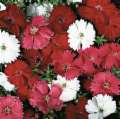
The flower, native to the Mediterranean region and India, has been at the height of its popularity in France of Louis XIV reign, when it was selected as a flower of the court. In the 19th century, carnation (dianthus) lovers formed clubs, and although carnation fever never reached the level of tulip obsession, the flower had many devotees. In fragrances, the same tradition can be observed, with the classical compositions featuring carnation in a variety of ways, particularly to add a peppery warth to the floral compositions. However, the modern treatment of carnation has been to deem it old-fashioned and trite. Yet, the solitary flowers, with the corolla of dark red fringed petals have an intense spicy smell that lends itself wonderfully to oriental blends. Combined with rose, it lends a spicy note that adds complexity to the sweet rich glow of rose.

Essential oil is present in the small amount in petals of the carnation variety, which is called “clove pinks,” hinting at the similarity between the smell of carnation and clove. In Russian, carnation and clove, although unrelated species, are bound by etymological ties. “Gvozdika”, with the root “gvozd’” referencing the nail-like shape of the spice clove, is the common name for both the flower and the spice. Both are rich in eugenol, which gives carnations and cloves their characteristic sweet heavy scent.

Produced mostly in France and Holland, carnation absolute is rare, with a heavy, spicy floral aroma tinged by sweet dark honey notes. It is a blend of clove, black pepper and exotic sweetness of ylang ylang, which incidentally are often used to reproduce carnation scents. Absolute is a greenish jelly like substance. 500kg of flowers are required to produce 100g of oil. In perfumery, it is common to employ synthetic substances like eugenol, isoeugenol and eugenyl acetate to accentuate floral character and to lend clove and carnation like scent.

Carnation solifores: Caron Bellodgia, Floris Malmaison, Lorenzo Villoresi Garofano, Comme des Garcons Carnation, JAR Parfums Golconda, L’Artisan Parfumeur Oeillet Sauvage.

Classical perfumes containing carnation: Caron Poivre and its EDT version Coup de Fouet, Caron En Avion, Caron Or et Noir, Caron Tabac Blond, Caron Fleurs de Rocaille (1933), Guerlain Après l’Ondée, Guerlain L’Heure Bleue, Je Reviens by Worth, Givenchy L’Interdit (original), Nina Ricci L’Air Du Temps, Schiaparelli Schocking, Estée Lauder Youth Dew, Robert Piguet Bandit, Dior Dioressence.

Modern perfumes containing carnation: Yves Saint Laurent Opium, Guerlain Vétiver, Maître Parfumeur et Gantier Soie Rouge, Carthusia Fiori di Capri, Mon Classique by Pascal Morabito, Lauren by Ralph Lauren, Red Door by Elizabeth Arden, Gucci No. 1, Boucheron Jaïpur Homme, Cartier Must II, Yves Saint Laurent Jazz, Molyneux Quartz, Hermès Bel Ami, Fendi Theorema, Estée Lauder Cinnabar, Estée Lauder White Linen, Estée Lauder Estée, Estée Lauder Spellbound, Guerlain Samsara, Balenciaga Cristobal, Gaultier Fragile, Dior Jules, Dior Fahrenheit, Gucci Envy for Men, Lanvin Lanvin for Men, Bvlgari Bvlgari for Men.

Bibliography: Bown, D. 1996. Encyclopaedia of Herbs and their Uses. Dorling Kindersley, London; Morris, Edwin T. 1984. Fragrance: The Story of Perfume from Cleopatra to Chanel. E.T. Morris and Co., New York, 233.

Tuberose : Perfume Ingredients and Notes

Tuberose
Nothing captures better the essence of tuberose than its meaning in the language of flowers, used in Victorian England. Tuberose signified both dangerous pleasure and voluptuousness. The scent of the flower is a fusion of white petals and warm skin, an arresting sensual and heady fragrance. On a blotter, tuberose absolute opens up with a faint green note before warming into a sweet jasmine-like scent underscored by a rubbery accord. It vacillates between the coconut sweetness and the warm skin impression, as it dries down.


Tuberose (Polianthes tuberose) is plant belonging to the lily family (Amaryllidaceae) native to Central America. Like most night blooming flowers, tuberose is pollinated by nocturnal moths, which explains the white shade of the flowers. Like jasmine, tuberose continues to produce its scent even after the flower is picked, thus, lending itself as a perfect candidate to the traditional painstaking enfleurage method. Steam distillation with its high temperature is not a feasible way to extract the absolute. While enfleurage is a traditional method traced back to Ancient Egypt, solvent extraction using hexane is far more common. Either method is time consuming, requiring 3600 pounds of blossoms to produce 1 pound of the absolute, which is why tuberose oil is among the most expensive in perfumery, more than $2,000 per pound (as of 2005.)

Continue reading →

As Seen On

Design by cre8d
© Copyright 2005-2026 Bois de Jasmin. All rights reserved. Privacy Policy