Divine L’Ame Sœur : Perfume Review


Star rating: 5 stars–outstanding/potential classic, 4 stars–very good, 3 stars–adequate, 2 stars–disappointing, 1 star–poor.
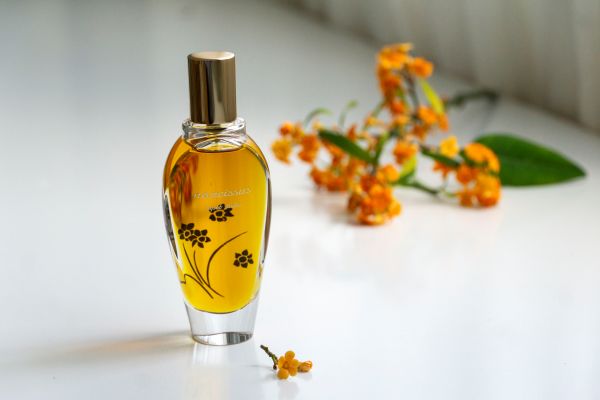
Divine L’âme Sœur creates an illusion of opalescent dust falling on dewy petals. The veil of aldehydes is, at first, hazy and opaque, however almost instantly it begins to fade revealing tropical opulence of ylang ylang and rich fruitiness of jasmine. While ylang ylang is a heady note, aldehydes render it ethereal and elegant, smoothing its rough edges and softening its sharp lushness. Indeed, Ernest Beaux was the first perfumer to discover the unique affinity between aliphatic aldehydes and ylang ylang, when he created Chanel No. 5.
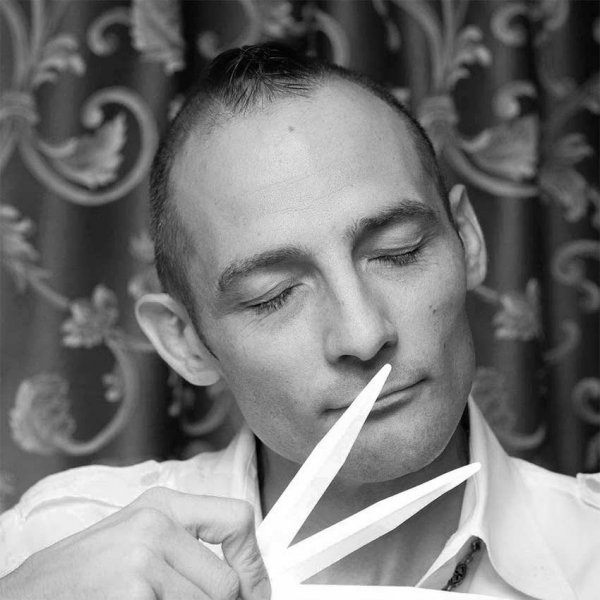
L’âme Sœur, which means “Soulmate,” was created by Yann Vasnier for Divine, a fragrance house founded by Yvon Mouchel in Dinard on the northern coast of Brittany. If it is possible to conceive of a perfectly elegant fragrance that nods to the classical tradition without being repetitive, L’âme Sœur is it. A beautiful rose note lends an appealing sweetness to the heart of the composition, complementing the crisp white shimmer of aldehydes.
Once the fragrance dries down, a luminous note of ambergris resurfaces to support the composition. In L’âme Sœur, the peculiar winey and stunningly sensual scent of ambergris is present as a wave of warmth that softens the lush florals. Where rose was tempted to appear as heavy and sweet, it is rendered as sun drenched and delicate. The juxtaposition of sensual warmth with the cool aldehydic opening is what makes L’âme Sœur particularly exciting. The final result is not so much powdery as one would expect from an aldehydic fragrance, as it is reminiscent of cashmere. Cashmere softness that caresses the skin and holds its warmth is the association that the dry down of L’âme Sœur brings to mind.
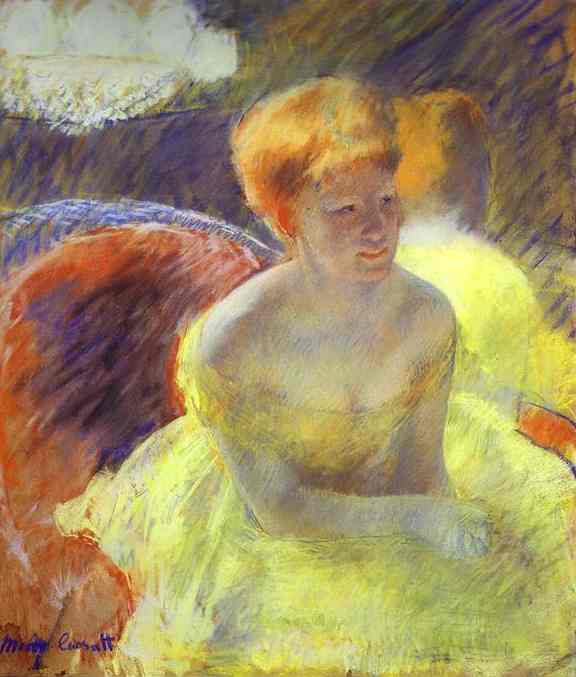
Mary Cassatt. At the Theater.. 1879-1880. Pastel on paper. The Nelson-Atkins Museum of Art, Kansas City, Missouri. Abcgallery.com