aldehydes: 22 posts

Guerlain Vega : Fragrance Review

44444

Arabesque

Star rating: 5 stars–outstanding/potential classic, 4 stars–very good, 3 stars–adequate, 2 stars–disappointing, 1 star–poor.

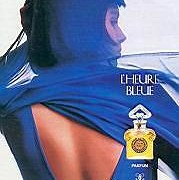
“Aldehydic mist on white petals” immediately predisposes one to think of fragrances like Chanel No. 5 (1921) and Lanvin Arpège (1927). Just like Coty Chypre (1917) and Guerlain Mitsouko (1919), itself an offspring of Chypre, set the gold standard for the variation on the chypre genre, Chanel No.5 with its cocktail of aliphatic aldehydes, reminiscent of metallic dust and candle wax, became the inspiration for many aldehydic florals. However, Véga is a Guerlain, both in its joyful rendering of the chilly aldehydic theme and the vanillic warmth pervading its elegant form. As it smiles through the radiant veil of flowers, Véga makes sweet promises, many of which it fulfills.

Composed by Jacques Guerlain in 1936, Véga was recreated by Jean-Paul Guerlain for the opening of the renovated La Maison Guerlain in the summer of 2006, thus initiating a yearly tradition of bringing back a long lost Guerlain classic from the past. …
Continue reading →

Serge Lutens La Myrrhe : Fragrance Review

55555

Cantebury_cathedral

Star rating: 5 stars–outstanding/potential classic, 4 stars–very good, 3 stars–adequate, 2 stars–disappointing, 1 star–poor.

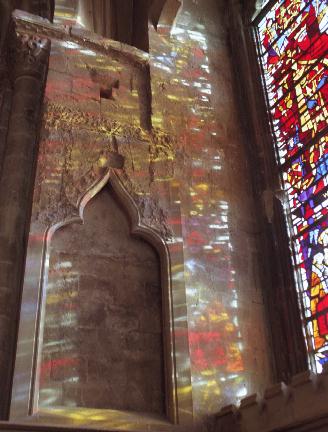
Serge Lutens La Myrrhe is the essence of the moment when the sunlight enters through the stained glass windows of an old church, bathing its cold stone in iridescent glow and lending a jewel-like splendor to the liturgical vestments and the vessels of the altar. The contrast between the light and the dark is what makes the fragrance one of the most intriguing compositions resulting from Serge Lutens and Christopher Sheldrake’s partnership.

The classicism of La Myrrhe (1995) is of misleading nature as it orchestrates its accords in a modern manner. The opalescent white veil of aldehydes that unfolds in the top accord almost hints at the floral waterfalls that are about to cascade softening the chilly breeze. Yet, instead of bergamot, rose, jasmine and ylang ylang of classical aldehydic compositions, La Myrrhe’s icy aldehydes become overlaid with sweet citrus, before falling into the heart spiced with anise. ….

Continue reading →

Lanvin Arpege New and Vintage : Perfume Review

55555

Arpege_30

Star rating: 5 stars–outstanding/potential classic, 4 stars–very good, 3 stars–adequate, 2 stars–disappointing, 1 star–poor.

Among the fragrances André Fraysse created, none can rival Arpège, which the perfumer composed in 1927 for the French couturier Jeanne Lanvin, in collaboration with Paul Vacher.  Scandal (1932), Rumeur (1932), and Pretexte (1937) followed after the success of Arpège. Jeanne Lanvin dedicated Arpège to her musician daughter, Marie-Blanche, who picked the name for the fragrance.

The original 1927 formulation of Arpège is true to its name–a musical concept of arpeggio–in a sense that individual notes are played distinctly one after another instead of simultaneously. Rose dusted by opalescent aldehydic shimmer unfolds first, followed by rich jasmine.

Continue reading →

Balenciaga Le Dix : Fragrance Review

44444

Le_dix_2

Star rating: 5 stars–outstanding/potential classic, 4 stars–very good, 3 stars–adequate, 2 stars–disappointing, 1 star–poor.

The breeze entering the windows suddenly brings a scent of something bittersweet and sharp. A wave of melancholy overcomes me as I noticed the yellowing leaves and the chill that forebodes the change of seasons. I want to hold onto the time as it passes, and the best way to do so is to envelop oneself in a fragrance that speaks of another era.

Created in 1947 by Francis Fabron, the perfumer responsible for such fragrances as the original 1957 version of Givenchy L’Interdit, Monsieur de Givenchy, and Nina Ricci L’Air du Temps, Balenciaga Le Dix is like a beautiful vintage dress that has lost none of its splendor, despite the passage of time. In fact, time only adds to its beauty.

Continue reading →

Menard L’Eau de Kasaneka : Perfume Review

33333

Cherry_shodo_kawarazaki

Star rating: 5 stars–outstanding/potential classic, 4 stars–very good, 3 stars–adequate, 2 stars–disappointing, 1 star–poor.

A burst of sharp fruity aldehydes is not an opening that would I expect of Menard L’Eau de Kasaneka created by a Japanese perfumer Shuji Suzuki, a fragrance described as spicy floriental. A wave of candied orange rind swells up before softening into creamy sweetness underscored by ginger candy and a dusting of nutmeg. Rich powdery heliotrope, or rather heliotropin, lends its sweet and buttery character to the composition, creating an association with a dessert that is a cross between violet scented candy and a cherry pie. The heart of the composition cannot be described in any way other than cloying.

However, the drydown is rather pleasant, with its softly powdered base of sandalwood and cool vetiver. The sweetness is toned down substantially, and the fragrance embraces the wearer gently, like a soft cashmere scarf. Ambrette (or hibiscus) seed is considered to be the closest substitute for animalic musk. Lending fragrances tenacity, it smoothes the base notes with its elegant and sensual feel. In L’Eau de Kasaneka, it is a soft anchoring point that brings balance to the composition. If there is a reason for me to own L’Eau de Kasaneka, it would be a lovely bottle designed by the famous Japanese painter Shozo Shimada.

Notes include hamanasu (Japanese rose), basil, ginger, nutmeg, cardamom, bergamot, orange, carnation, heliotrope, jasmine, ambrette seed, sandalwood, vetiver, cedar, vanilla, musk.

Print: Cherry by Shodo Kawarazaki, 1951. www.japaneseprintsandbooks.com/ kawarazaki10.html

As Seen On

Design by cre8d
© Copyright 2005-2026 Bois de Jasmin. All rights reserved. Privacy Policy