books: 37 posts

Reading Iran: Literature, Food, Poetry, and the Inner Map of a Country

I came to Iran through literature and language. Long before I traveled across the country, I had been reading Persian poetry, studying the rhythm of the language, and trying to understand a place that cannot be approached through headlines alone.

Traveling in Iran deepened that early fascination. I encountered a country of immense cultural density: hospitality and restraint, beauty and endurance, tenderness and control. Iran’s politics are complicated and often painful, and the present moment makes this impossible to ignore. All of the friends in Iran I have been able to reach speak of unimaginable violence and loss. Nearly everyone knows a young person who was killed.

After everything I have experienced in Ukraine, I did not think I could still be shocked. Yet with every new story, I understand more clearly the depth of grief and suffering the country is moving through, often without witnesses. It is precisely in moments like this that reading matters: not as escape, but as a way to resist simplification, to remember that no country can be reduced to crisis alone.
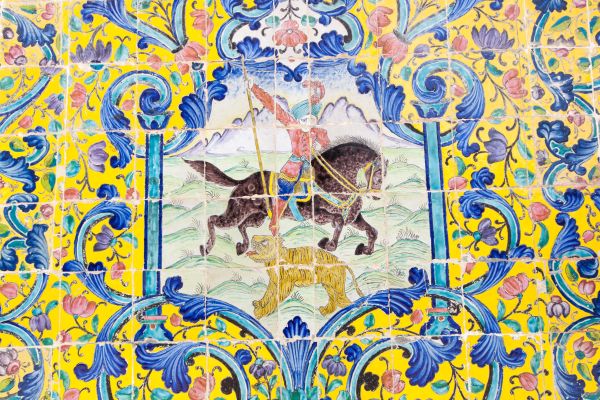
This reading list brings together books from my library. These books are an attempt to understand Iran not as an abstraction or a crisis, but as a layered, ancient, and profoundly human place.

Essentials — where to begin

The Blind Owl by Sadegh Hedayat
A foundational modern Iranian novel. Dark, hallucinatory, and deeply psychological, it explores alienation, obsession, and the fracture between inner life and social reality. Demanding, but essential.
Continue reading →

Reading Serhii Plokhy’s History of Ukraine in Wartime Kharkiv

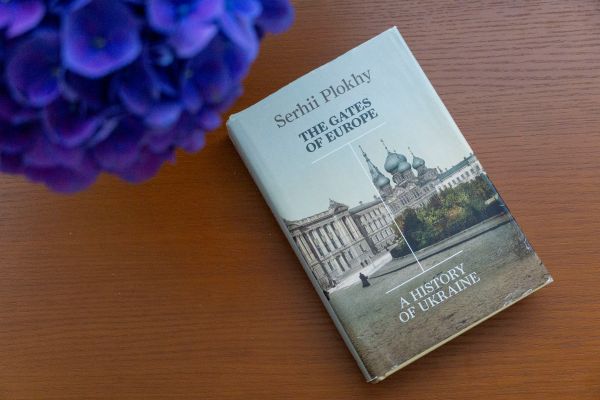
The last time I re-read The Gates of Europe was in Kharkiv. I was waiting for a friend at Makers, a coffee shop and artistic hangout in the city center. Kharkiv is the easternmost city in Ukraine that lies only 30 kilometers from the Russian border. This unfortunate geography makes it a target of near-daily bombardment. Just weeks earlier, Makers had replaced its large oval windows after a night of shelling, but when I sat there reading in its high-ceilinged, sunlit space, it felt like any other café in a busy urban center. Except that my phone kept buzzing with alerts about incoming drones and ballistic missiles.

Serhii Plokhy, a Harvard historian, published The Gates of Europe in 2015, one year after the annexation of Crimea and the start of war in the Donbas. Although the book spans over two thousand years of history, the narrative felt startlingly immediate, like reading the blueprint of a city I was only beginning to understand. Ukraine, in Plokhy’s telling, is not a periphery of someone else’s empire. It is the center of its own story—layered, scorched, reborn. That I was reading the history of Ukraine in Kharkiv, a city that embodies these layers and this capacity for rebirth, felt deeply significant. Clearly, I have a taste for immersive reading experiences.

Continue reading →

In Tribute to Lviv: Lonely Mozart in Lemberg and Reflections on Solitude

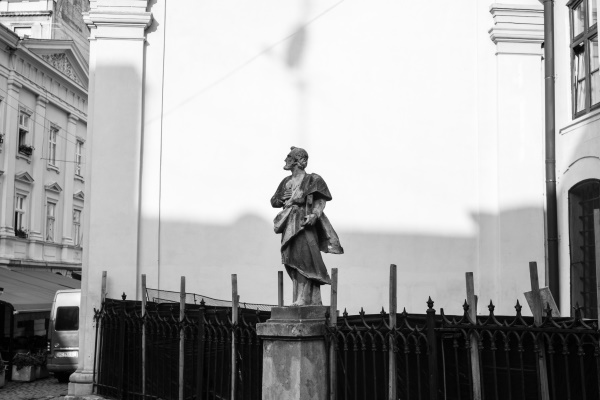
On Thursday, Russia launched a missile attack on Lviv, a city in western Ukraine, about 60 km from the Polish border. A jewel of Renaissance art, Lviv has a long history. Today it stands in mourning, grieving over the lives lost in the bombardment. Some of its beautiful buildings are in ruin. A few years ago, I spent a memorable time in Lviv with my mother and fell in love with the city. Below is my tribute to its fin-de-siècle allure–and the nostalgic beauty that unities Lviv with another gorgeous city on the other side of the border, Kraków.

In 1808 Franz Xaver Wolfgang Mozart, the youngest son of the famous composer, traveled to Lemberg. Today it’s Lviv, a city in western Ukraine, but when the eighteen year old pianist was packing his sheet music and books and setting off on his journey, it was located in Galicia, an entity created by Joseph II after the partition of Poland in 1772. (It was the same Joseph that commented about the Marriage of Figaro, “too many notes, Mozart.”) While young Mozart was aware that he was trading Vienna for the provinces, he was in dire straits. Lemberg seemed like a promising place for a pianist to build his career and return to the capital. Mozart ended up staying for more than two decades.


Young Mozart’s early letters to his family were filled with mentions of his “loneliness [Einsamkeit].” He acutely felt the Galician isolation and complained that his inspiration was deserting him. He envisioned all of the brilliant conversations he could have experienced in Vienna society, the music, the books, the arts, and despaired of finding anything similar in Lemberg. Franz Mozart’s output over his lifetime was indeed small, yet, what becomes obvious is how much he drew on the local surroundings and how creatively he interpreted them.

Continue reading →

My Favorite Childhood Book

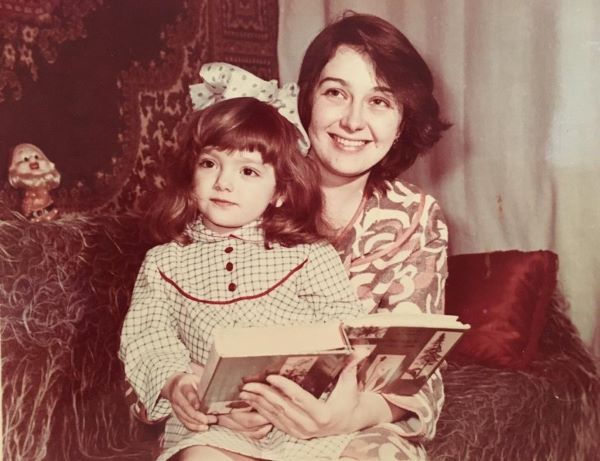
A few days ago I was going through some old photos when I came across this image of my mother and me taken in our apartment in Kyiv. I must have been 5-6 years old and I still remember this photo session. My father’s friend Petya, a professional photographer, came over to take photos of our family and had us pose in different ways. For some reason, I didn’t like posing the way Petya suggested, so my mother gave me a book and the result was this photograph.

The moment I picked up the photo, I could imagine the heft of that book, its shiny green cover and the colorful drawings of plants. I recalled that it was a book of medicinal plants. It used to be one of my favorite books to leaf through, and  when I learned to read, to lose myself in its descriptions of plants, their aromas and healing properties. The more I thought about the book, the more my later fascination with flowers and fragrances made sense.

Continue reading →

My Favorite Books of 2022

Last year held a few memorable reads for me, even though I finished fewer books than I normally would have. When I looked through my diary, I noticed that my favorite titles ran the gamut from travelogues to novels, with short stories and poetry in between. Putting together the list of my favorites below was a pleasure, as I recalled what I read and why I was inspired to pick up these books. I hope that you will find my selection compelling, and in turn I look forward to hearing about the books you read and liked.

Elisa Shua Dusapin, Winter in Sokcho (French: Hiver à Sokcho)

A winner of the Prix Robert Walser, Winter in Sokcho is a debut novel from the French-Korean author Elisa Shua Dusapin. It’s the story of a meeting between a young French-Korean woman who works as a hotel receptionist and a comic strip artist who arrives looking for inspiration. The emotional gap between the characters in the novel, the alienation, and the unsaid words leave a lasting impression after reading this book. The writing exquisitely evokes the wintery atmosphere of a small port town with its neon lights, fish market and endless snow.

Continue reading →

As Seen On

Design by cre8d
© Copyright 2005-2026 Bois de Jasmin. All rights reserved. Privacy Policy