Reading
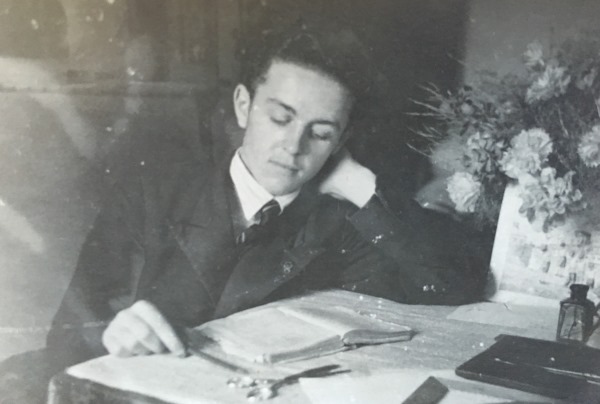
Looking through some of my photographs, I found this picture of my grandfather as a first year engineering student.

He posed for the photo, but in my recollections of him, a book–and a fishing rod–are ever present.
Looking through some of my photographs, I found this picture of my grandfather as a first year engineering student.

He posed for the photo, but in my recollections of him, a book–and a fishing rod–are ever present.
Occasionally I come across articles mentioning “roses from Syria” as “a precious” ingredient in perfumes. One of the pieces even appeared in a newspaper that runs daily reports on the war in Syria. But real world events don’t enter into the fantasy bubble of beauty writing, with absurd and morbid results. We’re conditioned to think of perfume as something so rarefied and intangible that for all we know angels pick the flowers and blend essences in their celestial realms. The thought that a country, which has been at war for five years, might have difficulty growing roses doesn’t cloud the writers’ imaginations.

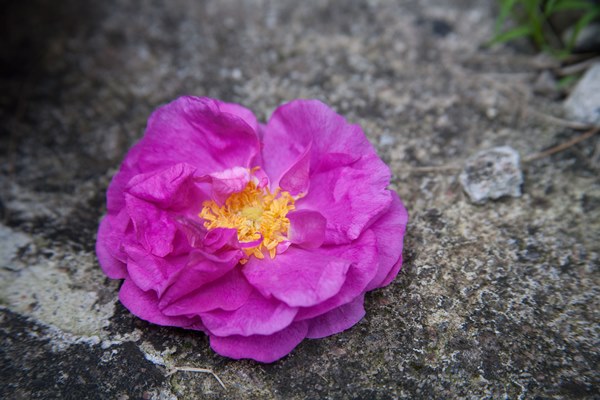
Until the war, which started in 2011, Syria produced 80 tonnes of roses, some of which were distilled on site and some exported to be processed in Europe. Syria wasn’t as large a producer as Turkey, Bulgaria or Morocco, but its roses had a delicious raspberry nuance. The last commercial sample I was able to get in 2011 still smells of sun warmed fruit and spicy honey. Damascus and the other rose growing provinces have suffered tremendously during the war, especially the area held by the revolutionary army and targeted in the heavy bombing campaigns by the Syrian regime. People have fled from the fighting, leaving plantation owners with few work hands and resources. As a one-time distiller told a reporter of The Express Tribune, “Today there are barely 250 grams (half a pound) of oil available to buy in the whole market.” What are the chances that it makes its way into a perfume produced by a luxury brand?
Oh, come let’s scatter rose petals and fill the cup with wine;
let’s tear the ceiling of the universe and create a new one.
If the army of woes is intent on shedding the lovers’ blood,
Cup-bearer and I will ride together and uproot the army’s foundation!
We’ll pour rose water in the bowl of purple wine;
we’ll in censer pour the sweetness of the scented wind. (ghazal 129)**
I’m reading Hafez in Shiraz. The marble steps are cool, and the autumnal sunlight thick as honey clings to the blue tiled dome of Hafeziye, a poet’s tomb. Hafez was born in this city known for its culture, sensuality and pleasure-loving ways, and even today Shirazi are proud to reinforce their reputation as sybarites with a sly sense of humor. It’s a regular weekday, but at Hafeziye there is the aura of an endless fest. A group of students reads poetry. A turbaned man in the flowing dress of a mullah pays his respects at the tomb. Two heavily made up young women with prominent post-surgery bandages on their noses pose for a selfie. Couples exchange glances, verses and phone numbers. Somehow, I think that Hafez wouldn’t mind.

“Color your prayer rug with wine,” writes Hafez, one of the most remarkable poets and mystical thinkers. Remarkable for his imaginative allusions, for his unveiling of hypocrisy and for his limitless passion which pours out in his verses through metaphors of love, perfume and wine.
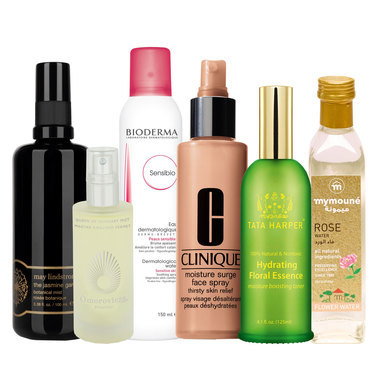
One of my favorite discoveries during my stays in Japan was the skincare. Any beauty store, from the glitzy establishments like Mitsukoshi and Takashimaya to the emporia like Matsumoto Kiyoshi and Ainz & Tulpe, has knowledgeable staff that not only can help you select the right products, but also diagnose your skin type and choose the right regimen. This is how I discovered the versatility and usefulness of face toners and mists. In my new column, Putting on the spritz: face mists, I cover some of my favorite products, both naturally scented and fragrance-free, as well as ways to incorporate them into a skincare routine.

Although my face toner schooling took place in Japan, most of the products I use are made by the American and European brands that offer well-formulated and interesting choices in all price ranges. I mention all of my top favorites in the article: Clinique, Tata Harper, May Lindstrom, Omorovicza, pure rosewater and more.
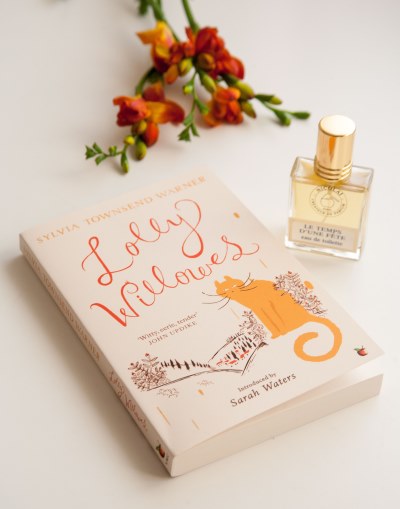
The heroine of Sylvia Townsend Warner’s novel, Lolly Willowes, rebels against society’s expectations. It’s a common enough theme, except that her rebellion takes an unconventional turn. Laura Willowes’s father dies when she’s twenty-eight, and the family council decides, against her wishes, that she should leave the country estate where she grew up and move to London. Treated as “a piece of family property forgotten in the will,” she becomes attached to her older brother’s household, where she’s expected either to marry or be useful as Aunt Lolly. She steadfastly refuses to do the former, and eventually she shocks her relatives by announcing that she will live on her own in a village called Great Mop. To safeguard her freedom, she becomes a witch.

Townsend Warner paints Laura’s transformation from Aunt Lolly to her own self through a series of events, most of which involve small sensory pleasures, out of which “she had contrived for herself a sort of mental fur coat.” They include second-hand bookshops, soaps, roasted chestnuts eaten in bed and cut flowers. Her relatives look down upon such frivolous–in their eyes–expenses, but for Laura they become an antidote to her dull, senseless life and catalysts for her awakening.