Victoria: 2669 posts

Aedes de Venustas Grenadille d’Afrique : Perfume Review

44444

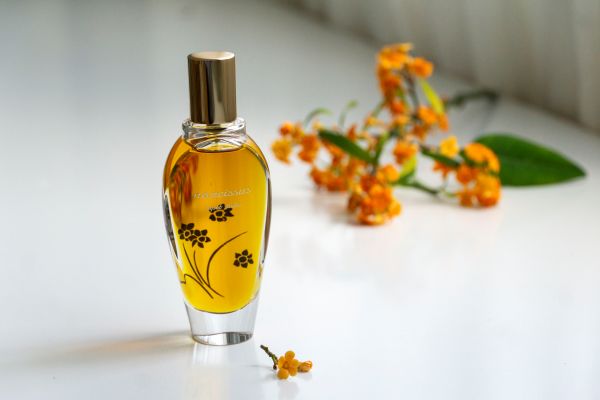
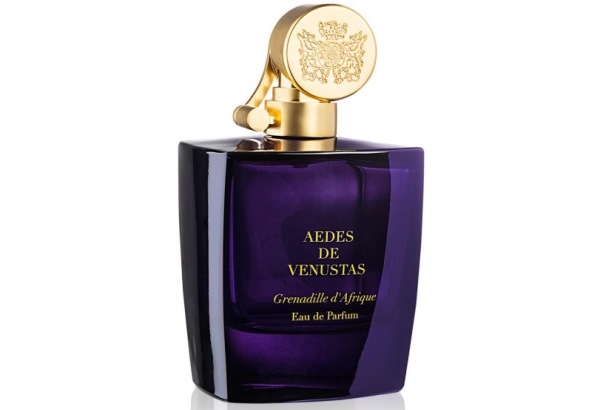
When Serge Lutens came up with an idea for Shiseido’s Feminité du Bois, he was asked so often about his “vision of a woman” that he got exasperated and said that he wasn’t making a perfume that smelled of any woman, that he merely wanted the smell of Moroccan cedar. That was in the early 1990s. I’d wager that today few briefs will surprise a perfumer, even as in the case of Aedes de Venustas’s Grenadille d’Afrique, the request is for ebony, “from crackling sap to balmy resin and from smoky wood to sun-heated stone… [and] also the primal landscape in which it grows.” For this, we have to thank Lutens and other niche pioneers.
grenadille-aedes

At first glance, Grenadille d’Afrique is a classical Aedes perfume–dry woods, peppery spices, amber, a hint of incense. With seven fragrances in its collection, the New York boutique has put together a coherent, well-edited lineup. Even if it’s famously enamored with incense, its touch is delicate enough, neither the church nor the ashram. Grenadille d’Afrique, however, brings a new element that I haven’t noticed before–retro glamour.
Continue reading →

Recommend Me a Perfume : September 2016

Bois de Jasmin is back with its “Recommend Me a Perfume” thread. You can use this space to ask any questions about perfume, including fragrance recommendations, and of course, share your discoveries.

van-den-tempel

How does it work: 1. Please post your requests or questions as comments here. You can also use this space to ask any fragrance related questions. To receive recommendations that are better tailored to your tastes, you can include details on what you like and don’t like, your signature perfumes, and your budget. And please let us know what you end up sampling. 2. Then please check the thread to see if there are other requests you can answer. Your responses are really valuable for navigating the big and sometimes confusing world of perfume, so let’s help each other!

To make this thread easier to read, when you reply to someone, please click on the blue “reply” link under their comment.

Photography by Bois de Jasmin, all rights reserved

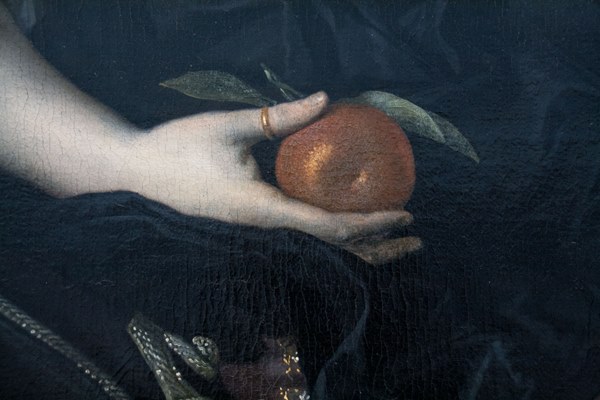
Abraham van den Tempel (c.1622 – 8 October 1672), a Dutch Golden Age painter. Portrait of Jan van Amstel (1618-1669) and Anna Boxhoorn (1642-1726), a fragment. Photography by Bois de Jasmin

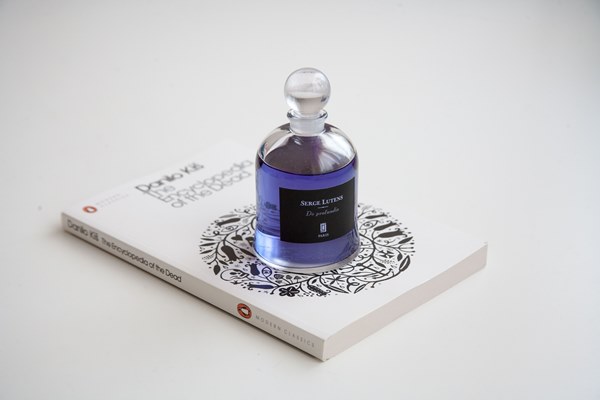
Perfume in the Library : Danilo Kis and De Profundis

There are two reasons for me to bring Danilo Kiš’s The Encyclopedia of the Dead into my scented library. First of all, his short stories were recommended by a Bois de Jasmin reader, Maja. Second, Kiš (pronounced as Kish) is a master at describing the intangible and the evanescent. Born in Subotica, Danube Banovina, Kingdom of Yugoslavia, Kiš (1935–1989) came from a family that he described as “an ethnographic rarity,” an artifact of the disappearing world–his father was of Hungarian Jewish origin, while his mother came from Montenegro. The lack of precision and neatly defined categories that mark the countries on the crossroads, the borderlands, are sometimes seen as problematic. But Kiš’s work, with its complex panoply of inspirations and traditions, shows that nebulous boundaries can produce many riches.

danilo-kis-lutens

The Encyclopedia of the Dead, written in 1983, contains 9 stories. Kiš insisted that he was writing neither science fiction nor fantasy, placing himself in the magical realism tradition of Jorge Luis Borges. There are references to many different writers such as James Joyce, Bruno Schulz, Vladimir Nabokov, Ivo Andrić and Miroslav Krleža, but inspiration from Borges is the main leitmotif. Some stories answer Borges’s puzzles, others take up Borges’s challenges–“let us imagine that someone shows a story instead of telling it…” (Borges, “Averroës’ Search”).

Continue reading →

White on White : Vyshyvanka and Poltava Embroidery

My favorite piece of clothing is a white linen shirt. The tailoring is plain–a straight, loose bodice is framed by a rounded collar and full three-quarter sleeves. In Ukrainian it’s called vyshyvanka, which means “an embroidered shirt,” and indeed the ornamentation is what makes this simple garment unique. The embroidery runs near the collar and falls onto the front of the bodice. It covers the sleeves so thickly that in some parts the fabric is hardly seen. The stitches become the bands of stars, snowflakes, lace and guelder rose, kalyna, a plant that in the symbolic language of Ukrainian art speaks of beauty and happiness. On my shirt, kalyna is abstract enough to be either flowers or berries, and it is intertwined with sinuous leaves and wispy stems. In the artist’s rendering of bile po bilomu, an embroidery technique native to Poltava, only one color is used to capture all of the nuances that in nature are given by a diversity of hues. The color is white.

white-shirt2

Bile po bilomu, or “white on white”, is among the oldest and most complicated embroideries, combining up to twenty different techniques and using drawn thread and counted stitch patterns to create an ornament full of light and shimmer. The artist who created my shirt is Nadia Vakulenko, one of the leading embroidery masters in Ukraine and a teacher at the Reshetylivka Arts Lyceum. Reshetylivka is a small town located in the Poltava region of central Ukraine. I first came here looking for any trace of my great-grandmother Olena and to learn about Ukrainian textile arts. The two aims were closely related, because Olena not only was one of the most creative people in our family, leaving behind several cookbooks and countless knits and embroideries, she also worked at Reshetylivka’s Clara Zetkin carpet factory.

Continue reading →

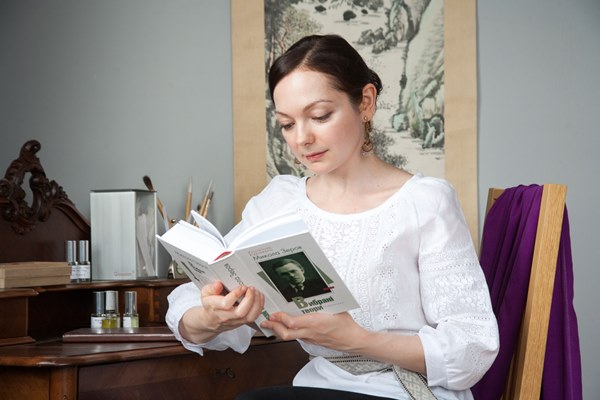
Perfume in the Library : The Pillow Book

When the Japanese courtier Sei Shōnagon started writing what is now known as The Pillow Book at the end of the 10th century, it was mostly done to alleviate the desperate boredom women experienced at the court. Their movements were circumscribed, and they mostly spent their days behind screens, observing while not being observed. Sei Shōnagon has a keen eye for detail and a sharp tongue, which is why even at the remove of many centuries, her book beguiles and entertains. How can one keep a straight face when she complains about dull tweezers (or mothers-in-law) and suggests that priests should be good looking because it would make listening to their sermons more agreeable.

pillow-book

Some of my favorite passages are of Sei Shōnagon in her lyrical mood. She describes scenery, sounds, textures and scents with such precision that I too feel the crinkly silk under my fingers and smell the spicy sweetness of incense.

To wash your hair, apply your makeup and put on clothes that are well-scented with incense. Even if you’re somewhere where no one special will see you, you still feel a heady sense of pleasure inside. [26] Things that make your heart beat fast (translated by Meredith McKinney)

Recently, I found a fragrance that reminds me of Japanese incense. It’s Eau de Rochas, a citrus cologne with a chypre layer. The choice may be unexpected, but once the fragrance softens from its initial sizzle of zest and rind, it becomes softly shaded and warm. The experience made me discover two things. First, Japanese incense is chypre, an accord of moss and woods, turned into smoke. Second, finding a scent to capture the facets of a favorite book enhances the experience greatly.

But of course, many of you know that, and in our previous discussions on the subject of perfume and books, you have shared some of your favorite combinations. I’d love to hear more.

Extra: The Smell of Books :: Perfume and Books: A Scented Story :: The Story of the Porter and The Ladies of Baghdad :: Virginia Woolf Mrs Dalloway :: Things that Make One’s Heart Beat Faster

Photography by Bois de Jasmin

As Seen On

Design by cre8d
© Copyright 2005-2026 Bois de Jasmin. All rights reserved. Privacy Policy