Culture: 426 posts

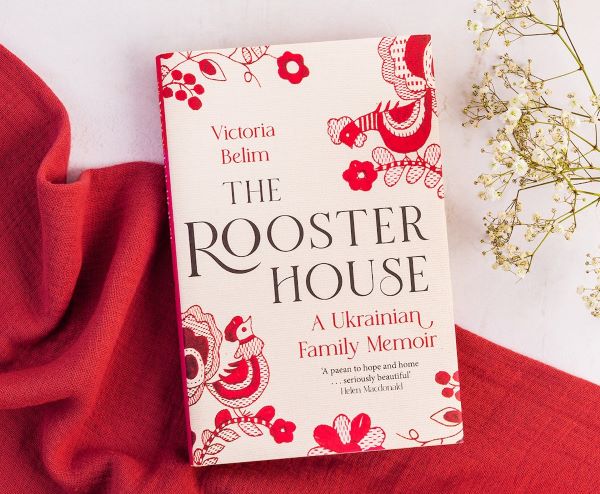
Art, travel, books, history. About my book, The Rooster House.

Three Classics and One Great Novel

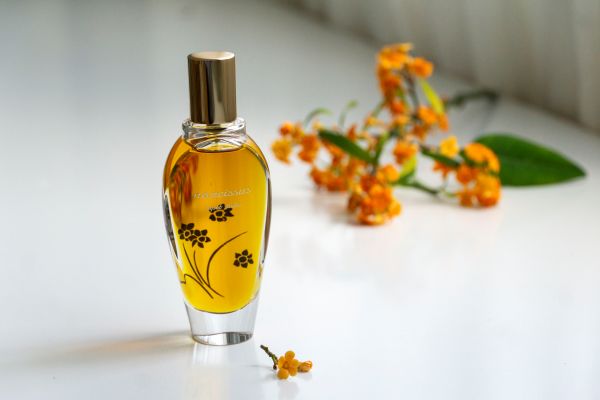
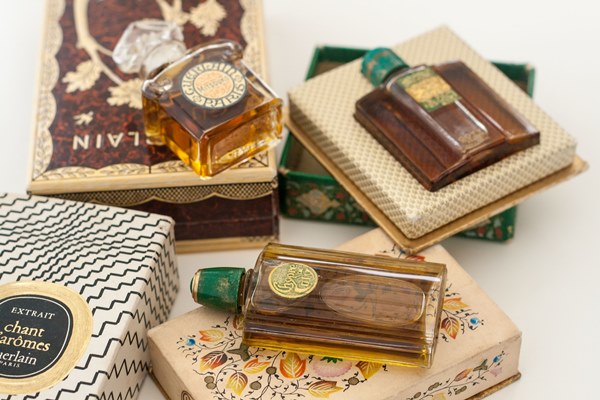
The first time I encountered a perfume that beguiled me was on the pages of a book. The sultry red-haired witch in Mikhail Bulgakov’s The Master and Margarita enticed women with the promise of “Guerlain, Chanel No. 5, Mitsouko, Narcisse Noir, evening gowns, cocktail dresses...” It would be some years before I smelled these perfumes, but their names left a “baffling but seductive” imprint, just as suggested by the novel.
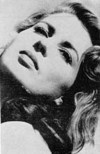
It is no accident that Bulgakov selected Chanel No 5, Guerlain Mitsouko and Caron Narcisse Noir. Those were the fragrances worn by his wife, Elena Bulgakova, the muse for Margarita in the novel. Elena Bulgakova’s granddaughter from her first marriage used to be part of my family. She often mentioned how much her grandmother loved fragrance, especially the three perfumes mentioned in the novel. Chanel No 5 evoked elegance for her. Mitsouko conveyed sophistication. And Caron was pure magic in its opulent glamour.

Continue reading →

Asya’s Idea of Paradise

The word paradise comes from the ancient Persian word pairidaēza, “an enclosed garden,” and for a Ukrainian, a cherry orchard is an idea of Eden. It has the same potent connotations as a white picketed fence house in the context of the American dream. It doesn’t mean that all Ukrainians dream of retreating to the village and tending to cherries—no more so than all Americans want to live in the suburbs and obsess over greens lawns—but the image has force beyond its mere components.

cherry-orchard1

In many folk songs, the cherry orchard is where friends meet, families gather for supper and beloved yearn for each other. It is a place of safety and beauty. It evokes all of the things that matter—family, love, friendship, bounty. It’s not a coincidence that one of the most popular works in Ukrainian literature is a short poem by the national bard Taras Shevchenko. Recite the opening lines to any Ukrainian—“A cherry orchard by the house. Above the cherries beetles hum”–and you will see his face light up and his mind travel to his own fantasy garden. “And nightingale their vigil keep,” he murmurs the poem’s romantic coda*.


Continue reading →

10 Books on The Art of Science

Stephen Hawking’s A Brief History of Time revealed to me how fascinating and beautiful physics can be. Whether he was talking about black holes and explaining that if the universe had a beginning then it was likely to have an end, page after page Hawking was inspiring me to see the world in a new way and to follow him in asking big questions. How does time flow? How did our universe come together? What is matter? What is the spirit? I had by then received a thorough science oriented education, but I had no idea that science could be discussed in such a creative and beguiling manner.

Hawking (January 8, 1942-March 14, 2018) had many achievements in the fields of theoretical physics and cosmology. One was his famous Hawking radiation discovery. Black holes were long predicted to swallow everything that crossed the surface that surrounded them, event horizons, but Hawking showed that they emit radiation and even glow because of the energy they radiate. It was a revolutionary discovery, because in the process of explaining it Hawking connected two seemingly incompatible domains, that of quantum mechanics and relativity.

Even more important, however, was Hawking’s drive to make scientific subjects, even complex ones like theoretical physics, part of popular culture. He found it a loss that with the increasingly technical nature of science and the overspecialization of academia as a whole, few people, other than specialists could understand it. In his books like A Brief History of Time, The Grand Design or The Universe in a Nutshell he set out to show the general public why science can enchant with its ability to answer complex questions or ponder the mysteries of life.

Continue reading →

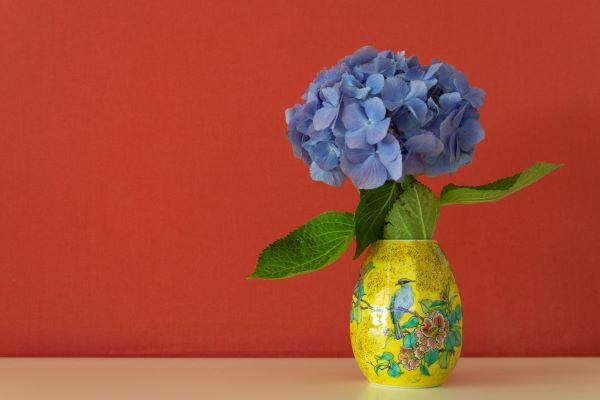
The Colorful World of Japanese Kutani Ceramics

The first time I made my own clay pot, I must have been six or seven years old. My mother’s family comes from Poltava, the central region of Ukraine famous for its arts and crafts, and ceramics in the town of Opishnya have a long tradition. My great-grandmother Asya visited the town every summer to select new dishes and pots and she must have taken me along. My memories of that visit are fragmentary, but I recall the softness of the clay, the brilliance of the green glaze, and a slight disappointment that my pot didn’t come out as symmetrical as I thought it should have been. However, that experience made me fascinated with ceramics and the way rough soil can assume the most exquisite of forms.

I rekindled my passion for ceramics while working and traveling in Asia. In Japan, the ceramic arts have a strong reputation and many different styles of pottery and porcelain exist, from the natural-looking Bizen ware to the ornate Imari ware. One could travel from the north of the country to the south and discover ceramics studios in every region, each showcasing a specific style of pottery. During one such trip, I discovered the colorful charm of Kutani ware.

Continue reading →

Perfume Industry, Diversity, and Becoming a Perfumer

I continue the topic of perfume industry professions. I receive many questions and most of them are similar, so I decided to record a follow-up video. This episode addresses questions from people interested to become perfumers but worried about diversity and not being able to fit in. I’ll explain based on my own experiences and offer several practical suggestions.

This topic is certainly vast, but I hope to touch upon a few key issues. The main idea I would like to reinforce is that the fragrance industry is open to anyone who is passionate, curious, and motivated. I don’t come from a perfumery background. I don’t even come from a country where perfumery is a viable profession. I had no connections to the industry. Yet, I managed to enter it, learn, and create my own niche in it.

If you have any questions, please let me know in the comments. I also recommend taking a look at Things to Consider if You Want to Become a Perfumer.

As Seen On

Design by cre8d
© Copyright 2005-2026 Bois de Jasmin. All rights reserved. Privacy Policy