Culture: 426 posts

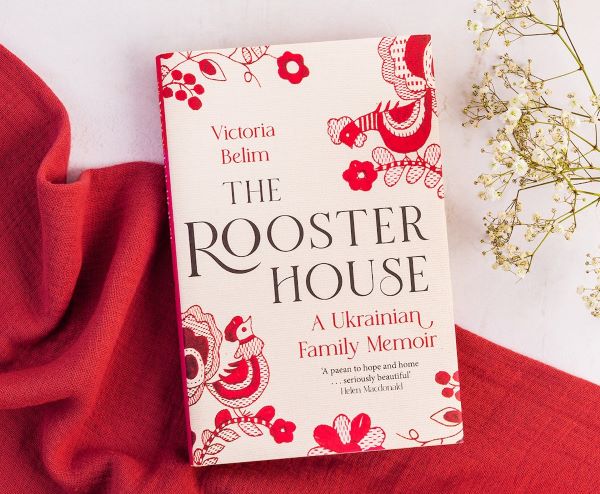
Art, travel, books, history. About my book, The Rooster House.

Sappho’s Moon

In an effort to start the week on a positive note, I bring to you a dose of beauty via Sappho. We travel to the island of Lesbos circa the 5th century BCE. Just as Sappho’s readers were enchanted then, we are moved today by her lyrical imagery. Little of Sappho’s poetry has survived, but the fragments of what remains are moving, elegant, and complex. I offer two of my favorite examples, and you can explore Penguin Classics as well as the sources I share below for more of Sappho in English translation.

While Sappho’s poetry is beautiful, it’s not an example of mere escapist pleasure–she lived through much turmoil, having had experienced exile and banishment. The politics of her day were just as unsettling as those of ours. Yet, her poetry uplifts and reminds us to dream, reflect and take joy in beauty.

I hope that you’ll enjoy them as much as I do. Please feel free to share something beautiful with us as well.

Moon

Awed by her splendor
Stars near the lovely
moon cover their own
bright faces
when she
is roundest and lights
earth with her silver
–From Sappho, A New Translation by Mary Barnard, 1958.
Continue reading →

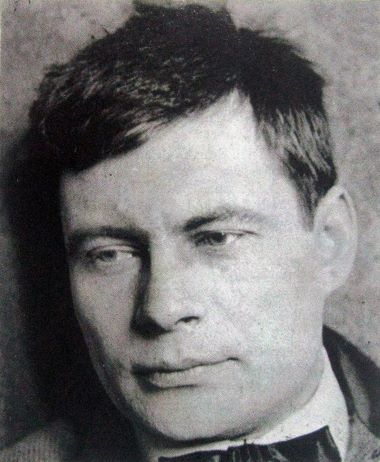
Poetry and Enigma of Mike Johansen

Why not start Monday with poetry? I’ve selected my favorite poetry by Mike Johansen (1895-1937), a Ukrainian poet of the 1920s. Johansen described himself as an enigma–half-Ukrainian, half-Latvian German, fluent in dozens of languages and yet making Ukrainian the medium of his prose and poetry. Johansen represents the avant-garde movement of the 1920s and he was one of the brightest stars of the same group that included people like Vladimir Mayakovsky, Velimir Khlebnikov and Mykola Khvylovyi. What distinguishes his work for me is his playfulness and humor.

Although he was a gifted translator at ease with Latin, English, German, and a number of Scandinavian and Slavic languages, his poetry is impossible to translate. It relies so much on the sound of Ukrainian that in another language it becomes something else altogether. Yet, even without understanding the language, the poem is hypnotic.

Continue reading →

Learning Languages and Reading Techniques

Reading is one of the biggest pleasures for me, and often when I learn a new language, I relish the chance to read in it. It’s also a great way to expose yourself more to the language and to make it part of your life. People often assume that “studying a language” means sitting down with a grammar book and doing exercises or spending time in the classroom, but that’s not enough. You have to surround yourself with the language by filling every free moment with it. Listen to music, watch YouTube clips about a subject you like, read.

And so today I will focus on reading and share a few tips. These are classical approaches, but they’ve been invaluable to me. In general, I start reading as soon as possible, even when I know that the text is too difficult. The most important part is to want to read the story, not to want to read in Arabic/French/Italian, etc. If you’re learning French and you long to read 19th-century novels, go for it. I don’t like texts especially written for language learners or children’s stories, but I have a soft spot for traditional fairy tales.

Continue reading →

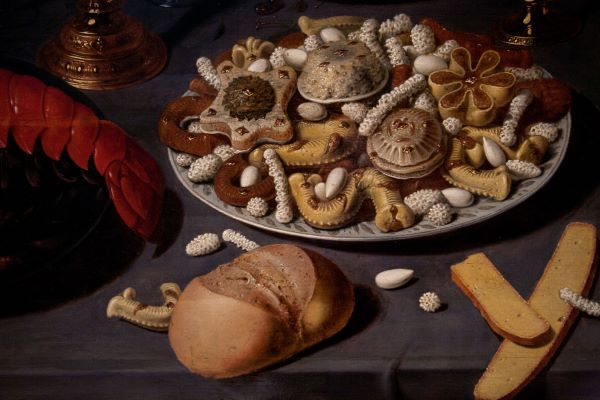
Postcard from Brussels : Flemish Chiaroscuro

Among the things I missed the most during the lockdown was going to a museum. The soft light in the exhibition halls, the scent of wood polish, and the silence add as much to my experience of the museums as the art itself–and the Royal Museum of Fine Arts in Brussels has plenty of it to admire. So when the restrictions were lifted, I headed to the museum and stood in front of my favorite paintings, greeting them like old friends. It was reassuring, a reminder that despite it all beauty will claim its own space.

The reason I feel this way rather acutely at museums is because they are testaments to historical events and traumas. Positioned though they are as shrines to art, wars, conquests, and colonialism have had their role to play in the riches that famous museums exhibit. It’s enough to make one ambivalent about the whole enterprise, and yet I still like museums. I still feel comforted by their ambiance. Art still inspires me to think differently, to push my boundaries, and to seek something new. The awakening of our curiosity is one of the greatest values of art, and deriving pleasure from finding things out is part of happiness as I see it.

Continue reading →

Learning Scents (or Words) : A Few Tips

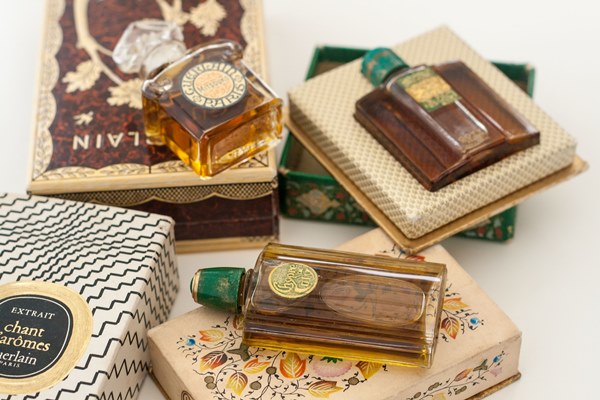
Recently I was making a new series of videos on learning languages, and as I was jotting down notes on learning words, I realized that for my studies I use the same memorizing techniques that I had used to learn ingredients in perfumery school. I wonder if my language learning didn’t accelerate during my training. After all, memorizing something intangible like a scent is even harder than memorizing a new word. Either way, I would like to share my tips on retaining smells in your memory, and you can see how you can apply these techniques to memorizing anything else.

If you wish to have a set of oils or spices ready, I recommend starting with no more 3. It might seem like very little, but if you learn to memorize those three scents and learn to pick them out in a blend, you can expand your exercises to a much greater number. Polish your technique with a few scents at a time.

For instance, my recommended smells for learning would be the following three: lemon (you can use the real fruit by scratching the peel), clove (you can use spices that you have at that time), and vanilla (you can use extract). You’re likely to have them already, and they’re used a lot in perfumery. Just because they’re familiar, however, don’t assume that you know all of their facets.

I emphasize the parallels with language studies to help you find your own connections. I’m sure all of you have pursuits that require memorization, so you can rely on the same techniques for learning aromas. Your techniques might differ from mine, but it doesn’t matter as long as they are effective.

Continue reading →

As Seen On

Design by cre8d
© Copyright 2005-2026 Bois de Jasmin. All rights reserved. Privacy Policy