Culture: 426 posts

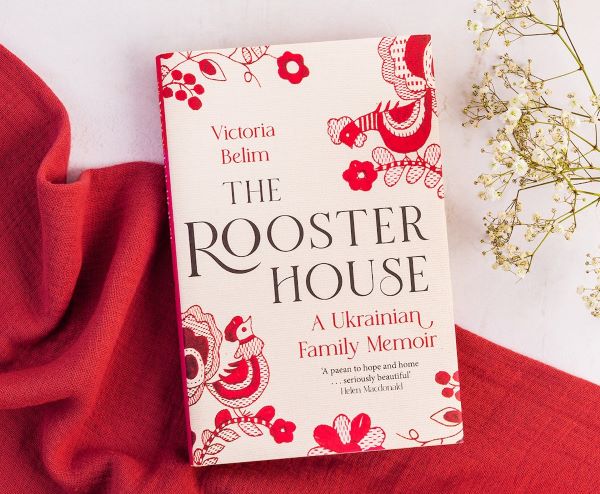
Art, travel, books, history. About my book, The Rooster House.

Haiku of the Day : Snowflakes of Autumn

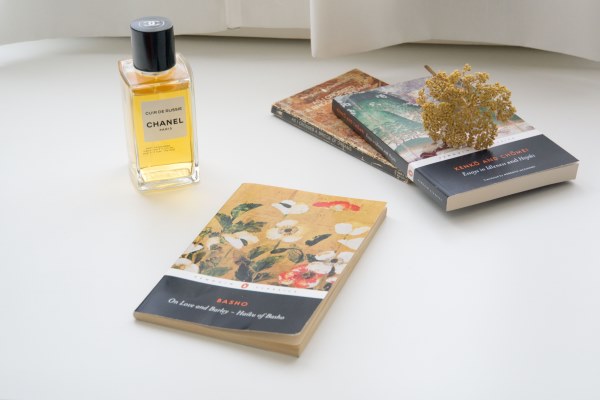
At the beginning of fall one of the resolutions I made was to go running on a regular basis. As they say, be careful what you wish for, because lately my days have been on a fast track. Nevertheless, one must carve out moments of contemplation even during busy, stressful periods, and my other autumnal resolution, to read more poetry, came to the rescue. Poetry concentrates images and sensations, and it’s an effect it shares with perfumery.
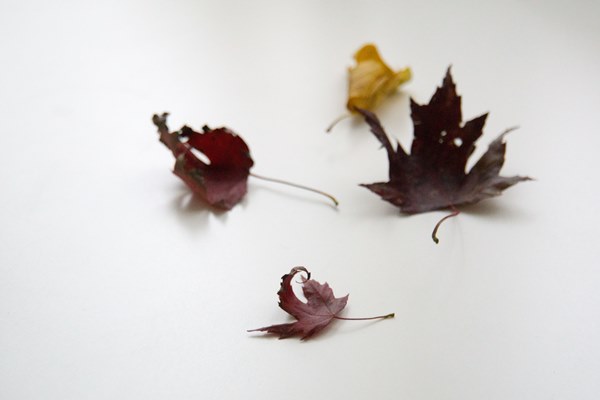
Japanese poet Yamazaki Sōkan (1465–1553) was a poet and calligrapher in the shogun’s court, but he gave up the courtier’s life and became a Buddhist monk. Though I have no wish to renounce the world, reading his poetry is like shutting out the noise and focusing on the beautiful. Today I bring you one of my favorite autumnal poems by this haiku master.

If they were silent
flights of herons on dark sky –
snowflakes of autumn.
Continue reading →

Georgian National Ballet : Dance and Dazzle

If Georgia’s cuisine is any indication, this country’s other arts are equally dazzling, especially music and dance. The first time I saw Georgian dancing was when the Georgian National Ballet Sukhishivili-Ramishvili visited Kyiv during my childhood. By then I had already studied classical ballet for several years, so it was hard to impress me with complicated turns or jumps, but when the Georgian troupe took stage, it charged up the whole auditorium with so much energy that for the two hours of the performance I felt myself soaring. I have since seen hundreds of dance performances, both folk and classics, but this feeling of intoxication and euphoria returned only on a few occasions since, the most recent being during Natalia Osipova’s performance of Giselle.

And it’s hard not to be moved watching Georgian dancing with its energy, rhythm, complex technique and precision. The clip above is the rehearsal of the same troupe I saw as a child, but of course, with a new generation of dancers. Sukhishvili-Ramishvili Ballet is based on traditional Georgian dancing, though they incorporate classical ballet elements to polish the movements further. Men dancing on bent toes, though, is part of the traditional repertoire, predating ballet’s en pointe technique. Although this clip is only the rehearsal, it gives you a sense of the troupe’s virtuosity. I watched it at least ten times, and I still hold my breath when the dancers do pirouettes on their knees, then raise themselves en pointe before jumping in the air and holding a trinacria-like shape for what seems like minutes.


Continue reading →

5 Ways to Transition Into Fall

In Europe the transition from summer to fall feels more acute, because people still take their August holidays and many stores are shuttered with the forlorn “Nous Sommes en Vacances” placards in their windows. I love having the city to myself, serene, calm, dusty. But little by little, it comes to life, as people return to resume their businesses, to start school or work. Now that half of September has passed I still can’t come to terms with the end of summer. So, I have my small solutions to make la rentrée, the official start of the school year in Belgium–and the official end of my vacation–more bearable.

Autumnal Resolutions

Some people make New Year resolutions, while I keep mine for fall. Instead of the end of vacation, let this period feel like a start of something positive. None of my resolutions are of a punishing nature; rather, they’re about things I keep meaning to do but keep putting off. For instance, this fall I decided to test my great-grandmother’s cake recipes that she wrote down during the wartime food shortages in order not to forget them. My second resolution is to finish the full cycle of Marcel Proust’s In Search of Lost Time. My final resolution is to explore more of Brussels. During my first years here, I used to set aside time each weekend to discover something new about the city, and as a result, it quickly became my own. But as travel and work obligations piled up, I haven’t been venturing out as much. This fall I will go back to my wandering ways.

Continue reading →

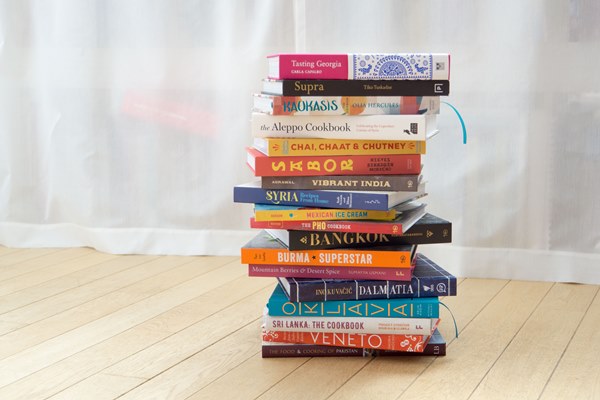
Top 15 Cookbooks for Fall : From Venice to Sri Lanka

If like me, you haven’t accepted the end of summer and would like to carry a sunny note through fall, there are several means to achieve it. For instance, scents can help but so can flavors. One of the reasons I love cooking is that it allows me to blend two of my passions–and savor the results. This fall, cooking is even more exciting because 2017 has been a year with many excellent cookbook releases. I had difficulty picking just a couple, so I decided to show you my favorite 15 books, from which I’ve cooked already and which I recommend wholeheartedly. They will satisfy your hunger as well as your wanderlust.

Europe

Veneto: Recipes from an Italian Country Kitchen by Valeria Necchio

Venice is on the well-trodden tourist trail, but its food and that of its region isn’t. This is a shame, because Venetian dishes blend a full spectrum of flavors and ingredients like polenta, pine nuts, rosemary, raisins, shellfish, white wine, and saffron. Veneto is Valeria Necchio’s debut cookbook, and it’s exquisite. I don’t mean the photographs and styling, beautiful though they are. The recipes are the only thing I’m interested in. For a taste of real Venetian cooking, I suggest trying fried marinated pumpkin with onion, pine nuts and raisins, prawn and Prosecco risotto, stir-fried beans with basil and garlic, and ricotta pudding cake.

Continue reading →

Nazik Al-Malaika on Why Do We Fear Words

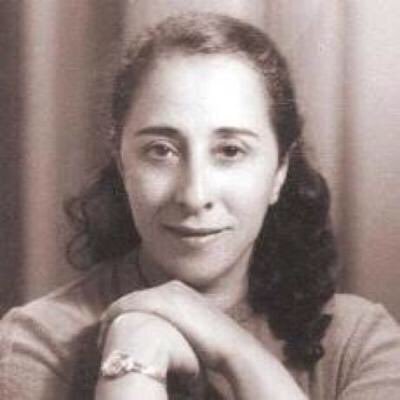
Do you want to feel impressed and inspired? If so, here is the story of the Iraqi poet Nazik al-Malaika (1923-2007). Her life could be a movie script–wrote her first poem at the age of 10, studied at Princeton before it accepted women, established a university, turned the ancient tradition of Arabic poetry on its head.

If anything, my synopsis understated what a meteor this woman was. Al-Malaika was born into a literary family. Her father was a teacher and her mother was poet, who as was common at the time, published under a male pseudonym. Nazik al-Malaika not only would revolutionize Arab poetry by adopting a novel, free-form style, but she also would secure a place for women in literature and lend her name to a poetry prize. Al-Malaika won a scholarship to study literary criticism at Princeton where she was the only female student. She earned a comparative literature degree from the University of Wisconsin in 1959, and when she returned to Iraq, she taught at the University of Baghdad and helped to establish the University of Basra. The rise of the Ba’ath Party forced her into exile in 1970, and al-Malaika lived the rest of her life in Egypt, where she published several collections of poetry and prose.

Continue reading →

As Seen On

Design by cre8d
© Copyright 2005-2026 Bois de Jasmin. All rights reserved. Privacy Policy