Culture: 426 posts

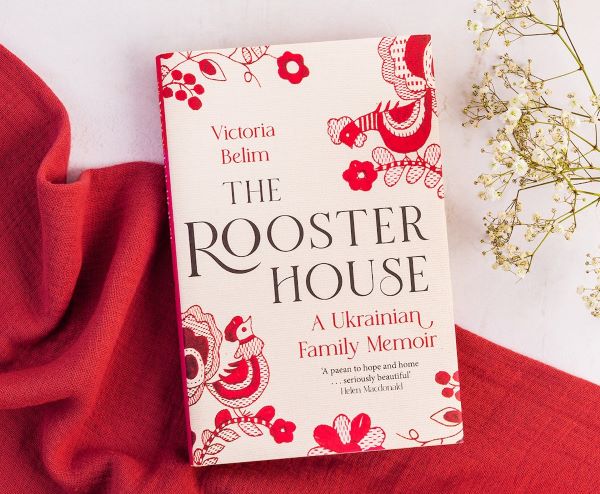
Art, travel, books, history. About my book, The Rooster House.

How Books Smell : My New Christmas Themed Article in Oh Comely Magazine

This month I have an article titled How Books Smell in the mid-winter issue of Oh Comely. Oh Comely is a magazine covering food, recipes, film, fashion, music, art and culture. It’s based in the UK and you can subscribe or buy any of its six yearly issues online at the Oh Comely store, or in shops all over the UK and internationally (here is the stocklists). It’s an independent magazine with a creative and refreshing approach to art, culture and lifestyle topics, and I think that many of those who read Bois de Jasmin will enjoy it too. Its latest issues included stories on poignant prose, Victorian women, dressing like your favorite literary heroine, and the art of keeping secrets.
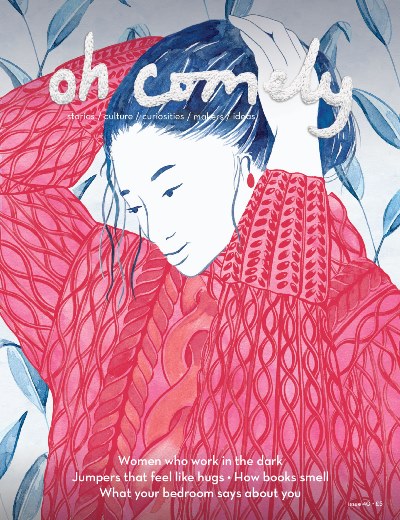
My article is on the topic that’s close to my heart–books and scents. I explore the sensory pleasures of reading and explain how I enhance it by visualizing scents in my favorite books. The two authors who guide me are Marcel Proust and Nikolai Gogol. The article also features incense inflected hawthorns, moon-stealing devils, Christmas revelry, and saffron brandy. I hope that you will like it.

The cover of Oh Comely 2017 winter issue.

Herve Leger : His Bandage Dress and His Perfume

Courtney Love’s “Doll Parts,” Vogue, and Hervé Léger’s bandage dress are my strongest associations with the mid 1990s. It was the summer I came to the United States, and while my parents tried to put our life together in a new place, I spent those first sweltering months in the American suburbs babysitting my little brother, watching MTV and reading magazines at our friends’ house. My mother had one bandage dress that she saved for special occasions. It was a sleeveless, knee-length piece made out of bands of white fabric. It hugged the body in a seductive way, and yet somehow it looked elegant, rather than revealing. From time to time I would put it on, douse myself in Lancôme Trésor and imagine being grown up and sophisticated someday. If the glossy pages of Vogue teased with their unattainable fantasies, the bandage dress was the concrete embodiment of my yearnings for glamour.


The bandage dress put many under its spell, and it propelled its creator, Hervé Peugnet, to stardom. The young couturier started his career as a hat maker, so the idea of creating a dress out of strips of fabric was inspired by millinery techniques. The bands of fabric were knitted in a panel, rather than cut and sewn, which gave the garments their structure and flow. Peugnet worked under Mr. Lagerfeld at Fendi and later at Chanel, and it was Lagerfeld who suggest that he change his name to something easier for English-speakers to pronounce.  Hervé Léger, as in “légèreté”, French for “lightness,” opened his own boutique in 1984 and dressed many celebrities in the 1990s.

Continue reading →

Rose, Jasmine, Osmanthus : The Pleasures of Floral Teas

Some of the most interesting combinations involve tea and flowers. Scent science explains why such pairings have become classics – tea leaves and blossoms such as gardenia, violet, rose or osmanthus have a number of fragrant compounds in common. When blended, the complementary aromas create affinities that enrich the taste of tea as well as its fragrance. In my latest FT column, Discovering The World’s Finest Floral Teas, I explain what makes flower notes pair so well with tea and share my favorites.

You can read the full article by clicking here. I also welcome you to take a look at the Bois de Jasmin tea archives, because we have quite a selection of posts on making tea, enjoying seasonal variations, taking it with roses, jasmine, roasted rice, or even experimenting with Estonian and Thai blue teas. If you’re after a tea-based perfume, here is my list, Best Tea Perfumes in 10 Different Styles.

As always, I’d love to know about your favorite teas, floral and otherwise.

Photography by Bois de Jasmin, Ti Kuan Yin tea with a few drops of rosewater. Ordinarily, I don’t tweak Ti Kuan Yin teas at all, because they’re perfect as they are, but this combination turned to be so bright and complex that I’m going to enjoy it from time to time.

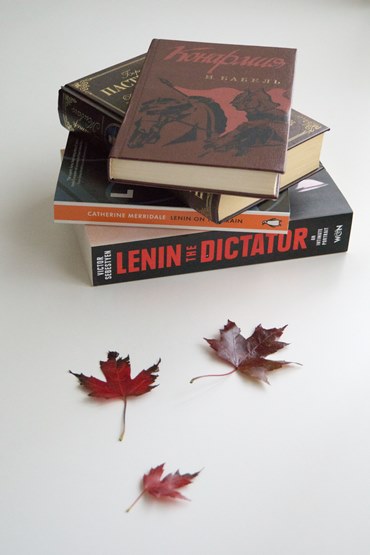
10 Books to Read About the Russian Revolution

My great-grandfather was a Bolshevik. Although he was too young to have participated in the events of the Revolution of 1917, he joined grass-roots Communist groups to spread literacy–and the word of Lenin. He was the first in his family to earn a university degree, and until his retirement he worked as a school teacher in central Ukraine. On the day marking the anniversary of the Bolshevik Revolution, November 7th, he donned the military honors he received during WWII and joined the parade.

Growing up in the Soviet Union, of which Ukraine was a part, I took the parades and processions for granted. I didn’t like them, because they felt perfunctory and empty of any meaning, but I participated, because refusing wasn’t an option. The older I got, the more I detested the slogans and the marches. “What did this revolution of yours achieve?” I would say to my great-grandfather whenever our discussions erupted into arguments. “Endless parades and endless lines?” The 1980s were a time of endemic shortages, when even basic goods like toilet paper disappeared from store shelves. When that happened, without a trace of irony we cut up the old issues of Pravda, the main Party newspaper whose name meant “Truth.” My great-grandfather was the only one who used it for its original intended purpose–reading the news.

Yet, for all his ardent belief in the revolution, my great-grandfather never romanticized it. I’m sure he would find the contemporary left’s nostalgia for a time they never experienced as deeply baffling. He might have thought that it was necessary to remove the corrupt, despotic tsarist system, but he recognized the tragedies it unleashed, especially the Civil War during which my great-grandfather lost much of his family. He was a believer and an idealist, but he wasn’t blind to the fact that the Red Revolution was followed by the Red Terror.

Continue reading →

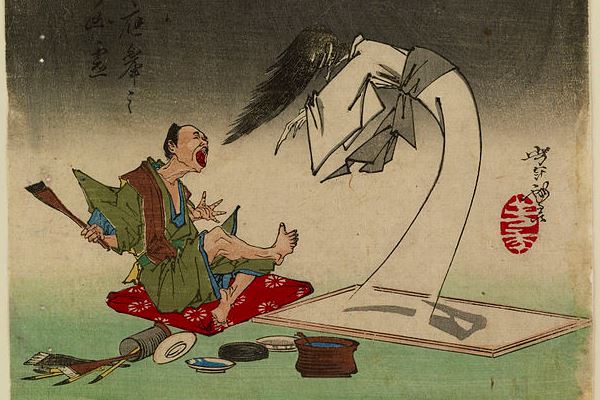
Japanese Ghost Stories : 5 Books

Frightening oneself with ghost stories or haunted houses is a summer activity in Japan for the chilling frisson it’s believed to provide. Yet the Japanese literary tradition filled with spirits, ghouls, specters and other supernatural phenomena is so rich that a full year wouldn’t be enough to even scrape the surface. Since dark fall evenings are a good time to delve into it, I decided to share five of my favorite Japanese books over whose pages hover ghosts.

The Japanese concept of a ghost, yūrei, is quite complex, but in its essence, it’s a soul of someone who died in a violent manner and may not have had proper funeral rites. The soul then returns to the living world to seek vengeance and to torment those who were responsible for the crime. The purpose of Japanese ghost stories, however, is not only to paint the frightful deeds of the unpacified souls, but also to examine the complexity of love, betrayal, loyalty, faith, and other human emotions and dilemmas.

Japanese Gothic Tales by Izumi Kyoka, translated by Charles Shiro Inouye

“She seemed too delicate for someone living in the mountains. Even in the capital you don’t see many women as beautiful. As she rubbed my back, I could hear her trying to stifle the sounds of her breathing. I knew I should ask her to stop, but I became lost in the bliss of the moment. Was it the spirit of the deep mountains that made me allow her to continue? Or was it her fragrance? I smelled something wonderful. Perhaps it was the woman’s breath coming from behind me.”

Continue reading →

As Seen On

Design by cre8d
© Copyright 2005-2026 Bois de Jasmin. All rights reserved. Privacy Policy