Culture: 426 posts

Art, travel, books, history. About my book, The Rooster House.

In Love with the Fifties : Palais Galliera Exhibit

If Paris is your destination anytime between now and November 2, 2014, and if you love French fashion, visiting the Palais Galliera is a must. The exhibit focusing on fashion from 1947-57, expertly curated by Olivier Saillard, is a thrill for the senses–the colors, shapes, textures. Pierre Balmain, Madame Grès, Hermès, Jean Dessès, Paul Daunay, Carven, and of course, the king of couture Christian Dior are given plenty of space, and the gowns presented are splendid.
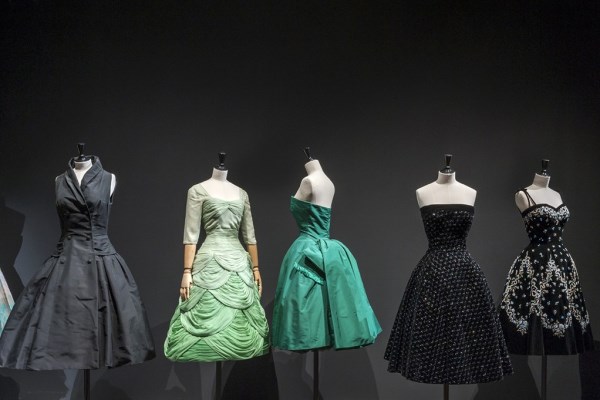
wwd

As Suzy Menkes says in her Vogue article, Those Fabulous Fifties!, “Saillard also has an eye for tiny details. He displays the noble sculpted outfits from Cristóbal Balenciaga and the shapely, round-hip dresses of Jacques Fath. But there is also room for an un-labelled transparent plastic handbag, its top decorated with pink roses to match the decorative fresco on the museum’s ceiling.”

Besides gowns, you can admire lingerie, bikinis in Hawaiian patterns, hats, gloves and lots of other accessories. To get a taste of the exhibit, please take a look at Palais Galliera’s website.

The museum of fashion remains open only during its exhibits, due to the fragile nature of its collection.

Palais Galliera
Musée de la mode de la Ville de Paris
10 Avenue Pierre 1er de Serbie, Rue de Galliera, 75016 Paris, France
+33 1 56 52 86 00
www.palaisgalliera.paris.fr

Photograph via WWD

Bonus: Angela of Now Smell This writes about the exhibit and her explorations of Paris in August.
Elie Roger and Estee Lauder Knowing

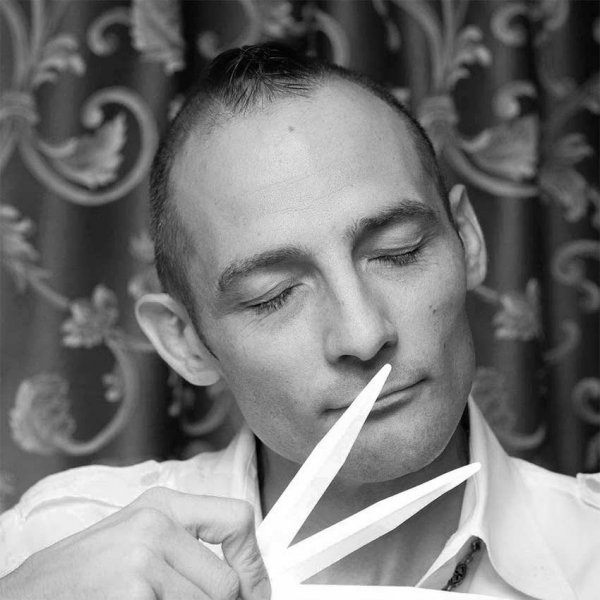
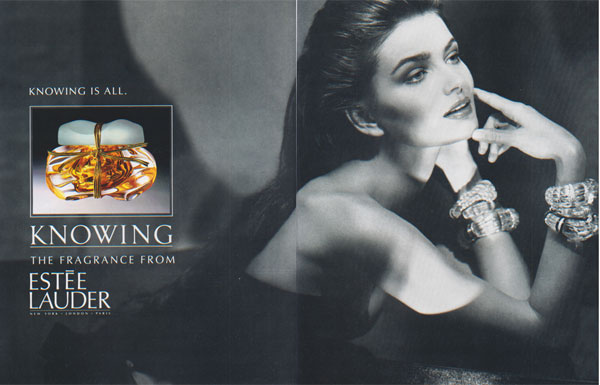
Who was the perfumer behind Estée Lauder’s Knowing, a chypre of roses tangled up with dark moss? For many years, Lauder, like many other companies, didn’t put the perfumers into the limelight, and this is why Elie Roger’s name is not often linked with Knowing if you search for the information online. Roger worked for the fragrance house of Firmenich, and he signed both Knowing (1988) and Clinique Wrappings (1990). While his portfolio wasn’t as extensive as that of some other perfumers, he had a distinctive style, and both Knowing and Wrappings remain beloved classics.

estee-lauder-knowing

Roger passed away on Nov. 19, 2010, after a long career, which started in 1946 in Grasse, France, his hometown. He worked for 20 years at Firmenich, both in New York and Paris, and he received the American Society of Perfumers’ Lifetime Achievement Award in 2001. Since he crafted two American classics as well as some other interesting fragrances, it’s well-deserved recognition.

Continue reading →

Wildflower Walk on The Eve of Ivan Kupala

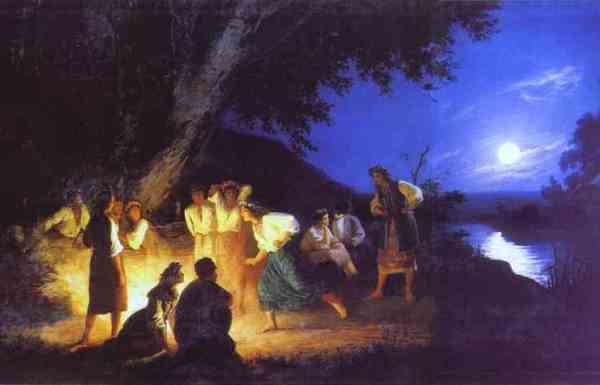
Bonfires are being prepared on the sandy beach lining the Vorskla, a river that cuts Poltava in half and hugs our hamlet within the city’s suburbs. One group of girls is busy weaving wreaths from wild flowers. Heaps of daisies, yarrow and cornflowers are spread out on the ground around them. Further along the bank, grills are being set up, and people are staking out spots with towels and empty crates. It is still early enough, several hours before the sun takes a dip in the river. The scent of hot sand, hay, wild thyme, cigarette smoke and water lilies hangs heavy in the still air. We are waiting for Ivan Kupala’s Eve.

kupala

Ivan Kupala is the Slavic version of the midsummer festival marking the summer solstice. According to the old style Julian calendar used by the Orthodox Church, it’s celebrated on the night of 6/7 July in Ukraine. (In neighboring Poland, Noc Kupały, just like the Swedish midsummer celebrations, takes place on 23/24 June.) Ivan means John (as in John the Baptist) and Kupala comes from the Slavic word for bathing. Although Christian traditions are woven into the festival, the roots are clearly pagan. Water and fire intertwine in various rites, and the river is worshiped as much as the saint himself. Today, the celebrations may involve more beer and barbecue than romantic rituals, but women still float wreaths in the streams to divine their future. Candles are still lit on the river bank. Couples still jump over the bonfire to test the strength of their relationship.

Continue reading →

From Petal to Essence : Grasse Rose Harvest

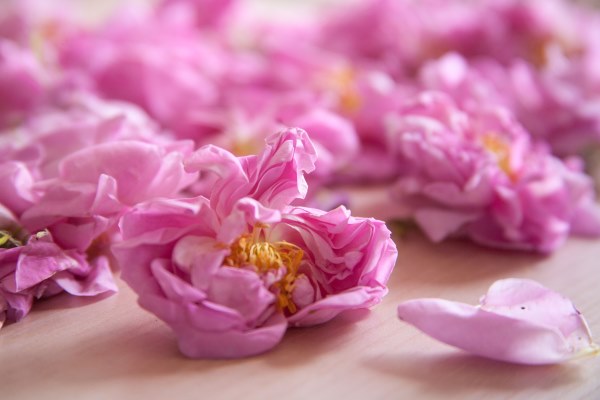
I’m drunk on roses. I’m flailing my arms around, making snow angels in the rose petals, and I’m laughing uncontrollably. The experience of sinking into a mass of soft pink petals is an exhilarating sensation, but it’s the scent that thrills me. The fragrance is clinging to my hair, my clothes, my skin. It clings to the rough cement walls in this garage filled with sacks of rose blossoms ready to be processed into essence, and it’s so rich and heady, it feels like a tangible presence. The aroma–linden honey, grated lemon zest, and warm raspberry–will follow me around for days, and even now, as I’m writing with a bowl of dried petals by my side, I can still smell the Provençal sun on them.

roses11

How many steps does it take for a flower to become perfume? I’m in Grasse, a town on the French Riviera, to get a glimpse into the intricate process of harvesting roses for the rose de mai essence. Painters express their vision with colors, but for perfumers and perfume lovers alike, the ideas acquire meaning with aromatics, so the art of making the essence is what we are to discover.

Continue reading →

Paul Vacher : Perfumers on Perfume

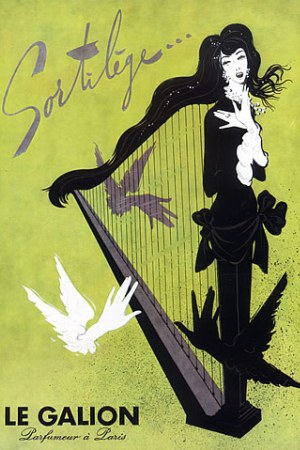
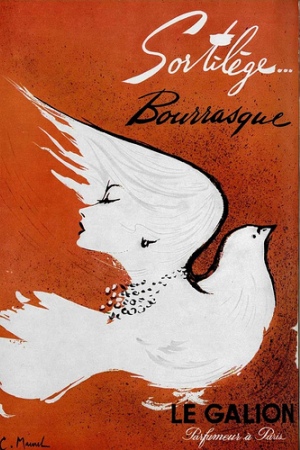
Do you wear Arpège or Miss Dior? Have you smelled Le Galion fragrances? In partnership with the Osmothèque, I offer you an excerpt from Indiscretions apropos of a new perfume, a 1943 magazine article by Michel Arbaud, which pays tribute to French perfumer Paul Vacher. Vacher worked at Le Galion and Guerlain, and he collaborated with many legendary perfumers on creations that still inspire us. He co-authored Miss Dior for Christian Dior in 1947 with Jean Carles, and Arpège for Lanvin in 1927 with André Fraysse. In the article, Vacher describes how he would create a seaside inspired perfume and what notes lend fragrance a sensual effect.

sortilegesortilege1

Vacher had an interesting approach to fragrance, but he’s much less well-known to most perfume lovers than some of his contemporaries. Part of the pleasure of dipping into the Osmothèque’s archives is hearing the voices of other creators, not only the most prominent ones. Vacher passed away in 1975, but Arpège remains an icon. Miss Dior has suffered somewhat post reformulation, but you can still smell it at the counter. In other good news, Le Galion is reintroducing its collection, including the exquisite Sortilège and Iris. Both were created by Vacher and reorchestrated by Thomas Fontaine, the current in-house perfumer at Jean Patou.

For other articles from the Perfumers on Perfume series, please see perfumers-on-perfume tag.

“The true creator of perfumes, not he who is satisfied by a decent mixture that is more or less novel, but he who ceaselessly searches for a new range of smells, rich in suggestion and reverie, always filled me with a somewhat superstitious admiration. A strange poet is he who has no words; a strange musician who uses no sound; a strange artist whose means of expression consist of a quantity of little labeled bottles that contain the essence, so variously aromatic or malodorous, of that in the world which touches most violently our olfactory nerves.

Continue reading →

As Seen On

Design by cre8d
© Copyright 2005-2026 Bois de Jasmin. All rights reserved. Privacy Policy