Food & Fragrance: 176 posts

Articles about the gourmand pleasures, flavorful cooking, scent and taste experiments and tested recipe ideas

Cooks, Follow Your Nose : My Article in Zester Daily

The best way to find a perfectly ripe tomato has little to do with its shape, color or size. It is the unmistakable scent of salty caramel that demonstrates a tomato is at its peak. While green tomatoes can be reddened with ethylene gas, furaneol, the compound that gives tomatoes their distinctive aroma, accumulates only when a fruit is allowed to fully mature on the vine. Strawberries and mangoes share the same compound, and other fruits contain analogous aromatic molecules when fully ripe…”

Zester Daily, a publication devoted to food and drink, has published my article Cooks, Follow Your Nose. In it, I share how understanding the role of aroma and the power of our nose is essential for eating well, despite the fact that most cookbooks and food shows rarely acknowledge this.  Hope that you enjoy it!

Jasmine Ratafia and Rose Liqueur

IMG_6548s

I love reading old cookbooks. One is immediately immersed into another world, where the daily concerns, dietary beliefs and time constraints are very different from ours. The recipes reflect all of this, ranging from simple preparations to complex affairs requiring extra helping hands. Whether I open a 19th century book published in Russia or in France, I know that there is always something intriguing to anticipate, a new taste, a new technique, a new inspiration.

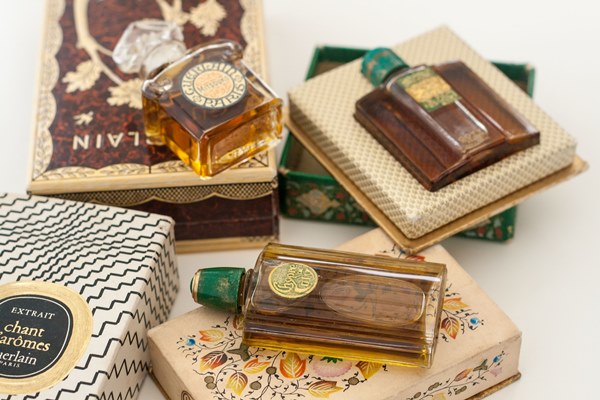
The main reason for my fascination with older cookbooks, however, lies in the explicit link between olfaction and cooking. Previous generations of cooks were quite savvy when it came to aromas, and they understood the basic principles of blending spices and herbs to create distinctive flavors. Recipes for perfumes were commonplace in cookbooks published before the 20th century, and those could be found alongside recipes for liqueurs and cordials. With the growth of the commercial perfume industry, the tradition of homemade fragrances waned and it is likely that many interesting preparations have simply been forgotten.

Continue reading →

Vanilla and Homemade Vanilla Extract Recipe

Vanilla

by Elise Pearlstine

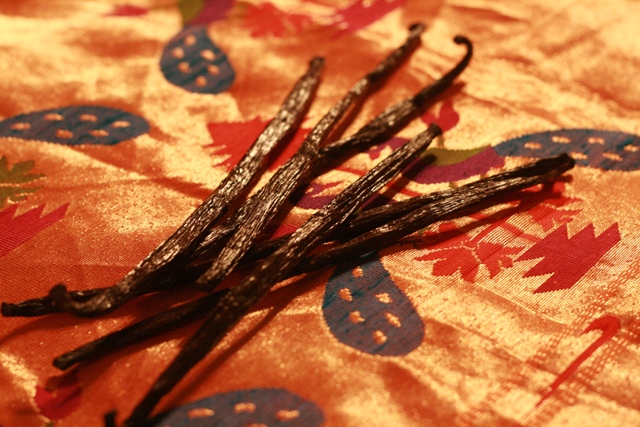
There is nothing quite so comforting as a dish made with vanilla, whether it is a rich, warm crème brulee or a dish of really excellent vanilla ice cream, especially if it is homemade. The vanilla bean is an ancient and popular flavor and fragrance ingredient. It is very difficult to describe without using the word ‘vanilla’ but I find a good extract or the beans themselves to have a fragrance that is warm, very sweet, balsamic, slightly earthy and very slightly floral. The odor can be tenacious.

Continue reading →

Scented Garden : Geranium and Spiced Arancello Recipe

Geranium cropped

By Elise Pearlstine

Sometimes the leaves, not the flowers, tell the story of an aromatic plant. I fell in love with the fragrant leaves of the scented geranium from my first sniff. From the rich, lemony smell of the citronella type to the green, floral, minty smell of a peppermint one, it is a wonder to rub your fingers over the rough, intricately shaped leaves to test the scent. There are many varieties–spicy ones, minty ones, as well as a beautiful pine-scented type with hints of rose and nutmeg. There are several hundred species in the wild. I once had a lovely chocolate mint variety that I worked very hard to keep alive in southern Florida but it did not make it through the hot summer months. It had a lovely, deep minty smell (the chocolate was mostly in my imagination) but it was a striking plant with purple streaked leaves. I gave up on scented geraniums for a number of years but recently bought six small plants – rose geraniums and attar of roses geraniums. Within a few weeks, the rose geraniums seemed to realize they were in Florida and quickly withered and died. The attar of roses plants, however, have stayed with me. I recently moved them into my office to get photos and just the act of moving them and putting them in a smaller room served to bring out the scent. They filled the room with a heady scent of rich rose with a lovely touch of green herbs.

Continue reading →

Exploring Edible Flowers : Hibiscus Sorbet Recipe

Edible flowers

By Elise Pearlstine

Hibiscus sorbet with wild orange and black pepper essential oils is deep red, tangy surprise that is also rich and slightly spicy, perfect for summer. Hibiscus is one of the more familiar edible flowers, especially as a tea, and the dried blooms are readily available in my nearby organic food store. Crystallized violets on cupcakes, rose petal jam, pansy ice cubes and nasturtiums in your salad – flowers add color, aroma and a hint of the exotic to your food creations. I love the idea of sautéed squash blossoms with a delicate, zucchini-like flavor. Both male and female squash flowers are edible and the female flowers have a tiny squash attached. Mustard flowers have a tangy, spicy bite just like the seeds. Another golden flower is the dandelion whose buds are edible and can be used to make wine. Purple lilacs – fragrant and slightly bitter but with floral overtones – make a lovely sorbet but can be easily added to a salad. Spicy carnation or dianthus (pinks) petals may be added to syrups. If your basil goes to flower, don’t worry, just pluck the flowering top and add the flowers to some herbal vinegar. Scented geraniums can be layered with sugar to provide a unique flavored and scented sweetener.

Continue reading →

As Seen On

Design by cre8d
© Copyright 2005-2026 Bois de Jasmin. All rights reserved. Privacy Policy