Christian Dior Hypnotic Poison : Perfume Review

44444

Matisse76

Star rating: 5 stars–outstanding/potential classic, 4 stars–very good, 3 stars–adequate, 2 stars–disappointing, 1 star–poor.

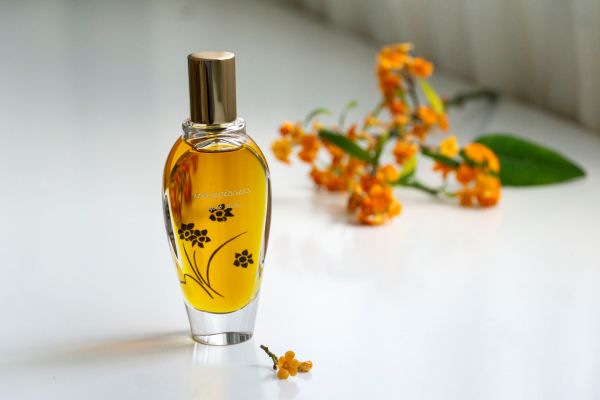
Spices folded into jasmine cream, with a metallic note cutting through the voluptuous richness is a vision of olfactory dessert that was created by Annick Ménardo. Having debuted in 1998, Christian Dior Hypnotic Poison does not shock like the original Poison. Instead, everything about its voluptuous oriental form is slow seduction. At the same time, it projects a comforting aura, with the sweetness of vanilla unfolding against the radiant freshness of musk and the milky bitterness of almonds.

Underscored by jasmine, a cloud of powdered sugar settles upon the base of elegant musk and vanilla. The musk note is almost austere, with a clean and metallic touch that contrasts beautifully with the bitterness of almond, conferring a restraint upon gourmand notes. ….

Continue reading →

Perfume Legends : French Feminine Fragrances by Michael Edwards

Perfume_legends

“Michael Edwards’s book represents a truly praiseworthy effort to help people better appreciate the great perfumes of this century,” says Edmond Roudnitska in his introduction to Perfume Legends: French Feminine Fragrances. Indeed, a perfume lover’s library is incomplete without this wonderful anthology, which combines beautiful illustrations with the comprehensive information on some of the greatest French fragrances. Edwards’s focus on perfume as an art form traced over the 20th century is an appealing vantage point, given the fact that he recognizes the synergy between the fragrance and the time in which it was created. He also notes the scientific discoveries that shaped the development of perfumery, such as the discovery of cinnamic aldehyde as the chemical responsible for the scent of cinnamon in 1833 by Dumas and Péligot, or the isolation of coumarin from tonka beans by Perkin in 1868. Moreover, the process of creation and forming of ideas that gave rise to some of the most famous fragrances is elaborated in great depth in Perfume Legends.

The book focuses on 45 fragrances, from Guerlain Jicky (1889) to Thierry Mugler Angel (1992), providing information on the creators, from the perfumers and the couturiers to the bottle designers and the executives of the perfume houses. …

Continue reading →

S-Perfume 100% Love : Perfume Review

55555

Gauguin57

Star rating: 5 stars–outstanding/potential classic, 4 stars–very good, 3 stars–adequate, 2 stars–disappointing, 1 star–poor.

Rose petals floating on water is the aspect of S-Perfume 100% Love that lends it a serene and wistful quality. Luminous accords are arranged like delicate patterns on Japanese silk, their translucence evoking a gentle touch. The composition captures the moment when one loses oneself in a reverie of perfect contentment. If this sensation could be bottled, 100% Love comes close.

100% Love was created by Sophia Grojsman, the nose behind fragrances like Jaipur by Boucheron, Eternity by Calvin Klein, Paris by Yves Saint Laurent, and Trésor by Lancôme. 100% Love is a fascinating fragrance in terms of the development of Grojsman’s artistic vision, whose earlier creations have been revolutionary in terms of their structure, where most of the formula was made up of only a few ingredients, with carefully chosen accents ornamenting the composition. In case of Trésor, four materials comprise 80% of the formula. The result is a panoramic, rather than a sequential composition, unfolding like a fan. …

Continue reading →

Hedione Luminous Jasmine : Fragrance Ingredient

Jasmine_grand What makes a perfect jasmine perfume? Jasmine absolute contains more than 300 different components, and traditionally, inspiration comes from the constituents identified. The aromachemicals would be combined in such a way as to replicate the fruity, flowery and animalic facets of jasmine, with additional green notes for capturing jasmine sambac. The effect of hedione (Firmenich tradename, also known as methyl dihydrojasmonate) on jasmine notes can be compared to a sunray hitting a flower. Given its ability to lend a radiant, warm quality to the floral notes, the perfume history of the last thirty years is incomplete without a discussion of hedione.

The name Hedione is derived from the Greek word “hedone,” which means pleasure–a fitting moniker for this luminous and compelling note. The material was discovered by Firmenich researcher Edouard Demole as he was analyzing the composition of jasmine essence. Hedione combines remarkably well with various perfumery materials, and its first significant usage of 2% was seen in Christian Dior Eau Sauvage, created by Edmond Roudnitska in 1966. A layer of luminous jasmine against the backdrop of herbs, patchouli, woods and coumarin makes Eau Sauvage revolutionary in its ability to interpret floral notes in the domain of masculine perfumery. …

Continue reading →

Article on Grasse in Newsweek

Rosesbasket_1

The origins of Grasse perfume industry can be traced to the 16th century. Currently, it is home to about 30 perfume companies. “Scents of the City” article (p. E-32, section Enterprise) in this week’s Newsweek gives the history and the current state of affairs in Grasse, along with tourism suggestions. (Link is no longer active)

As Seen On

Design by cre8d
© Copyright 2005-2026 Bois de Jasmin. All rights reserved. Privacy Policy