Autumnal Perfumes in the Spirit of the Season

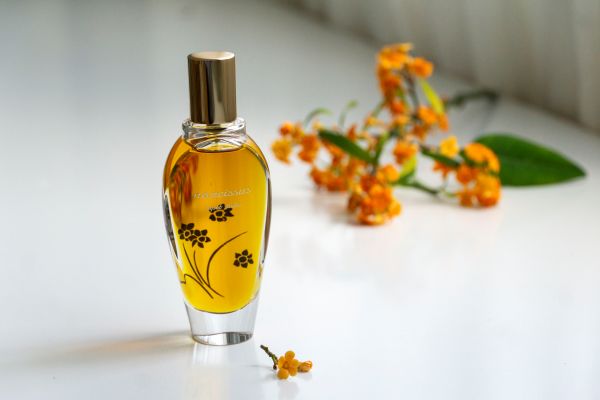
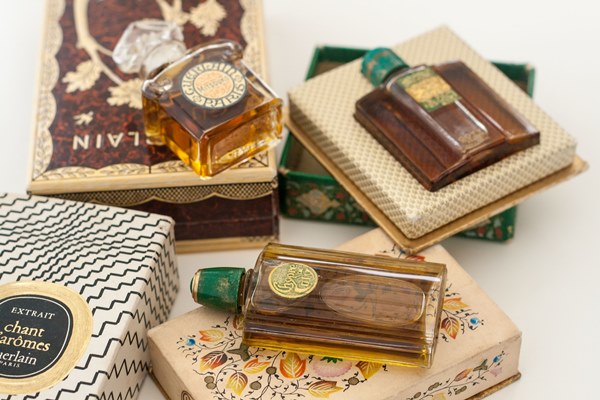
One of the most interesting principles in Japanese garden design is the idea of borrowed scenery, shakkei. Using existing landscape elements—distant mountains, ponds, and neighboring structures, a creator would plan the garden in such a way as to incorporate the surroundings into her composition and create her personal vision of nature. Perfumery is generally more about artifice and fantasy, but as summer fades, I too become inspired to borrow autumnal scenery for my fragrant accompaniment. My perfume choices become led by the scents of fall.

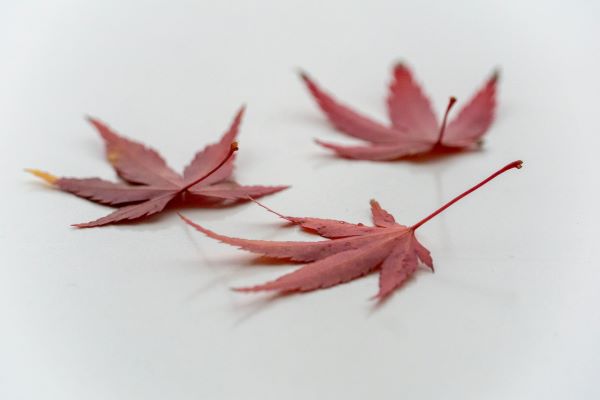
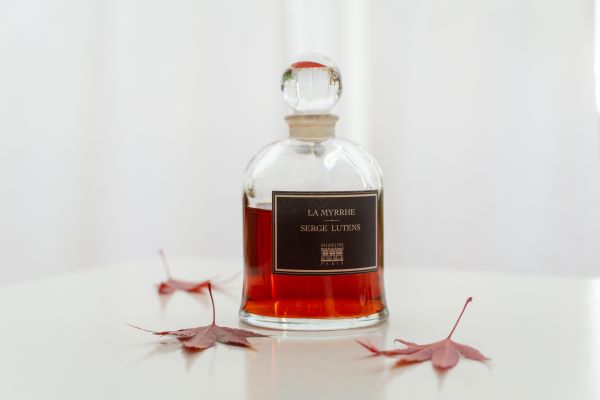
Even in the deodorized urban environment, autumn is a fragrant season. The moment that leaves start to fall, the air is filled with a mellow sweetness reminiscent of walnut shelves and faded leather. On my walks, I take a roundabout way through a park, kicking the golden leaves and glossy chestnuts with the tip of my boots. On my scarf I carry Serge Lutens La Myrrhe, a perfume that smells of dark licorice, myrrh and dried roses. Or I might select the delicate Chypre Rouge, also from Serge Lutens, a dark potion of amber, moss and honey.


Continue reading →

A Promise of Spring in Every Autumn

Autumn. Sonbahar in Turkish. Son means last. Bahar means spring. Bahar, a Persian loanword بهار, means also blossom, blossoming. And so, sonbahar, autumn, is literally the last blossoming. Turkish, one of the most elegantly structured languages I know, has its opposite counterpart— ilkbahar, which means spring. İlk means “first.” İlkbahar and sonbahar, spring and autumn. The first blossoms and the last. 

So in every autumnal leaf lies a promise of another spring. 

Photography by Bois de Jasmin

The Idea of Radiance and What It Means in Perfumery

Radiance in perfume is an elusive quality. The best way of understanding it is to envision a candle burning in a dark room, its glow lifting the dark shadows. A radiant fragrance is not necessarily a strong smell—it follows the wearer at a few paces, but it’s neither heavy nor overpowering. Capturing this duality seems impossible, but perfumers are adept at creating illusions.

Calice Becker is one such creator, and her fragrances illustrate the idea of radiance. Her Tommy Girl contains a green tea accord so luminous that it seems fluorescent. Another trendsetter is Becker’s Christian Dior J’Adore, a layer of flower notes as tightly woven as the millefiori ornaments of Murano glass. Perfumery students learn the craft much like artists, by copying the work of the masters, and when I was trying to achieve the variegated radiance of J’Adore, its complexity and nuances mesmerized—and confounded—me. Despite the conventional saying that too much knowledge kills the mystery, the experience made me appreciate both Becker’s craft and J’Adore’s lingering glow.

Continue reading →

Perfumes That Make You Feel Dressed Up

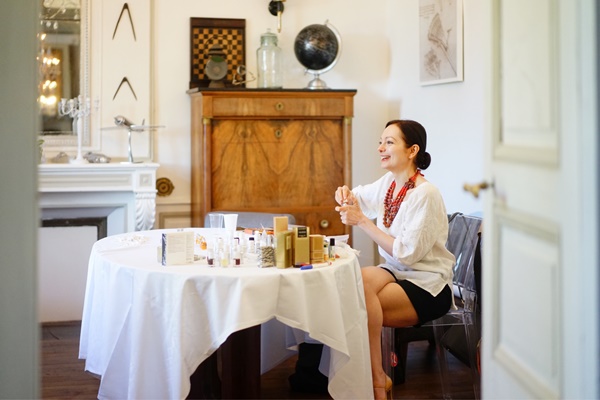
In the beginning of the lockdown, my friends and colleagues reveled in casual dress, especially those of us who have worked together for years and no longer felt embarrassed to take a Skype call in pajamas. Eventually, the Groundhog Day feeling of working from home settled in and whenever we would meet for a virtual happy hour, I’d see plenty of cocktail dresses and button-down shirts. Feeling dressed up is a terrific mood booster, and even if you lack an occasion to sport a beautiful outfit, why not put on a favorite dress to lounge around the house? My solution is different–and easier. I pick a perfume that makes me feel dressed up.

Certain fragrances make you feel like you need a ball gown to pull them off, but others feel like you’re dressed for a party, even if you’re wearing yoga pants and a t-shirt (my favorite outfit for working at home.) The choice of such fragrances is personal, linked more to your personal associations than with a specific scent, but the perfumes that make me feel dressed up have a few characteristics in common.

Continue reading →

Ukrainian Borscht Poltava Style : My Family Borshch Recipe

You can spell it borscht, borshch, or borsch, but by any name, it’s the dish that embodies the essence of Ukrainian food culture–colorful, rich and vibrant. To call it soup wouldn’t be correct, because Ukrainian borscht is a dish more like minestrone, pot-au-feu or cocido in its heartiness. Every region of Ukraine has different varieties of borscht. There is no one authentic recipe, although there are classical versions. Borscht in Lviv in the west of Ukraine is ruby-red and includes small mushroom-filled dumplings; it’s an essential Christmas Eve dish. In the south of Ukraine, borscht is made with fish. The Central Ukrainian-style borscht–the most popular variation–is famous for its sweet-sour flavors. Borscht can be made with beef, pork, chicken, duck, beans, and even fish. It can be vegetarian. It can be soured with tomatoes, beet kvas, vinegar, sour cherries, rhubarb or red currants. It can be flavored with mushrooms or dried plums. It can include white beets and be pale in color. It can be spicy with paprika or suave with sour cream.

Outside of Eastern Europe, borscht tends to be associated with Russian cooking, since people tend to label everything from the former Soviet Union as Russian. Borscht in different variations is also enjoyed in Poland (barszcz), Lithuania (barščiai) and Romania (borş). Nevertheless, if you think of borscht as soup with beets, cabbage and tinted red with tomatoes, then it’s the Ukrainian version that you have in mind. According to the Russian food historian, Olga Syutkina, that version became popular in Russia at the end of the 18th century, when this dish was introduced on the tsarist army’s menu. Originally, borscht was the food of the peasants, because it was easy to cook in advance and was nutritious enough to be served as a one-dish meal. With the immigration of the Ashkenazi Jewish community to North America, borscht–the English spelling gives away its Yiddish roots–became popular in the New World.

Continue reading →

As Seen On

Design by cre8d
© Copyright 2005-2026 Bois de Jasmin. All rights reserved. Privacy Policy