Perfume 101: 517 posts

Here you can find how to guides to selecting, testing and enjoying scents. Also includes are the lists of our top favorite perfumes for different occasions and articles covering all range of topics related to fragrance. If you’re curious to step inside a perfume lab (or even become an industry professional), this group of essays will be of interest.

5 Modern Perfumes with a note of surprise

A good fragrance smells familiar, a great fragrance smells surprising. The whole quest of modern perfumery can be summed by this sentence. We’re instantly attracted to the scents that remind us of something — a pleasant memory or another pleasant perfume, which is why well-liked, best-selling fragrances are often reminiscent of other perfumes on the market. A composition that rises above a merely easy-to-like, however, has an unexpected element. This surprising touch makes the scent linger in the memory and intrigue us. Finding the right combination of familiar and surprising is part of perfumer’s aim.

The five fragrances below represent different genres and styles, but the one element they have in common is surprise. I’ve selected examples that surprise rather than jolt to show subtle accents at play. These perfumes reinterpret classic themes, challenge conventions, and most importantly, smell wonderful.
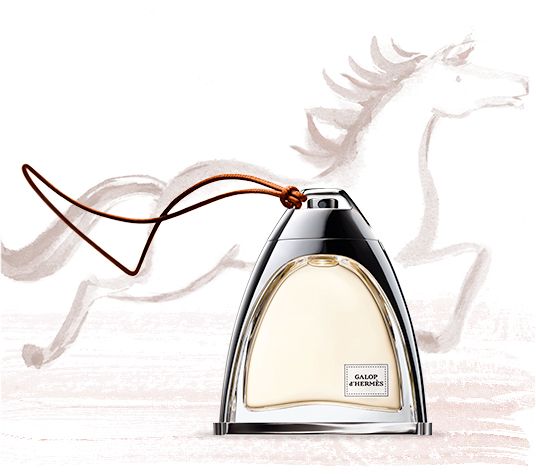
Galop d’Hermès

At the top of my list is Galop d’Hermès, a fragrance that appears at first as a pastel toned, chic rose but has a dark, smoldering heart. To wear Galop is to be enveloped in soft layers of leather, woods and musk. The new Hermès in-house perfumer Christine Nagel also added an accord of incense inflected rose and juicy quince, an additional surprise.
Continue reading →

Blending History and Architecture : Arquiste Parfumeur

I first came across Arquiste Parfumeur when I was looking for an original gourmand fragrance. Most of the dessert-inspired blends crossing my path were of the cotton candy and crème brûlée variety, and I wanted bitter chocolate. “Why not try Anima Dulcis?” suggested a friend, and gave me a small sample of cognac-colored liquid. It turned out to be the treat I was craving—dark, smoky, spicy, and properly indulgent.

Arquiste Parfumeur is a niche line conceived by architect Carlos Huber in 2012. In his original métier Huber specialized in the historical preservation of buildings, and his proclivities are obvious in the way he interprets history through scents. In Fleur de Louis, a graceful blend of jasmine, orange blossom and iris, he paints a picture of the engagement between Louis XIV and Infanta Maria Teresa of Spain. The citrusy L’Etrog promises to show me the 12th century Calabria, while my favorite Anima Dulcis is a glimpse of the Royal Convent of Jesus Maria in Mexico. Helping to realize Huber’s vision are perfumers Rodrigo Flores-Roux and Yann Vasnier. Flores-Roux and Vasnier teamed up on Anima Dulcis and L’Etrog, while Fleur de Louis is a solo project by Flores-Roux, a perfumer who shares Mexican origins with Arquiste’s founder.

Continue reading →

Three Crisp and Bright Incense Perfumes

Frankincense, the subject of my recent article and video, is on my mind again. Today I would like to reply to a request for fresh and bright incense fragrances that can be worn during warm weather.

Frankincense is a chameleon of a note, and it can evoke different impressions depending on what other ingredients are used in a composition. In general, if you’re looking for a fresh incense blend, consider fragrances with green, leafy and citrus notes. If you’re after a dark, smoky incense, search for notes like benzoin, tonka bean, Peru balsam, amber and guaiacwood.

Fragrances mentioned in the video:

Aedes de Venustas Copal Azur

Comme des Garçons Zagorsk

Hermès Un Jardin sur le Nil

More on the subject of incense: why the supplies of frankincense are fragile and which brands source sustainably.

What unconventional fragrances do you prefer during summer? What are your favorite incense perfumes?

On the Rose Trail: The Art of Distilling Rosewater

The 10th century Persian philosopher and scientist Avicenna is credited with many contributions to astronomy, geography, psychology, logic, mathematics, and physics. He also found time to delve into perfumery and devised methods to extract essential oils, experimenting on roses. If Avicenna were to step into a fragrance lab today, he would orient himself quickly enough–modern perfumery is a curious amalgam of state-of-the-art science and traditional techniques. For instance, rose oil is prepared in much the way as in Avicenna’s time through the process of steam distillation.

Even older than rose oil is rosewater, an ingredient with a history predating Avicenna. Lebanese food writer Barbara Abdeni Massaad, whose award winning cookbook Mouneh explores the traditions of preserving fruit, vegetables and flowers, includes a section on making rosewater. “Yes, the distillates from roses and orange flowers continue to be made in villages,” she commented on the vitality of the tradition. “Older people still believe that homemade is best.”

Continue reading →

Why Frankincense Is On The Verge of Disappearing

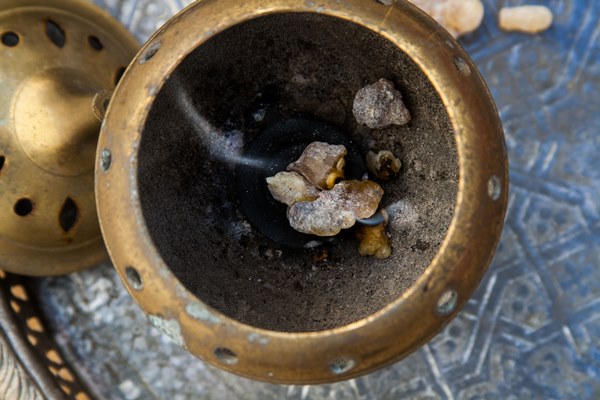
Incense is one of my favorite notes, whether it’s the classical frankincense (olibanum) r the blends meant to evoke the aroma of Japanese or Indian powders and joss sticks. I will eventually cover the different notes that convey an incense-like effect, but today I will start with frankincense. It’s an iconic ingredient, and in perfumery if you see incense mentioned in a fragrance pyramid, it’s often frankincense. Another reason I would like to start my incense series with frankincense is that it’s an ingredient under threat.



Frankincense is obtained from about five species of Boswellia trees found in North Africa, Western Africa, India, Oman, and Yemen. Centuries before oil became the source of Oman’s wealth, frankincense was its true gold. In order to collect frankincense, harvesters make incisions in the trunks of the trees. The oozing sap eventually hardens and is gathered in pellets. Men typically gather the resin, while women clean it and sort the so-called frankincense tears by size. In my film, I described the danger of frankincense harvesting, since the trees grow on hard-t0-access cliffs.

In Somalia, trees have always been highly valued and the groves were local property, passed down within clans. Trees were tapped only after they were at least 12 years old and the harvest would be rotated to give the plants time to heal. However, armed conflicts and rising demand for the resin collided to create conditions for overharvesting.

Continue reading →

As Seen On

Design by cre8d
© Copyright 2005-2026 Bois de Jasmin. All rights reserved. Privacy Policy