Perfume 101: 517 posts

Here you can find how to guides to selecting, testing and enjoying scents. Also includes are the lists of our top favorite perfumes for different occasions and articles covering all range of topics related to fragrance. If you’re curious to step inside a perfume lab (or even become an industry professional), this group of essays will be of interest.

Three Favorite Perfumes of the Moment

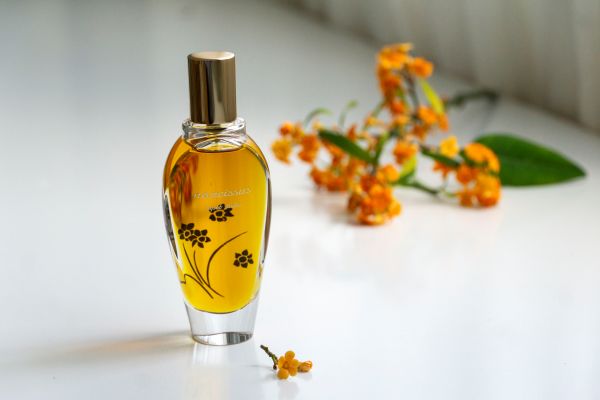
Three perfumes for warm days. Three ideas to evoke freshness. Three different scents for different moods. I originally wanted to make a list of summer fragrances like I always do this time of year, but as I was contemplating my list, my eye fell onto my dressing table and I saw three bottles. To avoid leaving perfume exposed to light more than necessary, I rotate what I wear, and these three perfumes have stayed on my dresser long enough for me to wonder what exactly I enjoyed about them and to share them with you.

You can watch my video for the description of scents and for my opinion on fresh fragrances in general. As a complement to the film, I would like to compare my current summer favorites to other similar fragrances and to give you more ideas on perfumes to sample.
Continue reading →

Is It Time to Rename the Oriental Fragrance Family?

My original article on this topic was published in FT’s magazine, March 2016 issue, but the topic is as relevant as ever so I decided to continue the discussion here.

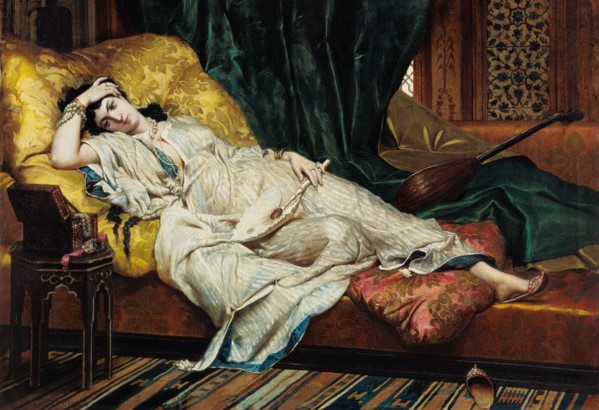
The world of perfume press releases is one in which Edward Said never wrote “Orientalism”.  Odalisques lounge in the incense-scented harems of marketers’ imaginations. The Mughals are still ruling India, and the Arabian Desert is a vast expanse of golden sands populated with handsome explorers—not an oil well in sight. There is even a fragrance family called “oriental.”

The term is misleading and vague. The Middle East and North Africa have old and sophisticated fragrance traditions, but the average oriental one might come across at Harrods has little to do with their classical forms. This family of French perfumery grew in tandem with other 19th-century developments in society, economy and art. As Ingres painted his erotic ideals in a harem setting, perfumers used heavy, rich notes like balsams, vanilla and musk to fashion their fantasies of the east. The fascination lingered well into the 20th century. Guerlain Shalimar was created in 1925, but it reprised all the hallmarks of the genre—opulence, warmth and an exotic backstory.

Continue reading →

Famous Perfumery Roses : Rose Damascena

Last week I covered the topic of rose de mai, or rosa centifolia, and it’s only fitting to turn my attention to the other famous perfumery rose, rose damascena or rosa damascena. Richer in essential oils than centifolia, it’s the most important rose cultivar for fragrances. In my video, I will describe this variety, show how rose absolute and rose oil look alike and explain where it’s grown.

Of course, I will also discuss rose damascena in fragrances. Although associated with feminine perfumery, roses of all types, natural and synthetic, are are used in masculine fragrances as well as compositions that are not obviously floral. I will explain how perfumers use rose nuances and to what effect.

Continue reading →

Fougere Perfumes and Fragrant Ferns

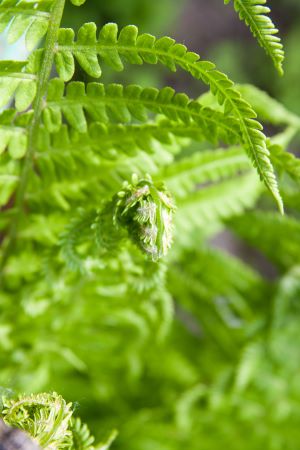
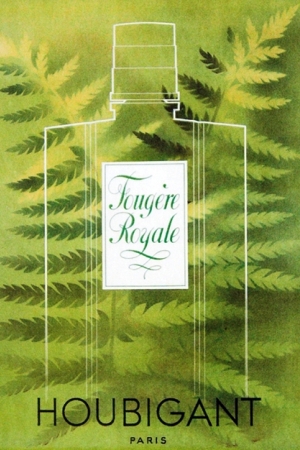
The first abstract fragrance in modern perfumery is considered to be Houbigant’s Fougère Royale created in 1882. Since I didn’t find myself around ferns (fougère in French) often enough, I assumed that they are scentless, and that’s the reason Fougère Royale must be pure fantasy. Its creator Paul Parquet had to use his imagination to create an intensely aromatic accord by blending the synthetic material coumarin into citrus, lavender, rose geranium, amber, musk and oakmoss.

Then I had a revelation. My Estonian friend, who has long tempted me with her eloquent descriptions of Baltic woodlands, whisked me off to her family cottage set on the edge of a fairy-tale forest. The light diffused by the evergreen canopy cast a soft glow onto the golden tree trunks and the quilt of emerald mosses. I noticed the scent of pine balsam and damp foliage. I lowered my face to a cluster of ferns and they too had a scent—loamy earth, spice and hay.

Continue reading →

Why Is Rose Centifolia Such An Expensive Ingredient

I had a chance to harvest roses in Grasse on a couple of occasions and to observe the process of rose absolute and rose essential oil distillation. The experience of jumping into a pile of rose petals was certainly heady and memorable, but what struck me the most was the work involved to produce rose absolute. Since the famous rose of Grasse, rose centifolia, or rose de mai, contains less essence than rose damascena, it’s rarely steam-distilled. Instead, it has to be processed in a multi-step manner, which requires skill, experience and the right equipment.

My most recent video is about rose centifolia. As I explain, the processing of rose blossoms into rose absolute is a complicated and time-consuming process.  First, the flowers are treated with an organic solvent such as hexane, and the resulting extract is then vacuum distilled. The solvent is removed, and the resulting product is called concrète.

Continue reading →

As Seen On

Design by cre8d
© Copyright 2005-2026 Bois de Jasmin. All rights reserved. Privacy Policy