Perfume 101: 517 posts

Here you can find how to guides to selecting, testing and enjoying scents. Also includes are the lists of our top favorite perfumes for different occasions and articles covering all range of topics related to fragrance. If you’re curious to step inside a perfume lab (or even become an industry professional), this group of essays will be of interest.

A Visit to Musée Lalique

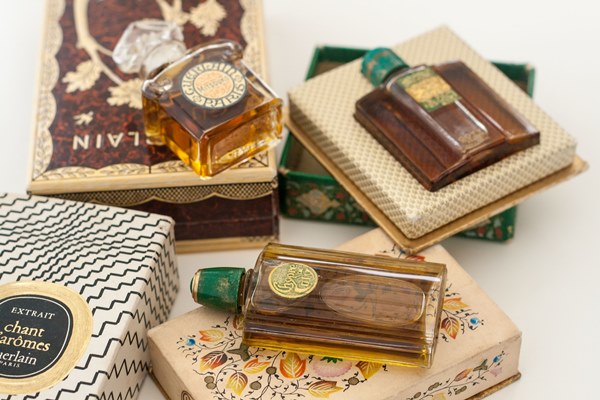
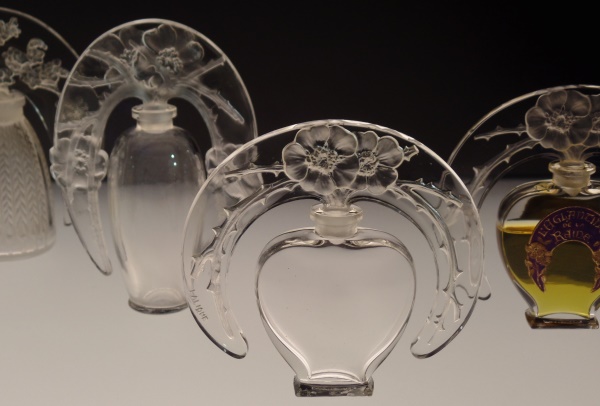
Andrea, a Bois de Jasmin reader, recently visited the Lalique museum in Alsace, France and sent me a few photos from her trip. When François Coty made his famous statement, “Give a woman the best product you can make, present it in a perfect flacon with beautiful simplicity and impeccable taste, ask her to pay a reasonable price, and that will be the birth of a business such as the world has never seen,” Lalique flacon is what he meant. The idea was revolutionary, and together Coty and Lalique made history. And take a look at these stunning bottles! Don’t they themselves look like works of art?
SAMSUNG CAMERA PICTURES

Andrea mentioned that at the museum you can see Lalique wares for all purposes, from sacred to profane–from liturgical objects to different types of decorations. There are perfume bottles and powder boxes, car trinkets and jewelry. You can also discover the interior design Lalique created for luxury liners and trains! If that were not enough, at the museum shop you can purchase Lalique perfumes, save for the Noir Premier Collection.
Continue reading →

Perfumes For Autumnal Moods and the Art of Japanese Garden

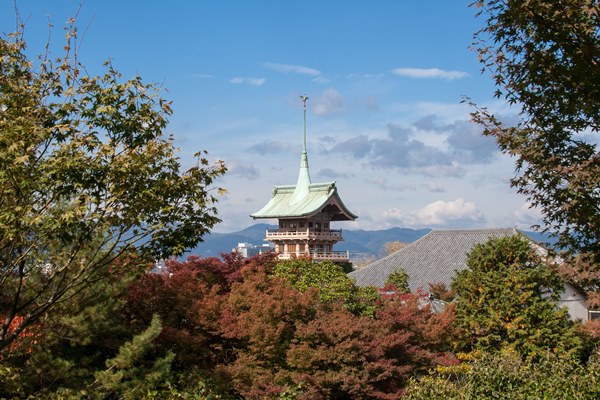
I came back from the south of France to a golden and grey Brussels and whatever summer memories that weren’t blown away by a mistral in Marseille faded into the damp fog of my Belgian city. I have a battery of perfumes evoking summer, but I wondered, what if I approached the theme of an autumnal perfume from a different angle? Instead of selecting a fragrance to fantasize about summer, why not let autumn be my guide? To do that, I relied on the principle of borrowed scenery, shakkei, from Japanese garden design. In my latest FT column, Autumn: The Scents of the Season, I explain how I do it and describe my choices: Serge Lutens Chypre Rouge, Bulgari Eau Parfumée Au Thé Rouge, Chanel Bel Respiro, Etro Messe de Minuit and others.

kyoto-garden-temple

One of the most interesting principles in Japanese garden design is the idea of borrowed scenery (shakkei). Using existing landscape elements – distant mountains, ponds and neighbouring structures – a creator plans the garden in such a way as to incorporate the surroundings into her composition and create her personal vision of nature. Perfumery is generally more about artifice and fantasy, but as summer fades, I too become inspired to borrow autumnal scenery for my fragrant accompaniment. My perfume choices become led by the scents of fall. To continue reading, please click here.

If you were to match autumn, its scents or its moods, to a perfume, what would you select?

Photography by Bois de Jasmin, Kyoto

Damask Roses and Roses of Damascus

Occasionally I come across articles mentioning “roses from Syria” as “a precious” ingredient in perfumes. One of the pieces even appeared in a newspaper that runs daily reports on the war in Syria. But real world events don’t enter into the fantasy bubble of beauty writing, with absurd and morbid results.  We’re conditioned to think of perfume as something so rarefied and intangible that for all we know angels pick the flowers and blend essences in their celestial realms. The thought that a country, which has been at war for five years, might have difficulty growing roses doesn’t cloud the writers’ imaginations.

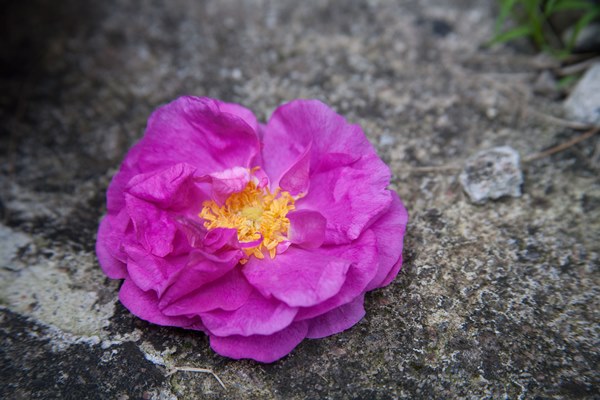
rosa-damascena

Until the war, which started in 2011, Syria produced 80 tonnes of roses, some of which were distilled on site and some exported to be processed in Europe. Syria wasn’t as large a producer as Turkey, Bulgaria or Morocco, but its roses had a delicious raspberry nuance. The last commercial sample I was able to get in 2011 still smells of sun warmed fruit and spicy honey. Damascus and the other rose growing provinces have suffered tremendously during the war, especially the area held by the revolutionary army and targeted in the heavy bombing campaigns by the Syrian regime.  People have fled from the fighting, leaving plantation owners with few work hands and resources. As a one-time distiller told a reporter of The Express Tribune, “Today there are barely 250 grams (half a pound) of oil available to buy in the whole market.” What are the chances that it makes its way into a perfume produced by a luxury brand?

Continue reading →

10 Fall Perfumes With a Retro Accent

Retro, vintage, old-fashioned. These terms, with various nuances, suggest fragrances that smell of another time. Elisa explores some of her favorite perfume examples.  What’s dated to one person is a retro classic to another.

What smells old-fashioned or,  more positively, “classic” or “retro” to any given nose is bound to change over time. In the near future, I suspect, the berry-and-peony fruity-florals and fruitchoulis that were ubiquitous in the late ‘90s and aughts will smell nostalgically old-fashioned to some, dated to others. Hillary Clinton reportedly wears Angel, and I recently heard a young YouTube star describe Chanel’s Coco Mademoiselle as her most “mature” smelling perfume!

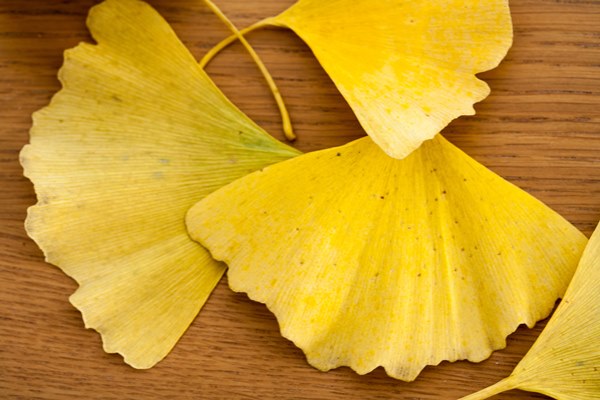
gingko

The perfumes I’ve been reaching for most this fall aren’t the all-time classics – the Shalimars, the Mitsoukos, the Chanel No. 5’s. But these scents, mostly born in the ‘70s and ‘80s, remind me of the grande dames of my youth, who weren’t in the least intimidated by unforgivingly sharp green chypres, loud and complicated florals, or deeply powdery orientals, all with massive sillage. To me, these are the new retro classics.

Chanel Coco 

When I first encountered Coco on a perfume counter many years ago, I found it confusing. What exactly was this mess, which couldn’t decide whether to be sweet or not? But now it smells complex and incredibly luxurious, especially in the parfum – all spicy, rosy florals and amber with a dry, animalic leather note cutting through. I’ve come to think of Coco as the quintessential, night-at-the-opera floriental.

Continue reading →

Apple Perfumes for Autumn (and Anytime)

Elisa offers you an apple. Or several.

Late in H Is for Hawk, a memoir about grief and falconry, author Helen Macdonald recounts bringing her goshawk, Mabel, to “Apple Day” at a local farm:

I walk into a white marquee, and inside, in dim green shade, find trestle-tables displaying hundreds of apple varieties. Some are the size of a hen’s egg; some are giant, sprawling cookers you’d need two hands to hold. Each variety sits in a labelled wooden compartment. I walk slowly along the apples, glorying in their little differences. Soft orange, streaked with tiger-spots of pink. Charles Ross. Berkshire 1890. Dual use. A little one with bark-like blush markings over a pale green ground. Coronation. Sussex 1902. Dessert. Miniature green boulders, the side in shadow deep rose. Chivers Delight. Cambridgeshire 1920. Dessert. Huge apple, deep yellow with hyperspace-spotting of rich red. Pasgood’s Nonsuch. Lincolnshire 1853. Dual use.

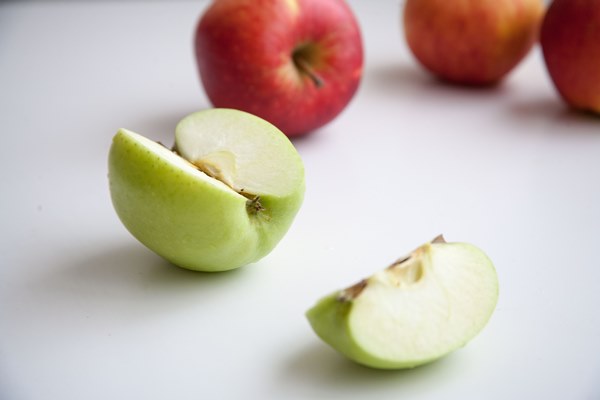
apples

I love the painstaking attention to detail in this passage – the appreciation for the subtle color variations, not only between varieties but over the skin of a single apple, and for the poetry in the names themselves. It’s almost like a dog show for apples!

Earlier this year, I noticed how many perfumes I love contain an apple note, and how apple notes can range from crisp and tart all the way to lush and compote-y, which means there are apple scents appropriate to any time of year. But what better time to talk about them than in fall? Here are some of my favorites (plus some misses, and a few more to try).

Continue reading →

As Seen On

Design by cre8d
© Copyright 2005-2026 Bois de Jasmin. All rights reserved. Privacy Policy