1980s perfumes: 12 posts

Maitre Parfumeur et Gantier Tubereuse : Perfume Review

33333

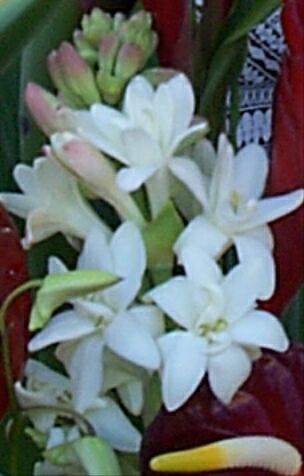
Tuberoses

Star rating: 5 stars–outstanding/potential classic, 4 stars–very good, 3 stars–adequate, 2 stars–disappointing, 1 star–poor.

Wearing tuberose soliflore is like eating a bar of dark chocolate in one go. In other words, it can be intoxicating to the point of decadence and overindulgence. Yet, sometimes it is exactly what one craves.

The aforementioned houses share the same perfumer, Jean Laporte, who after leaving L’Artisan Parfumeur founded Maître Parfumeur et Gantier. L’Artisan’s interpretation of tuberose (created in 1978) is pure butter, interspersed with honeyed petals. It opens up on a sharp and slightly abrasive note, however it mellows considerably as the drydown approaches. The result is a lush spicy tuberose scent, which is a bit closer to gardenia than a true tuberose.

Maître Parfumeur et Gantier Tubereuse (1988) renders its tuberose as a thousand layer cake. The layers of creamy soft tuberose appear to unfold further and further, laced with minute spicy and distinctly green undertones that make this fragrance more complex than that of L’Artisan. The green note is very pronounced, and it may not appeal to someone seeking a perfectly creamy tuberose soliflore.

Update: L’Artisan Tubereuse has been discontinued.

Parfums de Nicolai Number One : Perfume Review

44444

Gaugin bouquet of flowers

Star rating: 5 stars–outstanding/potential classic, 4 stars–very good, 3 stars–adequate, 2 stars–disappointing, 1 star–poor.

Parfums de Nicolaï Number One was the first fragrance to inagurate the line created by Patricia de Nicolaï and her husband Jean-Louis Michau in 1989. Number One won the prestigious Mouillette d’Or du Prix International du Meilleur Parfumeur, or Golden Scentstrip Award of the Best International Perfume Creator upon its debut. One whiff of this voluptous white floral composition, and it becomes clear why it received such an honor. De Nicolaï’s creations have an aura of grand parfums, while their structures are modern and radiant. Number One is a particularly harmonious blend of floral notes with a sonorous timbre of soft woods. After the initial sparkle of honeysuckle, the jasmine unfolds with its banana jam sweetness. Contrasted with sultry tuberose and green narcissus, the jasmine gains both complexity and sensuality. Iris with its powdery-rooty character lends Number One a caressing character. Its mixture of elegance and nostalgia is haunting.

Painting: Paul Gauguin, Bouquet of Flowers, 1896. Oil on canvas. National Gallery, London, UK.

As Seen On

Design by cre8d
© Copyright 2005-2026 Bois de Jasmin. All rights reserved. Privacy Policy