books: 37 posts

Chanel, Caron and Guerlain in Bulgakov’s The Master and Margarita

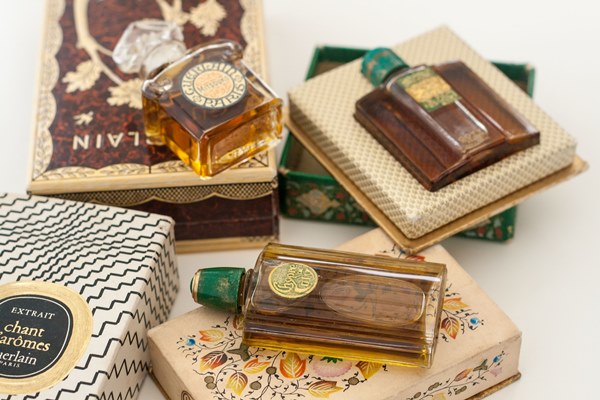
“The first time I encountered a perfume that beguiled me was in the pages of a book. The sultry red-haired witch in Mikhail Bulgakov’s The Master and Margarita enticed women with the promise of “Guerlain, Chanel No 5, Mitsouko, Narcisse Noir, evening gowns, cocktail dresses…” It would be some years before I smelled these perfumes, yet their names left a “baffling but seductive” imprint, just as the novel suggested.”

In my recent FT column, Revisiting Three Perfume Classics, I write about the three legendary perfumes that left their “baffling but seductive” trace in literature and history. They are Chanel No 5, Guerlain Mitsouko and Caron Narcisse Noir. Bulgakov started writing his novel in 1928 and worked on it until his death in 1940. The reason he selected these three perfumes as the lure for the black magic show was because they embodied glamour.

Continue reading →

What Does The Scent of Books Reveal?

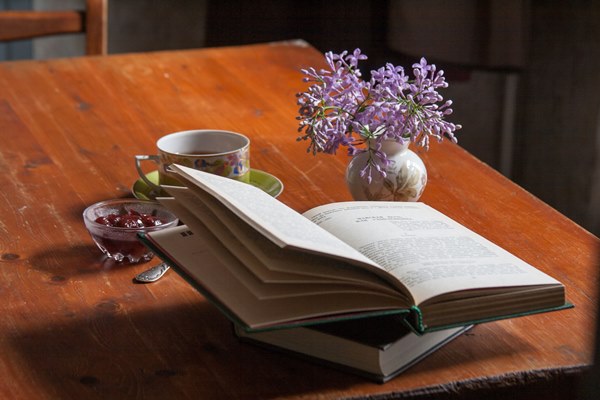
My Proustian madeleine is a piece of furniture. One of the first things I do when I arrive at our house in Poltava is to pry open the stubborn glass doors of the old bookcase and take a deep inhale. Even before I knew how to read, I loved smelling the leather bound volumes standing in neat rows on its shelves, so it’s true that my love of reading and my interest in aromas developed in tandem. Inside, the bookcase smells of vetiver roots, vanilla and sesame biscuits.

I’m not being whimsical with my descriptions, however. A ground breaking project by researchers at the UCL Institute for Sustainable Heritage explored odor descriptions as they relate to the chemical composition of books and created a “historic book odor wheel” to link the scents with the aromatics present in decaying paper. It’s amazing to see how many aroma-molecules books and perfumes have in common, from limonene (zesty, lemon-line odor) to hexanal (freshly cut grass) and vanillin (sweet, vanilla).

Continue reading →

Winter Lists : 5 Books and 2 Perfumes

There is nothing especially winter-like about my list of books (and perfumes). It’s mainly about enjoyment, with a dose of something high-spirited. Some may call it escapism, but I see it as a way to recharge and tune out the world long enough for me to find my balance and plunge back into the routine. Moreover, high-spirited, entertaining and fun, whether in literature, art or perfume, can assume many different forms. Here is my take.

winter-list

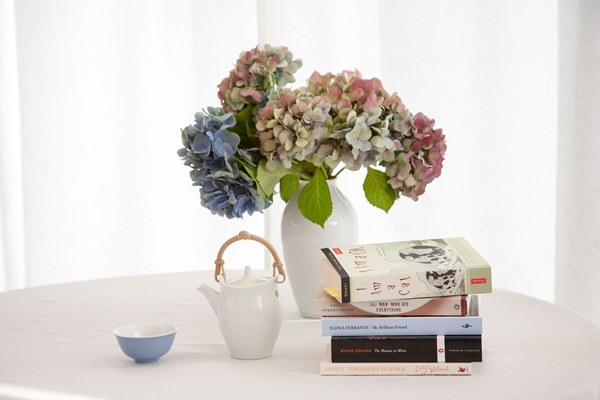
Jeffrey Steingarten The Man Who Ate Everything

“Whenever I have nothing better to do, I roast a chicken,” writes Jeffrey Steingarten. The food critic at Vogue magazine since 1989, Steingarten is also the author of two of my favorite books about cooking and eating, The Man Who Ate Everything and It Must’ve Been Something I Ate. Steingarten is witty, irreverent and passionate, an irresistible combination. His essays are full of interesting tidbits and recipes, but the main reason I enjoy them is because of Steingarten’s dry sense of humor. I don’t know how many times I’ve read “Kyoto Cuisine,” but the scene in which he tries to pry off the lid from a bowl of soup leaves me laughing out loud every single time. In the same essay, he also describes the exquisite flavors of Japanese cuisine, reminding his reader that as a bumbling tourist he may have missed many nuances. With Steingarten you can visit the Nishikidori market in Kyoto, run a scientific test of ketchups, grill sardines with Marcella Hazan in Venice, perfect fries, or try cooking from the back of the box.

Continue reading →

Perfume in the Library : Danilo Kis and De Profundis

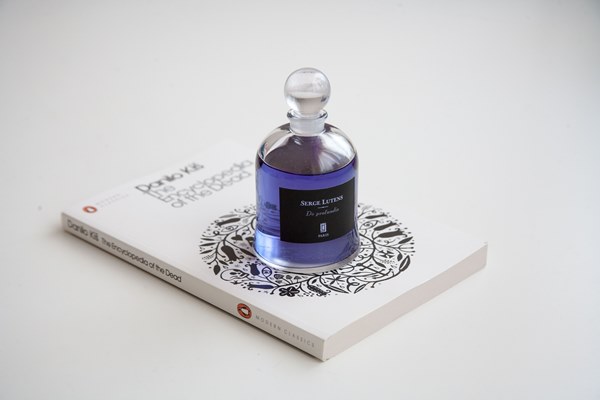
There are two reasons for me to bring Danilo Kiš’s The Encyclopedia of the Dead into my scented library. First of all, his short stories were recommended by a Bois de Jasmin reader, Maja. Second, Kiš (pronounced as Kish) is a master at describing the intangible and the evanescent. Born in Subotica, Danube Banovina, Kingdom of Yugoslavia, Kiš (1935–1989) came from a family that he described as “an ethnographic rarity,” an artifact of the disappearing world–his father was of Hungarian Jewish origin, while his mother came from Montenegro. The lack of precision and neatly defined categories that mark the countries on the crossroads, the borderlands, are sometimes seen as problematic. But Kiš’s work, with its complex panoply of inspirations and traditions, shows that nebulous boundaries can produce many riches.

danilo-kis-lutens

The Encyclopedia of the Dead, written in 1983, contains 9 stories. Kiš insisted that he was writing neither science fiction nor fantasy, placing himself in the magical realism tradition of Jorge Luis Borges. There are references to many different writers such as James Joyce, Bruno Schulz, Vladimir Nabokov, Ivo Andrić and Miroslav Krleža, but inspiration from Borges is the main leitmotif. Some stories answer Borges’s puzzles, others take up Borges’s challenges–“let us imagine that someone shows a story instead of telling it…” (Borges, “Averroës’ Search”).

Continue reading →

Perfume in the Library : The Pillow Book

When the Japanese courtier Sei Shōnagon started writing what is now known as The Pillow Book at the end of the 10th century, it was mostly done to alleviate the desperate boredom women experienced at the court. Their movements were circumscribed, and they mostly spent their days behind screens, observing while not being observed. Sei Shōnagon has a keen eye for detail and a sharp tongue, which is why even at the remove of many centuries, her book beguiles and entertains. How can one keep a straight face when she complains about dull tweezers (or mothers-in-law) and suggests that priests should be good looking because it would make listening to their sermons more agreeable.

pillow-book

Some of my favorite passages are of Sei Shōnagon in her lyrical mood. She describes scenery, sounds, textures and scents with such precision that I too feel the crinkly silk under my fingers and smell the spicy sweetness of incense.

To wash your hair, apply your makeup and put on clothes that are well-scented with incense. Even if you’re somewhere where no one special will see you, you still feel a heady sense of pleasure inside. [26] Things that make your heart beat fast (translated by Meredith McKinney)

Recently, I found a fragrance that reminds me of Japanese incense. It’s Eau de Rochas, a citrus cologne with a chypre layer. The choice may be unexpected, but once the fragrance softens from its initial sizzle of zest and rind, it becomes softly shaded and warm. The experience made me discover two things. First, Japanese incense is chypre, an accord of moss and woods, turned into smoke. Second, finding a scent to capture the facets of a favorite book enhances the experience greatly.

But of course, many of you know that, and in our previous discussions on the subject of perfume and books, you have shared some of your favorite combinations. I’d love to hear more.

Extra: The Smell of Books :: Perfume and Books: A Scented Story :: The Story of the Porter and The Ladies of Baghdad :: Virginia Woolf Mrs Dalloway :: Things that Make One’s Heart Beat Faster

Photography by Bois de Jasmin
As Seen On

Design by cre8d
© Copyright 2005-2026 Bois de Jasmin. All rights reserved. Privacy Policy