books: 37 posts

Reading for Late Summer Days

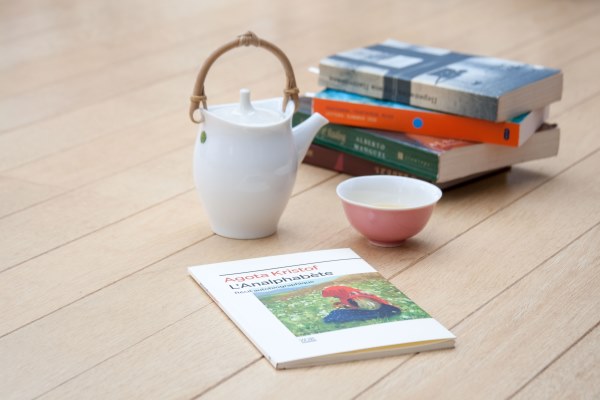
It’s the time of les vacances in Brussels. The streets are quiet. The parks are deserted, especially during the week. This summer tourists have taken the warnings of their home countries to heart and have mostly stayed away. I have the city to myself. So I take a book to a park, sit on the grass and read. (It’s a rare luxury in these parts, a fact demonstrated by the distinct lack of outdoor scenery in my picture. It started raining just when I had time for a photography session.)
books summer recommendations

The question then becomes what book to pick. A romance, a detective novel or a great classic? Walt Whitman once commented that the only reason he didn’t become overwhelmed by a steady diet of Sophocles, Homer, Aeschylus, and Dante was “likely because I read them… in the full presence of Nature, under the sun, with the far-spreading landscape and vistas, or the sea rolling in.” My selection is less lofty–simply some of my new and old favorites.

Agota Kristof The Illiterate

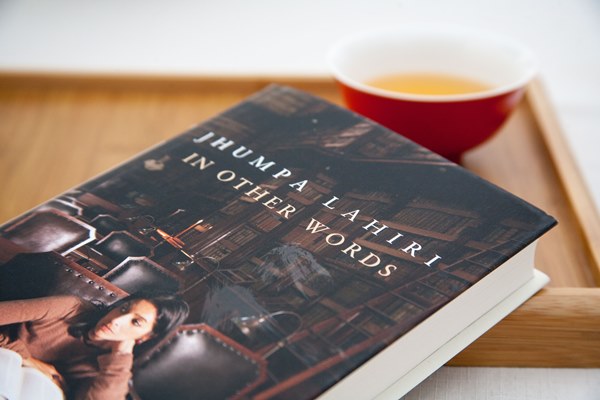
It’s fitting that I discovered the work of a Hungarian writing in French while reading a book by an American author writing in Italian. In her explorations of self and language, In Other Words (see my review), Jhumpa Lahiri mentioned being touched by Kristof’s experience. Kristof was born in Hungary and moved to Switzerland in 1956 as a refugee, and while she gained safety, she ended up in a social desert as she lost her language. The Illiterate is a series of stories about her love of reading, her family, her writing. They are tragic but also hopeful, and I related to them. I didn’t cross a frontier as an infant and didn’t have to work at a Swiss watch factory while writing poetry in my spare minutes, but having left the place where I was born, relatives, friends, and the familiar language(s), I can understand the anguish.
Continue reading →

Postcard from Ukraine: My Reading Corner

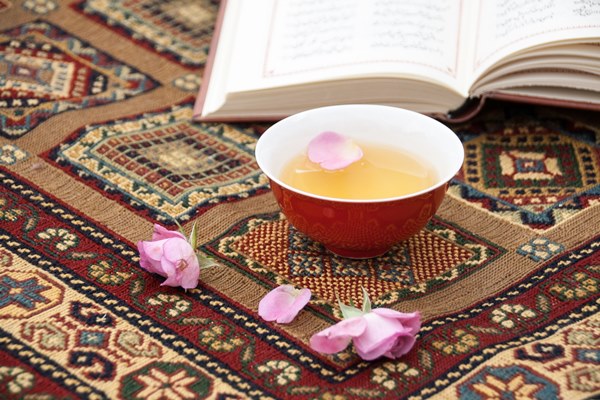
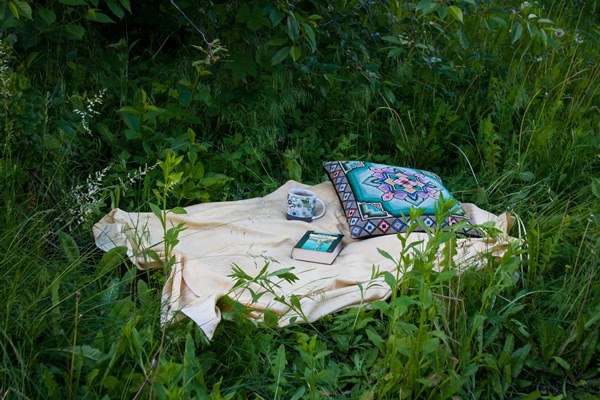
When a friend asked me about my reading corner, I was momentarily at a loss for an answer. I can easily zone out my surroundings, and I read anywhere–waiting for a bus or on the bus, at the metro station or squeezed among other passengers on a subway car. Various means of transportation are where I get most of my reading done. But of course, the best reading spot is quiet and comfortable, and these days it’s a little nook under a cherry tree in our Poltava garden. During our grey Belgian winters I dream of this overgrown orchard, of reading in the grass or simply stretching on a blanket and absorbing all the details around me–the pattern of veins on cherry leaves, the sweet almond scent of crushed grass, the shade of yellow of buttercup petals. These are the best souvenirs I bring back. So, when the weather cooperates, this is where I can be found with a book and a cup of tea (and less romantically, mosquito repellent).

reading spot

What’s your favorite reading spot? What are you reading these days?

Photography by Bois de Jasmin

In Other Words : Jhumpa Lahiri’s Italian Peregrinations

“The unknown words remind me that there’s a lot I don’t know in this world,” writes Jhumpa Lahiri in her memoir about learning Italian, In Other Words/In Altre Parole. It was the first sentence I read as I flipped through the slim volume at the bookstore, and I flashed back on years of studying languages and the part I always loved–finding new words and new shades of meaning in the familiar ones.  Words, with their roots borrowed from distant times and places, hid other worlds of experiences, ideas and thoughts, and even as I stumbled upon the strange grammar constructions and irregular verbs, learning a new language felt like an exhilarating journey.

lahiri

Lahiri’s particular gift as a writer, whether in her collections of short stories, such Interpreter of Maladies for which she won a Pulitzer prize, or in novels like The Namesake is to draw the curtain on the inner world of her characters. In her new book, Lahiri once again focuses on the subtle and the evanescent, but the exploration is of her own self. Without revealing personal details, it’s a strangely intimate and candid book. I read it, feeling alternatively as a voyeur or a trusted confidant. Days after finishing it, I kept missing Lahiri’s soliloquies and I re-read some passages several times. She’s an earnest, thoughtful companion, and her crisp, clear style–in both Italian and English–has the alluring simplicity of a Japanese calligraphy painting. A few lines say volumes.

Continue reading →

Beautiful Prose

Halfway through my graduate studies, I remember experiencing an intense craving for beautiful prose. I was training as a political scientist, and the texts on politics and economics, written by academics for other academics in a dry style favoring passive construction, began to make me listless. Respite arrived in the form of George Orwell’s essay “Politics and the English Language,” which remains one of my favorite pieces of writing–clear, concise, powerful.

books

Beauty, of course, is in the eye of the beholder, or reader. When I think of the books that left the biggest impression on me, they are written in a crystalline clear style, poetic but without unnecessary embellishments. Beautiful prose to me is a harmony between substance and style.

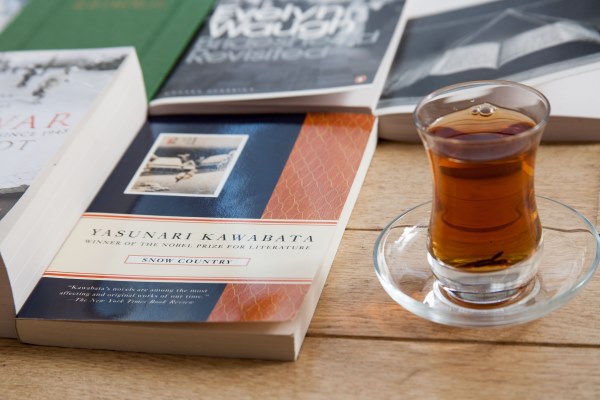
I don’t intend to compile a comprehensive list, merely a snapshot of my favorites today, but if I were to create an anthology of beautiful writing, Evelyn Waugh’s Brideshead Revisited (1945) would be one of the star contenders. Set before the Second World War, it is the story of one man’s infatuation with the aristocratic family and their world. There is passion, loss, betrayal and reflections on faith and religion. Waugh’s most introspective novel and also his most masterful, it combines beautiful writing with sharp observations on upper class society and its decline.

Continue reading →

Perfumes and Books : a scented story

Are scents really that difficult to translate into words? I don’t think so. We only lack practice. Moreover, if you explore literature and poetry, from Colette to Hafez, from Virginia Woolf to Gustav Flaubert, you can find many examples of writing in which aromas play an essential role. They can help us imagine the development of a plot, the emotions of characters or even the state of the divine.  My latest FT Magazine column Perfumes and Books is about such scented stories.

hafez1

“Fragrances are intangible and evanescent – hence the assumption that they are beyond the linguistic capacity of humans. Such difficulties need not be the norm. Open Virgil, Tales of the Arabian Nights, Proust, Zola or Persian poets like Hafez and Nizami, and discover how aromas can be given form and language. Invisible though scents are, they become more powerful when captured in words. To continue, please click here.”

Any other favorite examples of sensory descriptions in poetry or literature?

Photography by Bois de Jasmin

As Seen On

Design by cre8d
© Copyright 2005-2026 Bois de Jasmin. All rights reserved. Privacy Policy