Victoria: 2670 posts

Reading Tea Leaves: Best Tea Perfumes in 10 Different Styles

The scent of tea leaves is created by hundreds of aroma-molecules, and each variety has its unique fragrance. Terroir plays a role as does the method of curing the tea leaves. For instance, steamed Japanese teas like sencha and matcha have grassy, spinach-like aromas thanks to hexenal, while mildly oxidized oolongs share aromatics with lilac blossoms, roses and jasmine (nerolidol, cis-jasmone, linalool). The smoky profiles of teas like lapsang souchong are created by molecules like pyrazines, longifolene and guaiacol. In an interesting twist, guaiacol, along with certain types of pyrazines, is what gives roasted coffee its distinctive scent, which is why smoky teas are recommended to coffee drinkers wanting to expand their horizons. With such a rich palette of aromas, the tea accord is a fascinating exercise for a perfumer.
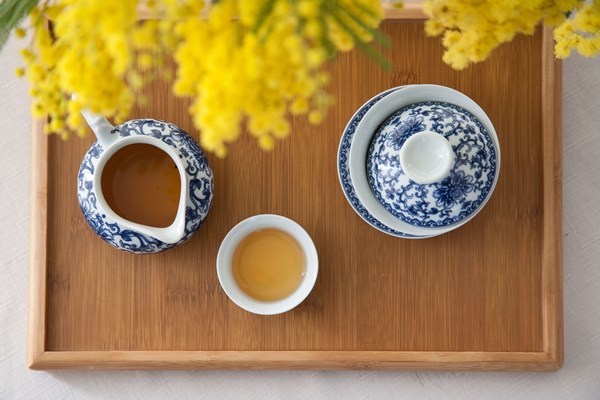
In my recent article on the development of Bulgari’s Eau Parfumée au Thé Vert, I described how Jean-Claude Ellena discovered a novel accord and created a modern classic. Since Bulgari launched the perfume in 1992, it became the green tea of fragrance. However, tea accords aren’t limited to delicate green blends, and when I began researching my article, I realized how many fragrances successfully incorporate a tea effect, both light and dark. I decided to make a list of the most interesting examples, in 10 different styles.

Continue reading →

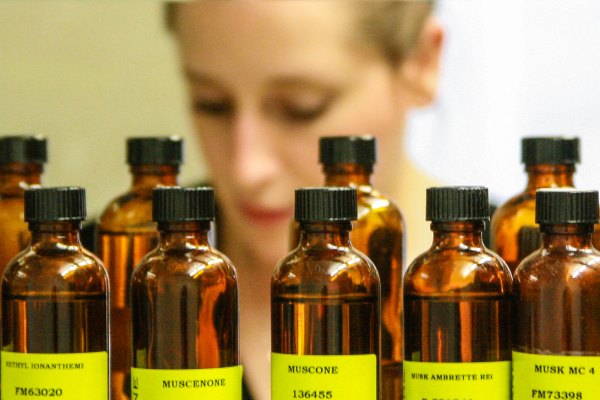
Renegades, Artists, and Artisans : Women in Perfumery

“Only a few people have the supersense of smell necessary to become a Nose—for reasons known only to Noses themselves, no woman has ever had it,” wrote one Donald William Dresden in a 1947 article about “twenty noses of France.” All of these twenty noses, as Mr. Dresden explains to his New York Times readers, are middle-aged men, imposing and intellectual. At round the same time, Germaine Cellier was galvanizing traditional French perfumery with her unforgettable Bandit (1944) and Vent Vert (1947). But she remained invisible for the likes of Dresden.

Fast forward to 2017. Since 1947 perfumery around the world has been altered dramatically by the greater openness of the industry and the opportunities it gave women. One would have hoped that their contributions were honored and recognized. In July 2017 Allure ran an article, The American Perfumers Modern Approach to Fragrance. Yet, in the magazine issue devoted to diversity, the article about the American indie movement didn’t mention a single female perfumer. It’s a serious oversight, since the indie movement is inconceivable without female perfumers. Having found the traditional houses either closed to them or limited in creative opportunities, talented and ambitious creators turned to the indie approach. The former situation was especially true for women.

Continue reading →

Modern Classics : Tea Colognes and Bulgari Eau Parfumee au The Vert

Eau Parfumée au Thé Vert is an unexpected modern classic. It wasn’t even meant to be displayed outside the Bulgari  boutiques, where its role was to be an elegant extra next to the house’s jewelry collection. Yet such was its allure and originality that it became one of the perfume trendsetters. And it made Bulgari into a perfume house of note. I tell the story of Eau Parfumée au Thé Vert in my newest FT column, Tempting Tea-Inspired Perfumes. But first I take you on my honeymoon to Kerala.

Munnar, a hill station in India’s southwestern state of Kerala, is one of the country’s largest tea producers. Ensconced in the Western Ghats mountain range, the town is surrounded by plantations that cascade down the hills and hide in misty ravines. I was in Munnar for my honeymoon, and my recollections of long, languorous walks around the tea gardens, the tolling church bells and the opulence of garlands at the Sri Subramanya Temple are laced with the scent of tea leaves. Crushed in my fingers, they smelled green and tannic; when carried by the morning breeze, the aroma resembled violets and driftwood. To continue, please click here.


The other fragrances in the Modern Classic series were Serge Lutens’s Féminité du Bois and Lolita Lempicka.

Researching the article made me realize how many excellent and distinctive perfumes feature the tea accord. Next week I will share a selection of favorites to complement my choices in the article above.

Image via FT

Roses, Tobacco and Places in Between : Kapka Kassabova’s Border

“Today, the Valley of Roses near the main rose-producing [Bulgarian] town of Kazanlak (from the Turkish kazan, cauldron) still produces fifty per cent of the world’s rose attar… The other fifty per cent is produced by Turkey. Like Oriental tobacco, the rose is a bitter love story between Bulgaria and Turkey. When Bulgaria broke away from the Ottomans in the 1870s, workers from the rose industry travelled south across the border with cuttings from the Valley of Roses and planted them in the soil of Anatolia. They must have really loved their roses.”

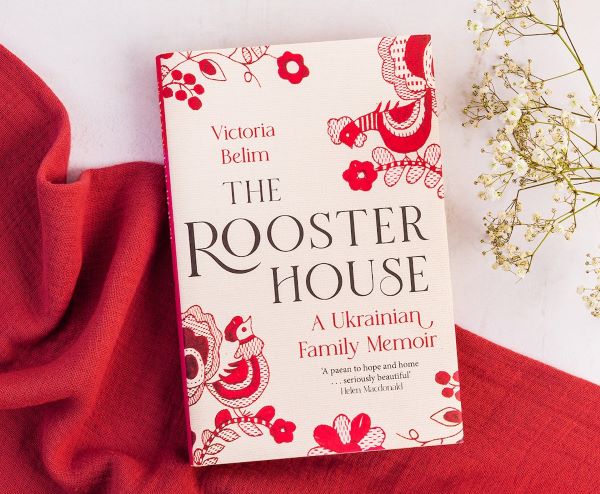
The story of rose damascena is one of many shared by Kapka Kassabova in her odyssey across the borders on Europe’s southern edge, between Turkey, Bulgaria and Greece. In the times of ever hardening borders reinforced by barbwire and prejudice, reading Border: A Journey to the Edge of Europe (public library) is an unsettling experience. How can mere lines on the map have the capacity to cut into people’s lives and haunt their thoughts?

That borders haunt is something I’ve experienced myself. I’ve been fascinated with maps ever since I was a child, sleeping under a large map of the world. A large part on it, colored dark pink, was the Soviet Union, with Ukraine, a jagged diamond sitting on its western border.  “Ukraine” meant “the borderland.” I was born in Kyiv, and finding the city in the middle of the diamond, my finger traced a journey west–Lviv, Krakow, Prague, Vienna. But past Lviv, near the village of Shehyni, a thicker line started, and the dark pink space yielded to a mosaic of colors. I may not have understood the post-WWII arrangement, spheres of influence and the Iron Walls, but I knew one thing with certainty–I couldn’t cross the line at Shehyni. The border was there to keep me in. The more I became aware of it, the more I wanted to see what was happening za kordonom, behind the border. The more I was deterred, the more it entranced me.

Continue reading →

Deciem NIOD CAIS : The Copper Peptide Review

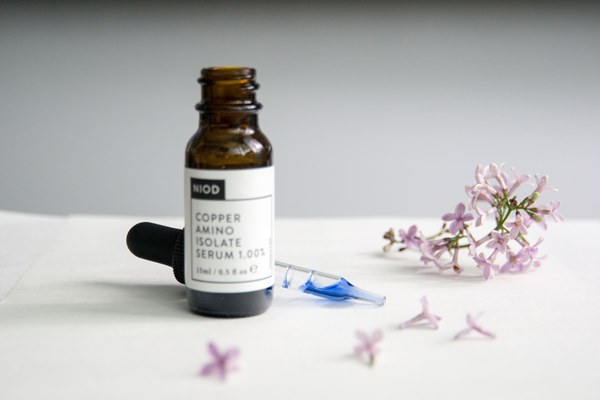
I woke up one day to discover that all beauty bloggers slathered blue liquid on their faces and spoke in a string of acronyms. What did NIOD stand for? Or CAIS, for that matter? Five days and 45 euros later I was to find out for myself. NIOD is one of the brands of Deciem, the same company that makes my favorite skincare, The Ordinary. CAIS is Copper Amino Isolate Serum. I selected the 1% concentration.

The online praises for CAIS reached a fever pitch by the time I had learned of it. It was supposed to activate body functions, although the collective wisdom couldn’t figure out which ones. It was to produce results on the fifth day, although NIOD said that the serum “departs from the traditional thinking of addressing visible aspects of skin aging individually and instead forms a foundation to respect skin health.” As you can see, much remained mysterious about this blue potion before I got my hands on it, but it sounded tantalizing enough to take the plunge. Moreover, I had such faith in Deciem that I was willing to overlook their befuddling descriptions.

Continue reading →

As Seen On

Design by cre8d
© Copyright 2005-2026 Bois de Jasmin. All rights reserved. Privacy Policy