Victoria: 2669 posts

Reading Nikolai Gogol in 2017

I celebrated Nikolai Gogol’s birthday on March 31st by picking up a volume of Dead Souls. The last time I read it in its entirety was during my school days, and many scenes were so vivid in my memory that picking up the novel again felt less like re-discovering than wandering through a familiar landscape. Gogol, the Ukrainian and Russian dramatist, playwright and novelist, is unrivaled for his sharp satire and colorful language, but what struck me this time is how relevant his observations were to our present day affairs. Today everyone is re-reading Orwell’s 1984, Bradbury’s Fahrenheit 451 and Atwood’s The Handmaid’s Tale, and I’d like to make a case for adding Dead Souls to the list.
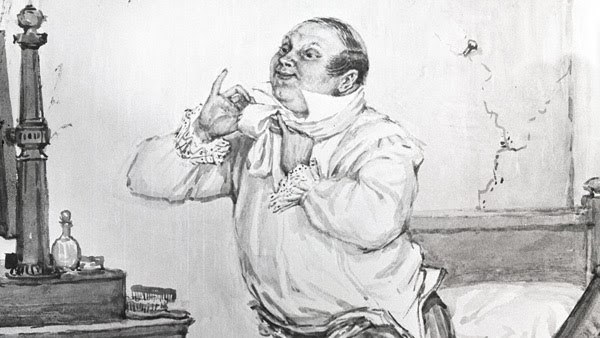
Let’s start with one of my favorite quotes in the book. “Absolute nonsense happens in the world. Sometimes there is no plausibility at all.” Yes, a similar thought in different formulations has been coursing through my head a lot lately. Or, “You can’t imagine how stupid the whole world has grown nowadays. The things these scribblers write!” What would be Gogol’s take on our world of “post truth,” “alternative facts,” and “fake news”?
Continue reading →

Petrykivka and Gogol : Colors and Scents

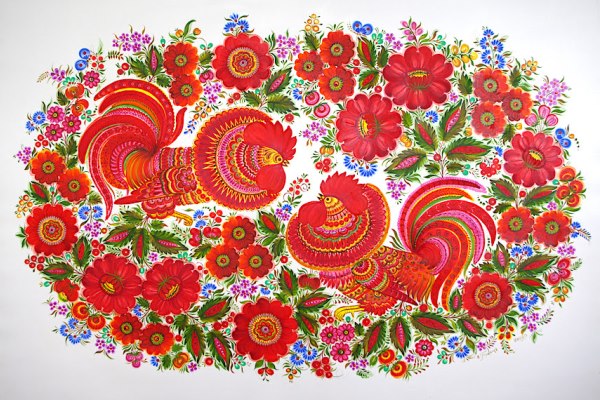
The colors and images of Petrykivka, one of the traditional Ukrainian arts, are vivid and joyous. Fire birds take flight among branches laden with fruit and fantasy blossoms. The artists believed that such colorful images protect people from evil spirits, and looking at the complex and happy ornaments of Petrykivka I can’t help thinking that there is something to the idea of art as talisman.

Petrykivka is considered as Intangible Cultural Heritage of Humanity by UNESCO, and the village of Petrykivka in the Dnipropetrovsk region still boasts many artists. I wrote about my visit two years ago, and anyone can tour the art studios, take a class or simply admire the paintings. Those of you in New York, however, have a unique chance to experience this art in person as The Ukrainian Institute of America hosts the exhibit Petrykivka: A Ukrainian Folk Phenomenon and Living Tradition from April 8 to April 30. The collection presented is based on discoveries by Natalie Pawlenko and Yuri Mischenko and features 47 paintings by some of the most renowned Petrykivka artists.

Continue reading →

Woods : Scents and Words

For our edition of scent diary today, I’ve selected woods as our theme. You can describe your favorite perfume that contains woods such as cedarwood, sandalwood, rosewood, etc. Although it’s a leaf, patchouli is classified as a woody note. Or you can pay attention to your environment throughout the day and see if you can notice a woody aroma–coffee, cloves, pepper also have nuances reminiscent of woods.

One of my favorite woods is cedarwood, a wood redolent either of fresh sap and violet petals or of pepper and soft smoke. In perfumery, the note called cedarwood usually comes from a type of juniper, although the precious Atlas cedarwood is also used for its plush honeyed effect. Another popular cedarwood is a synthetic called Iso E Super. To experience it unvarnished, you can try Escentric Molecules Molecule 01, which is a solution of Iso E Super, or Hermessence Poivre Samarcande, which overdoses Iso E Super.

Extra Reading: Perfumes with Cedarwood Notes

Photography by Bois de Jasmin

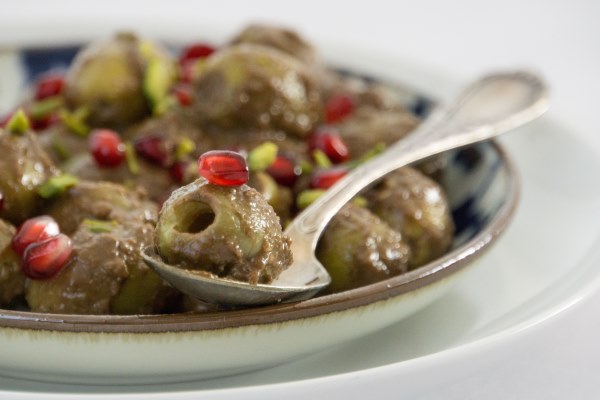
Persian Olives in Walnut-Pomegranate Sauce

For the symphonic complexity of Persian cuisine, with all of its rice pilafs bathed in saffron and rosewater, meats flavored with dozens of herbs and desserts made out of nuts and flowers, it’s the simplest dishes that illustrate most fully the imaginative riches of this venerable culinary tradition. It can be said that Persian cuisine is the closest relative to perfumery. It’s based on accords and notes.

One of the most popular accords is walnut and pomegranate. It’s a perfect harmony of sweet and sour, delicately smoky and fruity. You can build plenty on this base, but one of my favorite recipes is a simple blend of green olives in a walnut-pomegranate sauce. The dish is called zeytun parvardeh, which means preserved olives, but with the word “parvardeh” having the secondary meaning of “nourished,” it also makes me think of olives that have been well taken care of before they ended up on my plate. You will be too after tasting this dish.

Continue reading →

Scents and Words : Spring Fragrances

How do you describe something as intangible as a scent? It’s less difficult than it seems, and the only way to get better at it is to practice. So let’s do it together by describing our favorite spring aromas.

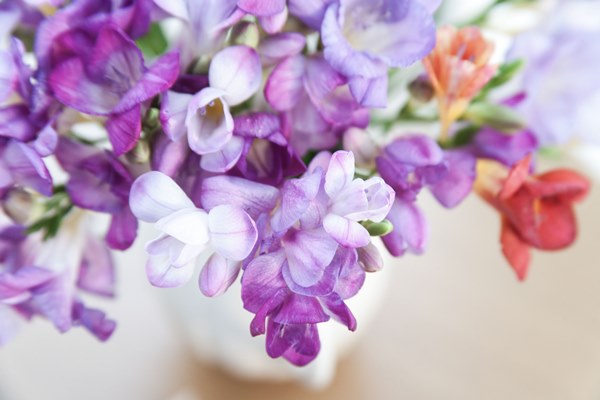
I will start with freesias, which are some of my favorite spring flowers. They smell of Concord grapes with a touch of violet and black pepper. They are sweet, lush and unexpectedly dramatic for such dainty blossoms.

You can also use the space here like a scent diary–for sharing what perfumes you’re wearing or what smells, good or bad, you notice around you.

As Seen On

Design by cre8d
© Copyright 2005-2026 Bois de Jasmin. All rights reserved. Privacy Policy