Victoria: 2668 posts

Rhubarb Sherbet Fragrances

Every spring I make a Persian rhubarb sherbet by cooking sliced stems and sugar in water. Once the flavor and pink color infuse into the syrup, I filter the liquid and add rose essence. Enjoyed from tall crystal glasses, the sherbet has a voluptuous taste that calls to mind the warm light streaming through the stained glass windows of the Nasir al-Mulk Mosque, a pink-tinted jewel of Shiraz. If you would like to replicate this experience, I invite you to take a look at my recipe.
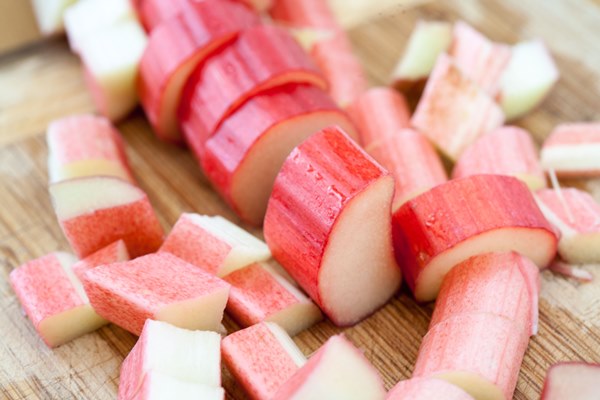
 

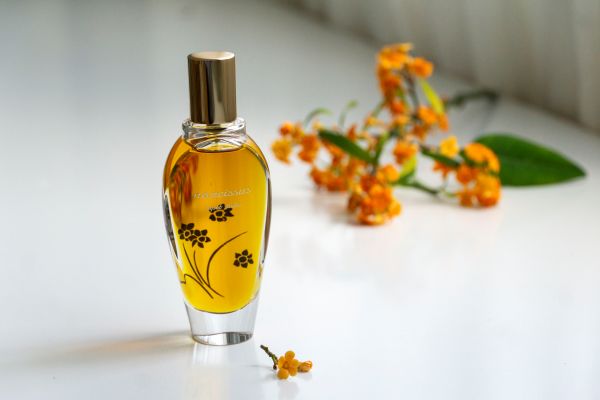
Since perfumery has much in common with cuisine, rendering my sherbet into a fragrance accord with a similar ornate impression is not difficult. Rhubarb has a natural affinity with rose, violet and berries, because they are complementary notes (and raspberry, in a nesting doll twist, contains elements of both rose and violet, which makes it an especially felicitous partner.)  Jo Malone White Lilac and Rhubarb explores this combination by augmenting the floral layer of rhubarb with a cocktail of rose and lilac. It’s a bright and happy perfume, with a nod to retro glamour.

Rhubarb may seem like a modern note in the perfumer’s palette, but in fact, it has a classical pedigree. A subtle effect, of green crunch and mouthwatering tartness, is found in Miss Dior L’Originale and Carven Ma Griffe. Today perfumers have more ingredients with rhubarb inflections at their disposal, using tartness to temper the sugary notes currently in vogue. For a rhubarb dessert, I might select Yves Saint Laurent Baby Doll, a compote of rhubarb, grapefruit and musk, or Burberry Brit Red, a crème brûlée topped with candied jasmine petals and gingerbread.

Just as it gives an interesting twist to a gourmand, rhubarb also makes green and resinous notes shimmer. To achieve such an illusion, Olfactive Studio’s Flashback dilutes the fruit with vetiver and just enough apple for a hint of delicate sweetness. Aedes de Venustas Eau de Parfum is an even more striking composition–it tosses rhubarb slices with basil leaves and incense. The effect is neither liturgical nor gourmand, but as fresh and exhilarating as being caught in a spring rainstorm.
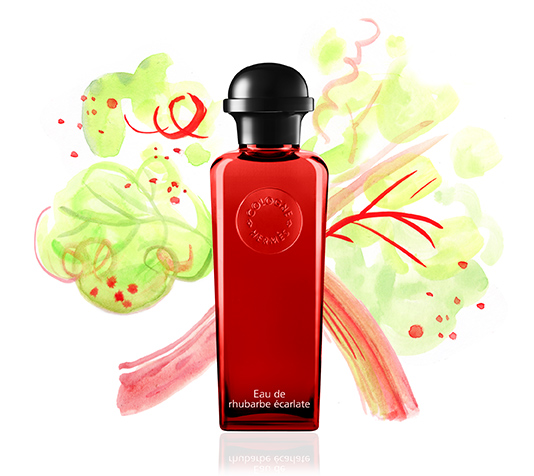
Another fragrance I like is Hermès’s Eau de Rhubarbe Écarlate, a creation by perfumer Christine Nagel. Nagel is well-known for her sultry compositions that wear like cashmere wraps, and with Eau de Rhubarbe Écarlate she demonstrates that it’s possible to make a cologne seductive. She pairs rhubarb with citrus and red berries, but then she adds a dollop of musk to make the drydown suave and tender. The result is similar to my sherbet—opulent, rich, and just as delicious.

What are your favorite rhubarb fragrances? Also, if you cook with rhubarb, I’d love to hear what you make. 
Online Sources for Learning About Raw Materials

You have to be a sleuth to learn about perfumery. As I already mentioned several times on this blog, there is not one definitive textbook or publication that covers all of the fundamentals but if you’re prepared to search, you can find a wealth of sources. This applies particularly well to the study of perfumery raw materials. Soon enough you find yourself curious about more details than an average fragrance description provides. While articles like the kind I have published in Perfume Notes are helpful, it’s also useful to have a database reference on hand where you can look up the materials you know or scroll through the lists to discover something new. Where does the material come from? How is harvested? How is it processed?

The online raw material catalogs provided by fragrance and flavor suppliers are a great source. They’re typically compiled for potential customers, so they explain the origin of a material, its olfactory characteristics, processing and main components. They might also list regulatory stipulations and other useful details for those who work with these materials. These databases are constantly updated, so I recommend bookmarking them. For your convenience, I have compiled the databases I use the most for my work. I hope that you will find these useful.


Continue reading →

The 5-Step Method to Decode a Perfume

I’m often asked for guidance to identify notes in specific perfumes. This question touches upon the larger topic of learning about fragrance–how is it made, what do various terms mean, how to parse out mixtures and so on. I’m asked about books or online materials that a non-professional can use to make sense of the intriguing and complex world of scents. Often, I direct my readers to the books by Philip Kraft and Harold McGee, but the truth is that there is no one definitive book that covers this topic. You would have to read widely and pick and choose your materials to tailor them to your interests.

What’s more, there is not one professionally recognized textbook on perfumery that all perfume students need to read. The text that comes close is Method of Creation and Perfumery by Jean Carles, originally published in 1961. I will leave a link at the end of the article, in case you want to read it. While it still remains a seminal text, much has changed in perfumery in the past decades, to the point that creation is conceptualized differently. With this in mind, where does this leave a perfume lover? What should you do in order to learn how to identify perfume notes and how to understanding fragrances better?

Continue reading →

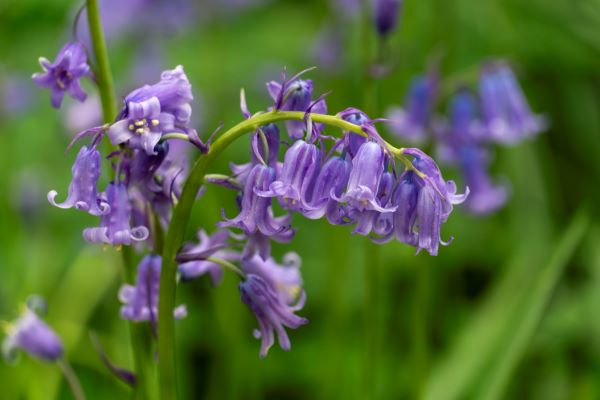
Scent Diary : Bluebells

Crushed young linden leaves — milky, tart, reminiscent of overripe lemons
Moist soil — pencil shavings, moss, steeped black tea, lingering spice, mineral dust
Bluebells — rose petals and lily of the valley soaked in almond milk, green, sweet, indolic
Lichen — Japanese ink, vintage face powder, cinnamon
Rowan flowers — pungent-spicy, powdery, dried mushrooms, almond candy
Lily of the valley — difficult not to think of Diorissimo, which is the best case of a nature reference in perfume
Nettles — grapefruit, green grape, crushed grass

A spring forest walk. Brussels. “Rice seedlings grow,” according to the Japanese traditional calendar.

Scent Diary is a place to write your observations about the scents around you–and about scents in your environment. Whether you write down 1 recollection or 10 matters less than simply reminding yourself to smell. You can add as many comments as you wish. You can comment today or over the course of the week; this thread will always be open. Of course, do share what perfume you’re wearing or what particularly good scented products you’ve discovered.

While looking through my articles, I found this article that I wrote a few years ago but that still remains popular and often-read: A to Z Tips for Enjoyable, Affordable and Rewarding Perfume Hobby. If you have any tips to add, I’d love to hear them.

Photography by Bois de Jasmin

Recommend Me a Perfume : April 2024

Our “Recommend Me a Perfume” thread is open this week. You can use this space to find perfume recommendations, to share your discoveries and favorite scents, and to ask any questions about scents, aromas and flavors. Or you can just tell us what perfume you are wearing!

Our May-June perfume class schedule is now open. The new classes include Lily of the Valley, Lilac, Hyacinth, Amber, Vanilla, and Tonka Bean. Please take a look and let me know if there are other topics that you would like to study.

How does it work: 1. Please post your requests or questions as comments here. You can also use this space to ask any fragrance related questions. To receive recommendations that are better tailored to your tastes, you can include details on what you like and don’t like, your signature perfumes, and your budget. And please let us know what you end up sampling. 2. Then please check the thread to see if there are other requests you can answer. Your responses are really valuable for navigating the big and sometimes confusing world of perfume, so let’s help each other!

To make this thread easier to read, when you reply to someone, please click on the blue “reply” link under their comment.

Photography by Bois de Jasmin

As Seen On

Design by cre8d
© Copyright 2005-2026 Bois de Jasmin. All rights reserved. Privacy Policy