Victoria: 2670 posts

Scented Garden : Fragrant Antique Roses

Roses and rock wall

by Elise Pearlstine

Close your eyes and imagine smelling a rose. Now imagine where you are and who you are with. My first memory is the warm, dewy, pure rose smell of roses along my back fence in my desert garden first thing in the morning. The next impression is the smell and sight of a mixed bouquet of rosebuds cut from my mother’s garden. I remember how the bright colors and subtle hues of different blooms contrast and how some roses stood tall while others gently bent over the edge of the vase. The smell of each was unique. The pleasure of walking in the garden, watching for thorns, cutting the perfect roses, finding an old treasured vase and arranging them for display is intimately mixed in with the scent of roses.

Continue reading →

Parfums de Nicolai Weekend a Deauville : Perfume Review

44444

Courbet

Star rating: 5 stars–outstanding/potential classic, 4 stars–very good, 3 stars–adequate, 2 stars–disappointing, 1 star–poor.

Graceful and delicate, Weekend à Deauville is tied along with Odalisque and Le Temps d’une Fête as one of my Parfums de Nicolaï favorites. The fact that I cannot decide simply proves how much I enjoy the offerings from this perfume house. I love how perfumer Patricia Nicolaï expresses classical themes in a modern form. Weekend à Deauville is a particularly nice example of her signature—a salty-sweet composition of lily of the valley and leather.

Continue reading →

Histoires de Parfums 1740 Marquis de Sade : Perfume Review

44444

1740

Star rating: 5 stars–outstanding/potential classic, 4 stars–very good, 3 stars–adequate, 2 stars–disappointing, 1 star–poor.

I will not even try to connect the Marquis de Sade (1740 refers to the year of his birth) to the elegant immortelle-leather composition presented by Histoires de Parfums, a French niche line established by Gérald Ghislain in 2000. Somehow, it speaks not of an 18th century boudoir but is rather an expression of the Folies Bergères of 1920s Paris where Josephine Baker performed her Danse sauvage. While it is dark and sensual, the aura of 1740 is really quite glamorous.

Continue reading →

Rain, Home, World

Rain2
It started, like all overwhelming events, quite unexpectedly. First, the skies were tinged a pearly grey, then suddenly they whitened and broke into a rain of monsoon proportions. The staccato noise of drops hitting the roof, the surprising brightness of sunshine reflecting in the water, the steamy heft of air… Within seconds I knew that I might as well succumb–having discarded my useless umbrella and high-heeled shoes, I simply ran. When breathless and wet, I finally reached the apartment, the rain started to recede, turning mellow. The deep puddles were filled with green leaves and marigold petals, the street looked shiny and clean…

Continue reading →

Citrus : Perfume Lexicon & Fragrance Notes

According to the Greek mythology, the garden of Hesperides was a garden belonging to Zeus’s consort, Hera, where immortality-giving apples grew, tended by the daughters of Hesperus or the God of Evening, the Hesperides. Alluding to the magical golden apples, the name Hesperide came to be applied first to oranges and then to the entire citrus family.

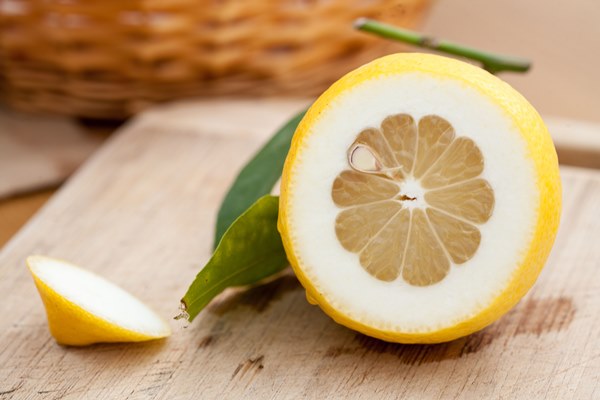
lemon1

Although citruses seem ubiquitous now, the fragrant fruit was among the precious cargo from the Spice Route. The earliest mention of citruses occurs in the Nan-Fang Ts’ao Mu (Trees and Plants of the South) written around 300 A.D. by Chi Han, while in 1178, there appears a whole chronicle dedicated to citruses, the Citrus Chronicle (Chű Lu), written by Han Yen-chih (Morris 48). Native to China and Southeast Asia, where about 500 species can be found, citruses were brought to the west by the Arabs. The parts of Europe under Arab control, such as Spain and Sicily have a long tradition of citrus cultivation. Indeed, Sicilian citrus oils have always been among the most prized. In the 14th century, spice trade was the source of revenue for Italy, specifically Venice, which after the battle at Chioggia in 1380, defeated Genoa and monopolized the trade (Morris 141). The Venetian galleys intercepted the caravans at Aleppo or Alexandria, and then would transport their wares to various guilds in Europe (141).

Continue reading →

As Seen On

Design by cre8d
© Copyright 2005-2026 Bois de Jasmin. All rights reserved. Privacy Policy