Books: 114 posts

Books and reading lists

À rebours (Against Nature) by Joris-Karl Huysmans : Scents in Books

“From black-rimmed plates they ate turtle soup and eaten Russian rye bread, ripe Turkish olives, caviar, salted mullet-roe, smoked Frankfurt black puddings, game in gravies the colour of liquorice and boot-blacking truffled sauces, chocolate caramel creams, plum puddings, nectarines, preserved fruits, mulberries and heart-cherries; from dark coloured glasses they drank the wines of Limagne and Rousillon, of Tenedoes, Val de Peñas and Oporto, and, after the coffee and the walnut cordial they enjoyed kvass, porters and stouts.”

― Joris-Karl Huysmans, Against Nature

His writing inspired Oscar Wilde—and corrupted Dorian Gray. As an art critic, he discovered Degas and Odilon Redon. Joris-Karl Huysmans (1848-1907) was one of the most prominent stars of the European art scene at the end of the 19th century, and yet he remains little known to the general public. However, two events this year are putting Huysmans into the spotlight. First, the Bibliothèque de la Pléiade, published by Gallimard, has added his works to their prestigious collection of classics. Second, Musée d’Orsay will hold an exhibition from 26th November 2019 to 1st March 2020 devoted to Huysmans’s contributions to 20th century aesthetics.
Continue reading →

5 Books for Language Lovers

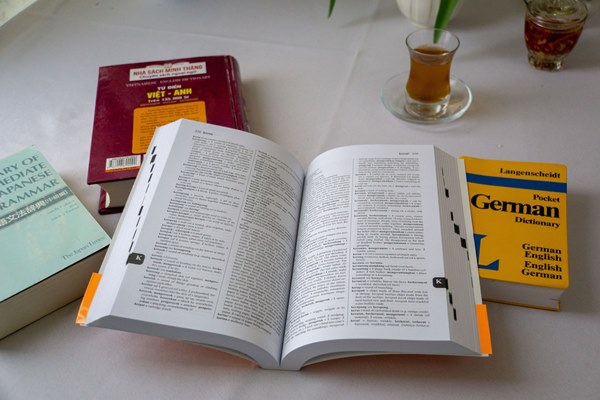
Babel comes from the Hebrew verb meaning “to confuse,” and the story of Babel is the story of human folly in aiming to reach the heavens by building a large tower. To stop their efforts, God splintered their tongue into a dizzying multitude–and created the first language barrier humanity has experienced. Yet, one can find this diversity incredible, rather than regrettable. The 6,000 or so human languages that exist today are so rich that learning them, or learning about them, is a fascinating pursuit.

I’ve shared some of my tips on learning languages in three different articles, How I Learn Languages, How I Learn Languages: Where to Start, and How to Learn A Language by Reading and Listening, but today I would like to invite you to read about languages. I’ve selected five books that either explore the way languages developed or the way people use them. None of them are standard academic books, but rather works written by people passionate about words, sounds and letters.

Continue reading →

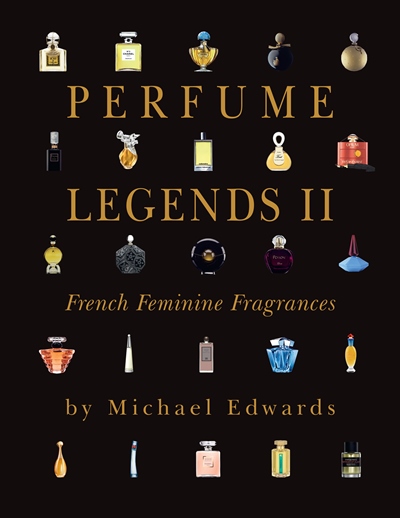
Michael Edwards’s Perfume Legends II

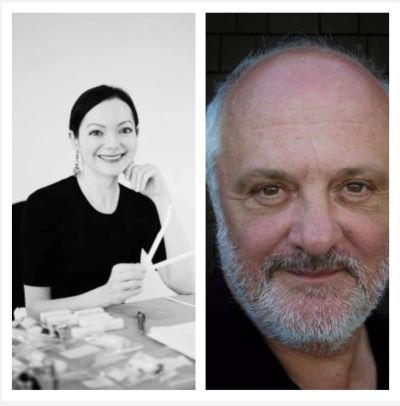
I’ve been waiting for Michael Edwards’s Perfume Legends II in the same way that Star Wars fans anticipate the new sequels. First published in 1996, Perfume Legends told stories behind more than 40 iconic fragrances. Edwards explained the inspiration behind the concept and the bottle and also left room for perfumers’ voices. Why did Edmond Roudnitska add an opulent plum note to Rochas Femme? How did Jacques Polge create the baroque effect of Chanel Coco? I read and re-read the book so much that my copy fell apart.

Edwards, however, wouldn’t rush the sequel. Respected in the industry for his Fragrances of the World database that assiduously tracks every new launch, he brought the same meticulousness to the Perfume Legends project. He decided to update the list, and so he spent several years researching information and interviewing perfumers, creative directors and designers. The industry can be frustratingly secretive, especially when it comes to explaining the perfume formula, but Edwards has never been daunted by such obstacles. The book reveals it all.

Continue reading →

Boris Pasternak : Let’s drop words as gardens drop orange-peel and amber

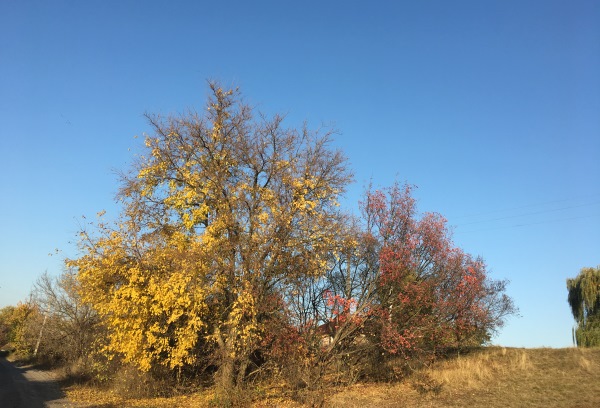
The garden stood still and fragile, ready to drop golden leaves at the gentlest breeze. I woke up early and as I stepped out of the house, I didn’t anticipate the ethereal beauty of autumn. I too stood still, my hand outstretched to pick a red apple forgotten on a bare branch. Fall cast its spell on me, and I didn’t want to shake it off.

The last time I was in Ukraine in autumn was in 1993, but I don’t recall visiting Poltava, the place where my grandmother Valentina lives, at that time. When I still lived in Ukraine, I would usually be in school. Once I was already abroad, I would return only in spring or summer. This spontaneous visit happened because of a series of events out of my control, but as I stood in the orchard filled with golden light, I realized what a gift fate has given me. To experience perfect beauty when one least expects it is after all one of the greatest blessings in life.

Such moments aren’t grand. As Boris Pasternak (1890 – 1960) writes in one of his most moving poems, “life, like an autumn stillness, is all detail.” Noticing these details and capturing them is essential. When people ask me why I find the sense of smell so fascinating, I respond simply–it allows me to pay attention to details. If you notice the scent of fallen leaves, you will also notice the delicate etching of their veins, the lemon yellow hue, the silvery mist that turns the landscape into an impressionist painting, the sound your steps make in a quiet orchard. Your ability to slow down and pay attention to such things is the essence of enjoying life, of living it fully, of savoring every moment, whatever the circumstances.

Continue reading →

The Color of Love

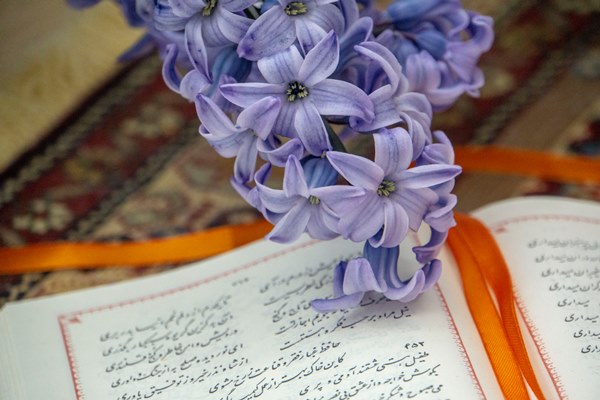
“Even before the two worlds took shape, there was the color of love.” The 14th poet from Shiraz, Hafez, embodies for most the most beautiful and poignant of what the poetic Sufi tradition has produced. This mystical branch of Islam encourages the experience of the divine through one’s personal quest, and it fits with my idea of spirituality. According to the Sufi worldview, the divine is in the details. In every leaf. In every jasmine petal. In every exhalation of a rose. In oneself. The search for it gives meaning to all that one does. And art in all of its manifestations is the way to connect to something greater than oneself, to bridge the two worlds, the inner world of spirit and the outer world of the material.

What is the place of love then? For Hafez, who stays true to the Sufi tradition in his writing, it’s the most important state that can be. Without love, it’s impossible to understand the divine. Which is why in his famous poem he says that even before the idea for the world existed, there was love. Love intoxicates. Love breaks all barriers. Love enlivens. Love takes one out of oneself. Love transcends all. Love makes you feel alive.

Continue reading →

As Seen On

Design by cre8d
© Copyright 2005-2026 Bois de Jasmin. All rights reserved. Privacy Policy