Books: 114 posts

Books and reading lists

Perfumes for Reading The Pillow Book

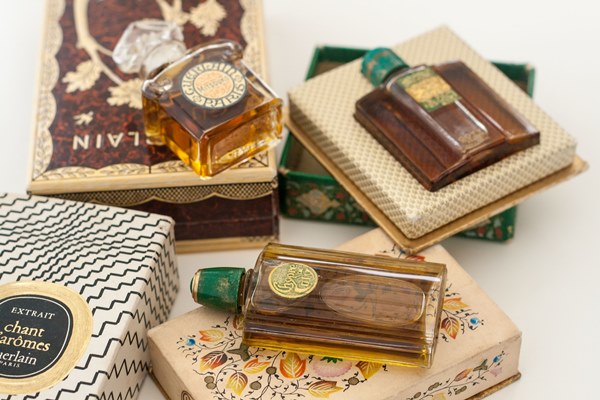
“Things that make your heart beat fast: to wash your hair, apply your make-up and put on clothes that are well scented with incense. Even if you’re somewhere where no one special will see you, you still feel a heady sense of pleasure inside.” The woman who wrote these lines was a 10th-century Japanese lady-in-waiting in the Heian court. We only know her title, Sei Shōnagon, not her real name, but The Pillow Book ensured her fame. In my recent FT magazine article, Three Perfumes for Sei Shonagon, I select three fragrance to accompany the Japanese literary masterpiece.

“For a fragrance that evokes Sei Shōnagon’s description of the royal palace – the carved screens, incense smoke and rustle of silks – I turn to Arquiste’s Nanban. It’s dark and plush, with velvety layers of myrrh, sandalwood and leather, but the infusion of osmanthus, a blossom that smells of apricots and tea, gives a candlelit glow to the composition.”

Have you read The Pillow Book? Do you ever select scents that match the mood of your favorite books?

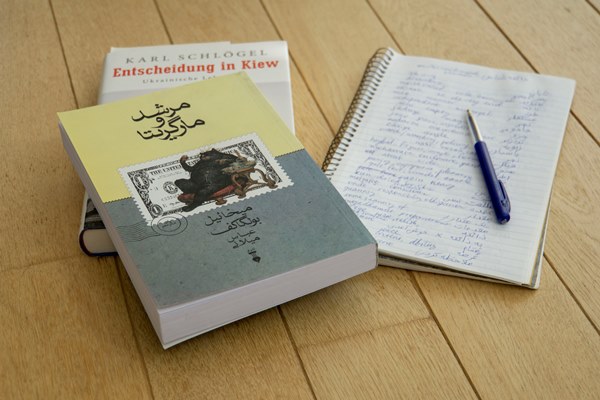
How I Learn Languages 3 : How to Pick a Tutor on Italki

When I shared my tips on learning languages, I received many letters and comments from you with your own experiences, and above all, with questions. I apologize if I wasn’t able to answer every letter or with as much detail as I would have liked, and so I’ve decided to separate all of the questions into  categories and address them in a series of posts. One topic in particular was finding a tutor on Italki, a website that I use to learn languages. Italki is a platform that offers a chance for students to find tutors, conversation partners, and help with grammar or word usage in dozens of different languages. It works on a referral system, so if you want to join and get an automatic $10 discount on your lesson, be sure to get referred by another user (they will also get a referral credit). My Italki profile is here.

Italki has grown tremendously over the years, and today it has so many options that newcomers may feel overwhelmed. Should you choose a professional teacher or a tutor? How do you know that the tutor is trustworthy? How do you plan your study? Finally, how do you select the ideal tutor for you among hundreds of profiles? OK, you won’t have that problem if you want to learn a less common language like Uzbek, since there is only one Uzbek tutor on Italki, but let’s assume that you want to learn Japanese and there are around 400 people offering their language teaching services. Where to start?

I’ve written this article using the example of Italki, since that’s what I rely on, but these tips can be applied to other other language tutoring service.

Continue reading →

Wind Through Green Leaves Aoarashi

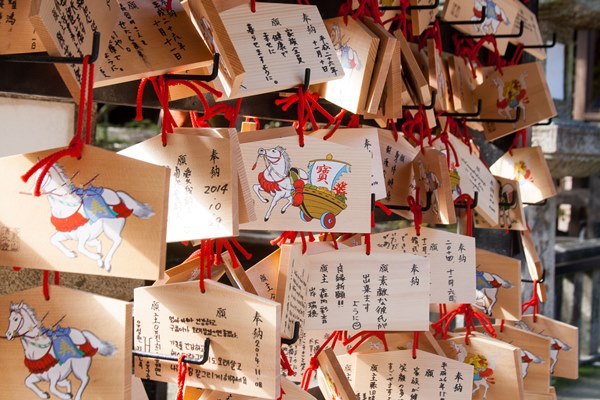
Imagine right now standing under a tree and hearing the wind rustling through its leaves. If you enjoy this vision, I would like to share a Japanese poem with you.

Wind blowing through green leaves
I see a shrine
And I pray

青嵐神社があったので拝む
Aoarashi Jinja ga atta node Ogamu

Japanese haiku are full of seasonal words, which serve as a guide to the reader. For instance, this charming poem by Ikeda Sumiko (池田澄子, born in 1936) contains the word aoarashi.  It means wind blowing through green leaves and it’s a seasonal word for the fifth month.

Continue reading →

Bulgaria Travel Reading List

Bulgaria, like so many places that fell on the other side of the Iron Curtain, remains terra incognita. Yet, it has an ancient history, delicious food, beautiful music, picturesque churches, incredible biodiversity, and of course, roses. Despite its small size, Bulgaria supplies 50% of the world’s rose essence.

I’ve decided to put together a list of non-fiction and fiction books. These novels and travel accounts present a fascinating and rich land, a place where many different cultures, influences and traditions meet.

Continue reading →

How to Learn A Language by Reading and Listening

In my first two articles outlining my methods for studying languages, I mentioned that I rely on reading both to learn new languages and to maintain the ones I already speak. However, I wanted to explain what I do in more detail, because my strategy differs from the more usual ones found in language books and classrooms. Generally, we’re told that we should just start reading, look up the words we don’t know and just slough through the book despite the difficulties. In the same vein, we’re advised to watch foreign films and listen to music.

The problem with this approach is that it takes a long time to learn a language in such a passive way. Of course, we should plunge into books we want to read as soon as we feel that we have enough of the basics and we should watch films and songs. The latter is especially important to get used to the rhythm and melodies of the language you’re learning and to create your own language bubble. (Watching films with subtitles, by the way, is not particularly effective, since our brains use the path of least resistance and effectively tune out the incomprehensible by focusing on the familiar.) I often tune into German, Portuguese or Japanese radio stations and listen to them as I cook or edit photos.  However, if your goal is to learn to speak the language, then you have to follow a different strategy when reading and listening.

Continue reading →

As Seen On

Design by cre8d
© Copyright 2005-2026 Bois de Jasmin. All rights reserved. Privacy Policy