Books: 114 posts

Books and reading lists

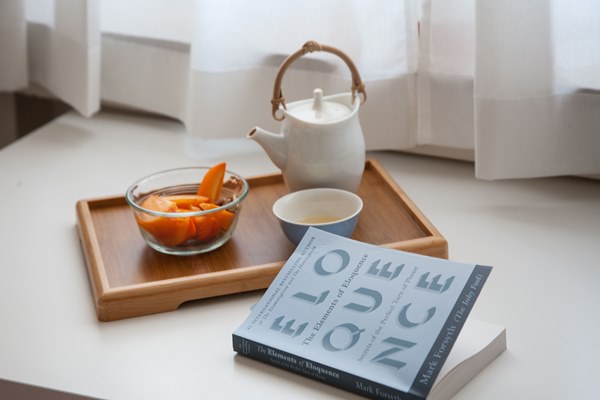
Haft Seen and Hafez

Happy Nowruz! نوروز مبارک ! Nowruz is also called the Persian New Year, and it’s celebrated on the spring equinox, usually on March 20 or 21 in the Western calendar. This year, it took place on Wednesday March 20, 2019 in New York and Brussels, and on Thursday March 21 in Tehran. It’s a holiday that cuts across religious and geographical divides, and it’s celebrated in many countries around the world, especially the ones that had a link with ancient Persia. Along with Easter, it’s my favorite holiday, because it’s about rejuvenation, light and spring.
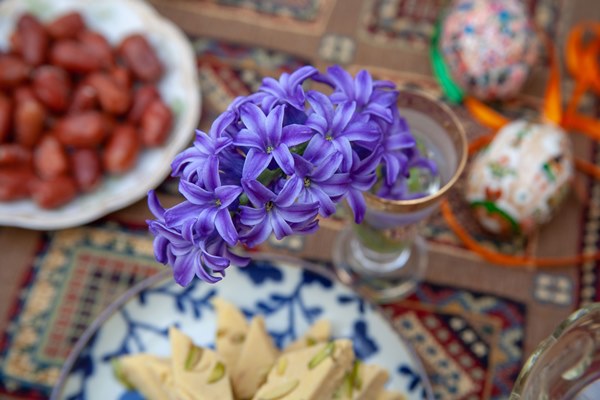
I’ve already written about the tradition of haft seen, a special spread of symbolic items that have deep significance on Nowruz. As I’ve mentioned, a book of Hafez’s poetry is an important part of haft seen. In the same spirit, I’ve selected a poem to share with you. I hope that the new year will be filled with beauty, happiness and inspiration for all.
Continue reading →

The World in a Haiku

Silent the old town
the scent of flowers
floating
And evening bell
-Matsuo Bashō (1644-1694), translated by Jane Reichhold

Haiku condenses. Haiku magnifies. If haiku speaks of a flower, it doesn’t compare the poet to a flower or the world to a flower. It says, the world is a flower. The world is in the flower petal. The details are refined by the poet’s imagination, who pours the whole experience into seventeen syllables. Haiku is the essence.

Discontented
Violets have dyed
The hills also
-Shiba Sonome (17th century), translated by Earl Miner and Hiroko Odagiri.

Continue reading →

How I Learn Languages 2 : What Languages To Study

I didn’t anticipate the interest that my first article on my language learning strategies would generate. Your comments and emails sharing your experience with studying were fascinating and full of great tips. Above all, many of you asked me questions such as the resources I use for reading, writing, and listening, how I maintain all of my languages, how many languages one could study at the same time, and so on. I’m glad to reply to them all.

I learn languages for a variety of reasons. Some I’ve learned because I moved to the countries where they were spoken. Some I’ve studied for my degree in Political Science and to facilitate research. I’ve also learned languages as I traveled or wanted to understand better the cultures that fascinated me.  In the this article on the languages topic, I’ll discuss how to decide what languages to study. It may sound like a straightforward decision, but how you take it will determine your success and your ability to persevere with studying a new language.

Do Not Study a Language Just Because It’s Popular

Let’s bracket the real issue of needing to study a language for work or to adjust to a new country. Today I want to talk about a situation where you’re simply picking a language to learn and are not sure whether you should study French or Italian.  First, think about what language you would like to speak? Hearing what language do you feel your heart skip a beat? What language do you find beautiful? What language belongs to a culture (cultures) you find fascinating?

Continue reading →

How I Learn Languages

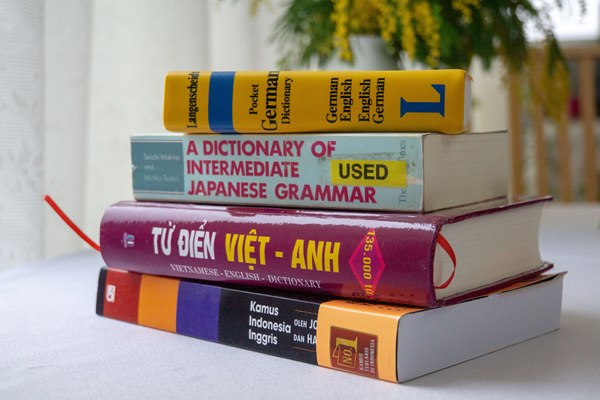
The KGB blacklisted my stepfather, making it impossible for him to travel outside the Soviet Union. He satisfied his wanderlust by reading and learning languages. I remember our bookshelves filled with self-study books and dictionaries: English, French, Italian, German, Bulgarian, Serbian/Croatian, Czech. I opened them at random and the more unfamiliar they looked, the more I wanted to learn and enter the universe of new languages. It felt exciting and liberating.

That exhilarating feeling of discovery has remained with me, and it drives me to learn new languages. I speak, read and write 18 languages and am currently learning my 19th. Besides English, these languages include French, Italian, Persian, Indonesian, Japanese, Russian, Ukrainian, Turkish, Vietnamese, Urdu, Bulgarian, German, Hindi, Uzbek, Portuguese, Albanian, Serbo-Croatian–and learning Mandarin. Most of these I’ve learned in the past few years when I figured out a method that worked for me. I’m often asked by many of my friends and readers to put together my strategy for studying languages, and so I’ve jotted down certain rules and important elements that make my learning efficient. Once I started writing, I realized that I could come up with a whole book on the topic, but since my goal today is to summarize my approach in an article, I’ll leave the comment field for any additional questions and clarifications. Please feel free to ask your specific recommendations and share your experience with learning languages.

Continue reading →

Perfumes The Guide by Luca Turin and Tania Sanchez

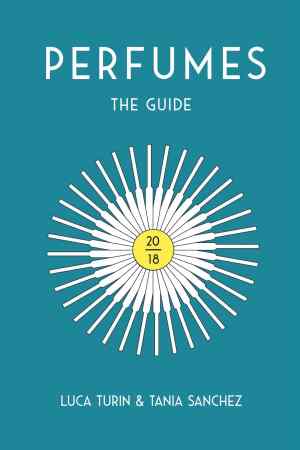
Every year brings us a few thousand new perfumes. When I stand in front of a perfume counter, I’m reminded of something I learned in my university psychology course – too much choice leads to anxiety. Thankfully, there are people who work tirelessly to make sense of the fragrance market and save us from experiencing choice overload. One such individual is Michael Edwards, whose Fragrances of the World, aka The Fragrance Bible, has been cataloguing and classifying perfumes since 1983. Luca Turin and Tania Sanchez are the other brave souls. Their Perfumes: The Guide 2018 includes more than 1,200 reviews of fragrances, along with tips on navigating that overwhelming perfume counter.

I’ve reviewed Perfumes: The Guide 2018 for my FT Magazine column (please click here to read it), but after I finished the piece, I had more to share from my interview with Tania Sanchez. Such as what were the authors’ favorite fragrances as they were working on the Guide, what perfumers do some of the best work today, what would Tania & Luca recommend to someone new to fragrance as well as some of their own favorite reviews.

Continue reading →

As Seen On

Design by cre8d
© Copyright 2005-2026 Bois de Jasmin. All rights reserved. Privacy Policy