Culture: 426 posts

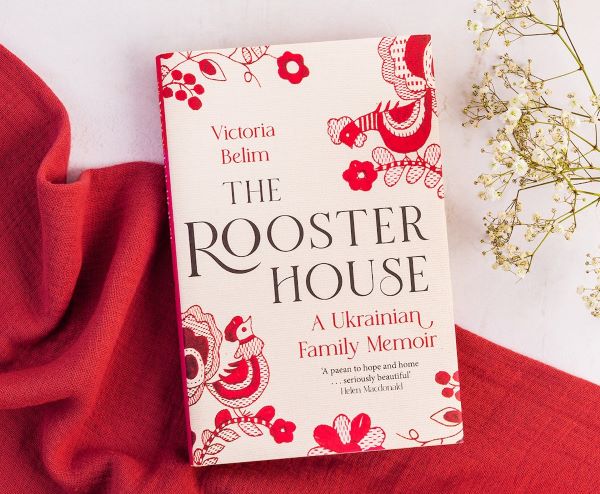
Art, travel, books, history. About my book, The Rooster House.

The Mirror and The City : Jafar Panahi’s Ayaneh

A little girl is waiting for her mother on a busy sidewalk in Tehran. All other first graders have already been picked up by their parents, while she, a girl with her arm in a sling, is still alone. Her quilted pink jacket hangs open; her blue school satchel is dragging on the ground. She peers at the people passing by, attempts to make a phone call and then decides that she’s going home on her own. A school mistress’s friend offers to give her a lift on his bike, but she hops off midway thinking that she has spotted her mother on the bus.
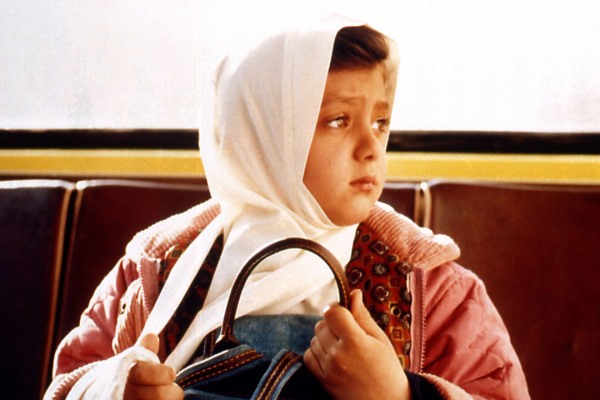
And so starts Mina’s adventure in Jafar Panahi’s film The Mirror. She gets on the wrong bus. She hears people’s stories. She’s worried about not being able to find her mom. And then suddenly, she stares straight into the camera, rips off her arm cast, her pink coat and her white headscarf and announces that she doesn’t want to play anymore. The camera swivels to show the bus full of shocked and confused film crew, with Panahi himself burying his head in his hands. We’re as shocked as they are. What’s going on?
Continue reading →

Fall Reading : Odyssey, Celestial Bodies and Obsessions

Autumn can be described as “golden,” “melancholy” or “rainy,” but I like the Japanese epithet of autumn as “the season for reading,” dokusho no aki. There is something particularly inviting about the image of sitting down with a book and a steaming cup of tea on a rainy day. Or I like to take a favorite book of poetry to a park and read a few stanzas as I wade through the fallen leaves. This fall, however, I’ll more likely be reading at train stations and airports as I have several trips lined up. Whatever the circumstances, I made a list of books to read. For the Bois de Jasmin fall reading list, on the other hand, I want to share the books I’ve read and enjoyed. As always, I look forward to your lists and recommendations.

Homer, The Odyssey

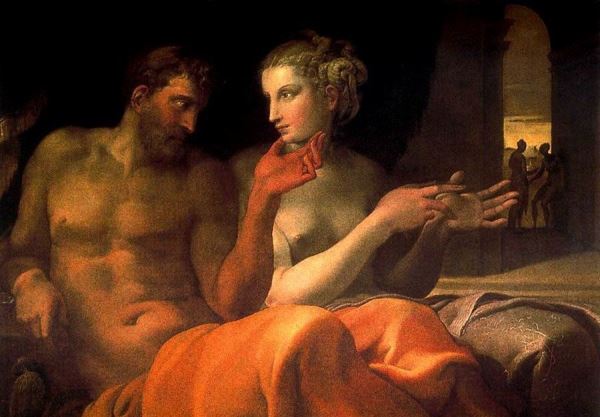
I’ve decided to re-read The Odyssey after I finished Mary Beard’s Civilisations: How Do We Look/The Eye of Faith. Beard observes that certain works of literature influenced our culture to such a great extent that we take it for granted. Two of the most important books in the history of Western literature, as well as the oldest, are Homer’s Iliad and The Odyssey. I’ve selected The Odyssey, because it was my favorite when I was a student, and the copy we had at home was a French translation by Leconte Lisle circa 1860’s. It’s a translation in prose, but I found it beautiful and suspenseful.

Continue reading →

Scents That Satisfy Wanderlust

Some scents have the flying carpet effect on me. I only need to put a few drops on my skin and I feel that I’m in another place. It might be a place that I visited, but most of the time it’s about a fantasy. In my new FT column, Scents with A Sense of Place, I explore how fragrances can transport us out of our usual routine and take us on a journey. I use the example of several favorite fragrance, including my recent coup de coeur, Chanel Paris-Deauville.

The art of perfumery is about creating illusions. When we explore scents, it’s best to forget about the brand, bottle shape and perfume name, and focus on what the aromas tell us. For one person, Etat Libre d’Orange Jasmin et Cigarette is a smoky jazz club, while for another it’s an Indian temple filled with incense smoke and flower garlands. The only thing that matters is whether a perfume creates a vision one wants to experience again and again. To continue reading, please click here.

What about you? What perfume do you reach for when you wish to satisfy your wanderlust?

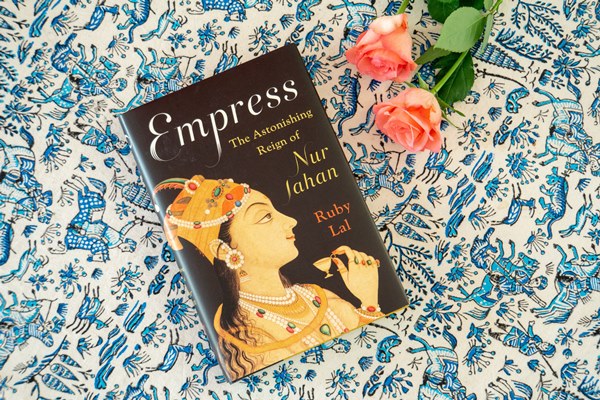
Empress Nur Jahan by Ruby Lal : Power and Roses

One doesn’t often see empresses portrayed loading a gun, but among the many representations of Nur Jahan, the 17th century Mughal sovereign, the most famous shows her doing just that. She’s standing against a leafy landscape, dressed in a man’s turban, orange trousers and a transparent silk coat. The musket is long and unwieldy, but she handles it with ease. Her posture is confident, bold and self-assured. When the painting was presented to Nur Jahan’s husband, the emperor Jahangir, he proclaimed it perfect and named the court painter Abul-Hasan, Nadir uz-Zaman, the Wonder of the Age. But as the historian Ruby Lal notes in her book, Empress : The Astonishing Reign of Nur Jahan, the true wonder was the subject of the painting herself.

Nur Jahan (1577-1645) was born Mihr un-Nissa, a daughter of Persian nobles who left the repressive conditions of Safavid Iran for the greater freedom–and wealth–of Mughal India. She became Nur Jahan, the Light of the World, when she married Jahangir in 1611. She was an unconventional imperial spouse, because she was not only past the nubile age–she was 34 at the time of their betrothal, but also a widow and a mother. Records don’t tell us exactly how the meeting between Mihr and Jahangir happened. What we know for sure is how much the emperor esteemed his wife, describing her bravery, archery and shooting skills, her wisdom, and her generosity at length in his journal, Jahangirnama.

Continue reading →

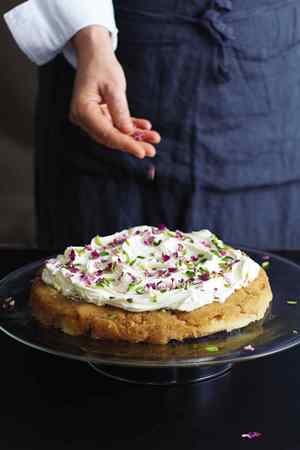
Culinary and Aromatic Journey Across the Islamic World

“My most vivid scent from Beirut was that of gardenias. Our neighbor’s garden was full of gardenia trees and when they flowered, the smell was so heady and divine that I would stay outside just to enjoy it,” recalls Lebanese-born Anissa Helou. As a journalist, chef and prolific cookbook author, she has traveled the world collecting recipes and learning how different nationalities prepare their food. Yet when I ask her for a favorite scent memory, it’s the perfume of Lebanese gardenias that she describes.

I was inspired to reach out to Helou after I spent a few weeks in a haze of coriander, rosewater and saffron, thanks to her magnum opus, Feast: Food of the Islamic World. Published this spring after many years of extensive research, it’s a fascinating compendium of recipes from countries united by their Islamic heritage. As I describe in my article for FT Magazine, A Cultural And Aromatic Journey Across the Islamic World, another common link among the diverse cuisines Helou describes is their attention to aromatics.

Continue reading →

As Seen On

Design by cre8d
© Copyright 2005-2026 Bois de Jasmin. All rights reserved. Privacy Policy