Culture: 426 posts

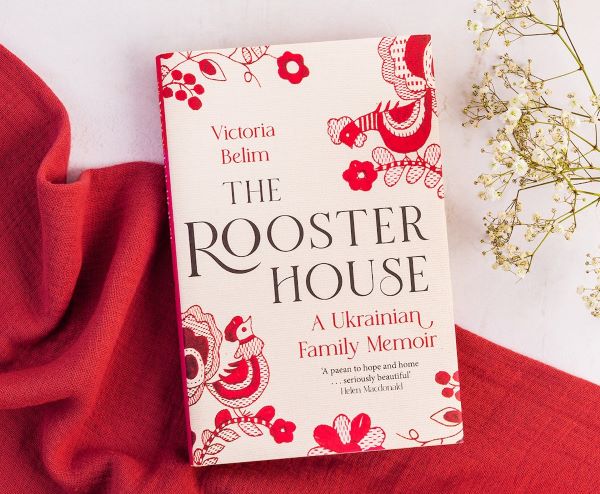
Art, travel, books, history. About my book, The Rooster House.

Renegades, Artists, and Artisans : Women in Perfumery

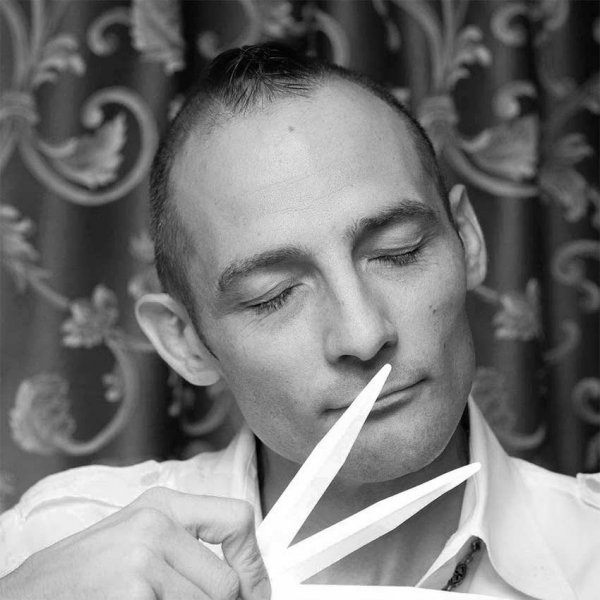
“Only a few people have the supersense of smell necessary to become a Nose—for reasons known only to Noses themselves, no woman has ever had it,” wrote one Donald William Dresden in a 1947 article about “twenty noses of France.” All of these twenty noses, as Mr. Dresden explains to his New York Times readers, are middle-aged men, imposing and intellectual. At round the same time, Germaine Cellier was galvanizing traditional French perfumery with her unforgettable Bandit (1944) and Vent Vert (1947). But she remained invisible for the likes of Dresden.

Fast forward to 2017. Since 1947 perfumery around the world has been altered dramatically by the greater openness of the industry and the opportunities it gave women. One would have hoped that their contributions were honored and recognized. In July 2017 Allure ran an article, The American Perfumers Modern Approach to Fragrance. Yet, in the magazine issue devoted to diversity, the article about the American indie movement didn’t mention a single female perfumer. It’s a serious oversight, since the indie movement is inconceivable without female perfumers. Having found the traditional houses either closed to them or limited in creative opportunities, talented and ambitious creators turned to the indie approach. The former situation was especially true for women.
Continue reading →

Roses, Tobacco and Places in Between : Kapka Kassabova’s Border

“Today, the Valley of Roses near the main rose-producing [Bulgarian] town of Kazanlak (from the Turkish kazan, cauldron) still produces fifty per cent of the world’s rose attar… The other fifty per cent is produced by Turkey. Like Oriental tobacco, the rose is a bitter love story between Bulgaria and Turkey. When Bulgaria broke away from the Ottomans in the 1870s, workers from the rose industry travelled south across the border with cuttings from the Valley of Roses and planted them in the soil of Anatolia. They must have really loved their roses.”

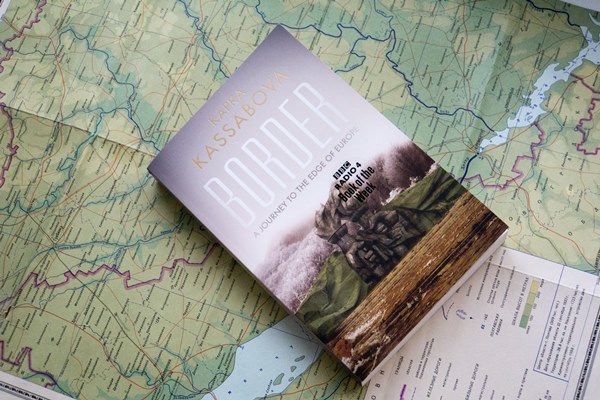
The story of rose damascena is one of many shared by Kapka Kassabova in her odyssey across the borders on Europe’s southern edge, between Turkey, Bulgaria and Greece. In the times of ever hardening borders reinforced by barbwire and prejudice, reading Border: A Journey to the Edge of Europe (public library) is an unsettling experience. How can mere lines on the map have the capacity to cut into people’s lives and haunt their thoughts?

That borders haunt is something I’ve experienced myself. I’ve been fascinated with maps ever since I was a child, sleeping under a large map of the world. A large part on it, colored dark pink, was the Soviet Union, with Ukraine, a jagged diamond sitting on its western border.  “Ukraine” meant “the borderland.” I was born in Kyiv, and finding the city in the middle of the diamond, my finger traced a journey west–Lviv, Krakow, Prague, Vienna. But past Lviv, near the village of Shehyni, a thicker line started, and the dark pink space yielded to a mosaic of colors. I may not have understood the post-WWII arrangement, spheres of influence and the Iron Walls, but I knew one thing with certainty–I couldn’t cross the line at Shehyni. The border was there to keep me in. The more I became aware of it, the more I wanted to see what was happening za kordonom, behind the border. The more I was deterred, the more it entranced me.


Continue reading →

What Does The Word Mitsouko Mean?

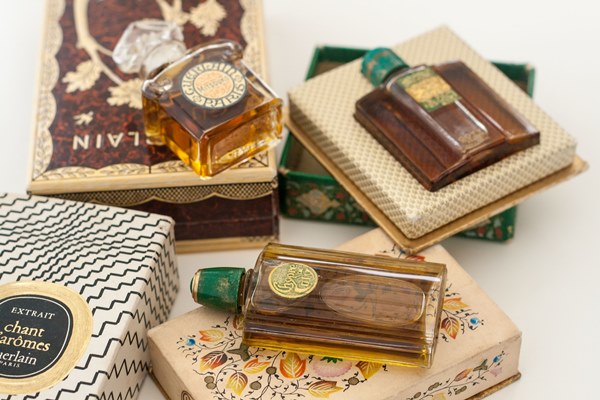
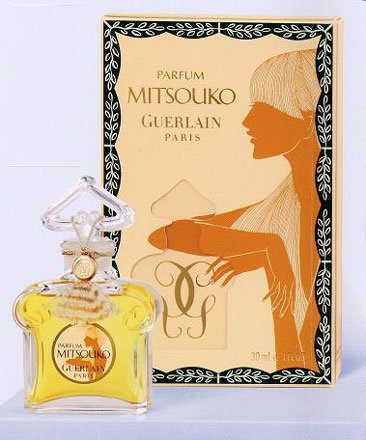
Of the legendary fragrances, Guerlain classics have some of the most beautiful names and stories to go with them. Shalimar and Shah Jahan’s gardens in Lahore. L’Heure Bleue and the streets of Paris at dusk. Après L’Ondée and a sudden May downpour. And there is Mitsouko. The fragrance created in 1919 was inspired by two extraordinary successes of its time–a perfume and a novel, Coty’s Chypre and Claude Farrère’s La Bataille. Farrère was a close friend of Jacques Guerlain, and a few years earlier Farrère mentioned Jicky in his novel Opium Smoke–“Jicky poured drop by drop onto the hands blackened by the drug.” This image delighted Guerlain enough to return the favor by baptizing a new creation after Mitsouko Yorisaka, a character in La Bataille (The Battle).

Farrère’s novel sold more than a million copies in its day, but the perfume inspired by it survived the test of time better. Much of Farrère’s work, La Bataille included, doesn’t excite. It’s a novel of conventional value and somewhat stuffy, nostalgic style inspired by Pierre Loti’s Madame Chrysanthème, Farrère’s commander during his stint with the French navy. To Farrère’s credit, unlike Loti, he attempted to present Japan as an evolving modern society, rather than a place of ikebana and geishas. The background for the story is the Russo-Japanese war of 1905, in which Japan wiped out the Russian fleet and demonstrated that the Meiji era reforms put it on equal footing with the Western powers. Farrère had spent three days in Nagasaki and had done his own research, but in the end, the plot suffers too much from melodrama and clichés borrowed from Loti, without Loti’s refined style.

Continue reading →

Summers Under The Tamarind Tree and Grilled Spicy Chicken

Picking a favorite cuisine is not easy for me. I adore the lusty Ukrainian flavors of my childhood as well as the subtle interplay of nuances of Japanese cooking. Italian dishes, especially the Abruzzo specialties I learned as a teenager living in southern Italy, are the mainstay in my repertoire, food I turn to if I don’t know what else to cook. Persian delicacies like layered rices and stewed meats are what I make when I feel like playing with colors and flavors. And the cooking of the subcontinent, especially Pakistan and India, satisfies my perfumer’s sensibilities. Diverse though the cuisines are in different parts of the countries, they give me a chance to compose a dish as I would a fragrance by building accords and creating top, heart, and base notes.

Pakistani cuisine may be less known in comparison to Indian, but it boasts a splendid variety of dishes, from grilled meats to banana leaf steamed fish, from breads perfumed with saffron to rice garnished with dried fruit and nuts. It’s both a new and an old country. Formed in 1947, Pakistan bears the imprints of civilizations that succeeded each other, from the Indus Valley Civilization to the Greeks and the Mughals. As a place where different faiths met and different people traded, fought, loved and lived, it has a varied and rich food culture. Short of visiting a Pakistani family, one way to discover it is via Sumayya Usmani’s cookbook, Summers Under The Tamarind Tree: Recipes & Memories from Pakistan (public library).

Continue reading →

10 Favorite Summer Reads in 10 Subjects

Summer reading lists are a tradition stretching back to my school days when a teacher sent us forth on vacation armed with a compilation of books to be read by September 1st. Now I will make a confession. As much as I liked imagining that come the first day of school, I would have a book report completed, I could rarely stick to the prescribed selection (and not only because it was biased towards the moralistic Soviet classics). At the library other titles tempted me as did the iris and chocolate redolent volumes from my great-grandmother’s old bookcase. Things have remained much the same the older I got. Even if I make reading lists, I leave room to deviate from them, because one of the pleasures of literature is the serendipitous discovery. My reading depends on my current interests, work projects, recommendations from friends, and Bois de Jasmin readers. If I fall under the spell of one of my obsessions–Japanese literature, Persian poetry, Ukrainian history, artist memoirs, or Middle Eastern politics–my carefully planned reading list will unravel and recombine into something else entirely. I follow my curiosity, and as a motivating force, it’s far stronger.

What I do love is reading lists made by others and selecting new titles to inspire my reading. The summer reading recommendations I share in this post were compiled in the same spirit. They include 10 books in 10 different subjects, books that I enjoyed in subjects that I find fascinating. In the words of Montaigne, who stars in one of my favorite books on the list, “When I am attacked by gloomy thoughts, nothing helps me so much as running to my books. They quickly absorb me and banish the clouds from my mind.” They also enhance the sunniest of days.

Continue reading →

As Seen On

Design by cre8d
© Copyright 2005-2026 Bois de Jasmin. All rights reserved. Privacy Policy