Food & Fragrance: 176 posts

Articles about the gourmand pleasures, flavorful cooking, scent and taste experiments and tested recipe ideas

Tisanes : Fragrant Caffeine-Free Teas

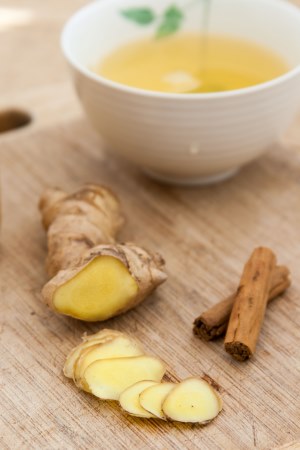
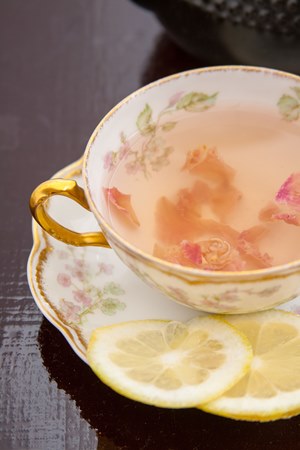
I have a tea drawer, which is hard to explain to those who either don’t drink tea or don’t drink so much that they actually need a designated tea drawer. “What do you do with it?” ask bewildered guests suspiciously eyeing the dozens of packages that I keep in a credenza in the corner of my dining room. (Those guests become even more bewildered when they see my perfume shelf, but that’s another story). Although all tea comes from the same plant, camellia sinensis, it exists in such a range of flavors and tastes that one box of Earl Grey simply doesn’t cover all of my cravings. But since high-quality tea is best bought in small quantities and drunk as quickly as possible, the bulk of my tea drawer is made up of herbs and dried flowers that I use for tisanes.
tisane-gingertisane-rose3

Tisane usually refers to a non-caffeinated beverage made by steeping flowers, herbs, or spices in water. I’m very sensitive to caffeine, and after 6pm I don’t drink anything caffeinated. For this reason, linden blossom or cinnamon and honey tisane is one of my favorite ways to wrap up the day. Some infusions like linden, sage and ginger have health benefits, but I drink them for their aroma and taste. It takes less than 10 minutes to brew rose tea, but the boost you receive from a steaming cup that smells like summer itself lingers for hours.
Continue reading →

Raspberry Cognac Jam

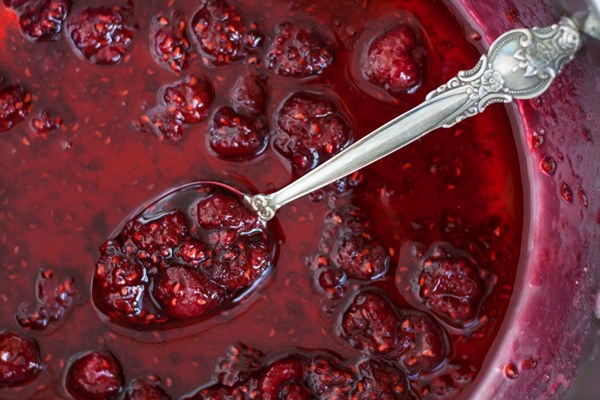
“Do you remember the scene from Anna Karenina about making jam?” asked my grandmother as we stood over a pan of raspberries slowly melting into sugar. The passage my grandmother recalled was about a newly wed Kitty introducing a new method to Levin’s household, with somewhat tense results.

raspberry-cognac-jam1

“Agafea Mihalovna, to whom the task of jam-making had always been entrusted, considering that what had been done in the Levin household could not be amiss, had nevertheless put water with the strawberries, maintaining that the jam could not be made without it. She had been caught in the act, and was now making jam before everyone, and it was to be proved to her conclusively that jam could be very well made without water….Agafea Mihalovna, her face heated and angry, her hair untidy, and her thin arms bare to the elbows, was turning the preserving-pan over the charcoal stove, looking darkly at the raspberries and devoutly hoping they would stick and not cook properly.”*

Continue reading →

Strawberry Orange Blossom Compote

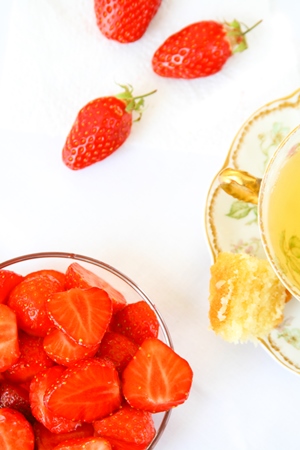
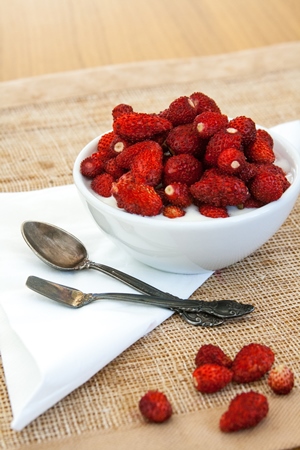
Methyl anthranilate probably doesn’t sound all that delicious to you, and if you were never friends with chemistry, it might seem downright scary. I promise not to give an organic chemistry lecture here, but please bear with me for a moment. Methyl anthranilate is both fascinating and mouthwatering–this molecule occurs naturally in some of the most fragrant fruit and flowers, from Concord grapes to orange blossom, from mandarins to gardenias. And also in tiny wild strawberries, fraises des bois.

wild strawberriesstrawberry-compote2

Also known as woodland strawberries (Fragaria Vesca L.), they are only as big as your pinkie nail, but their flavor is so intense that a fistful of berries will perfume an entire room. They smell of caramel, orange flowers and muscat. When you taste them for the first time, you realize that this is what every strawberry flavor tries to imitate.

Continue reading →

10 Ways to Use Orange Blossom Water

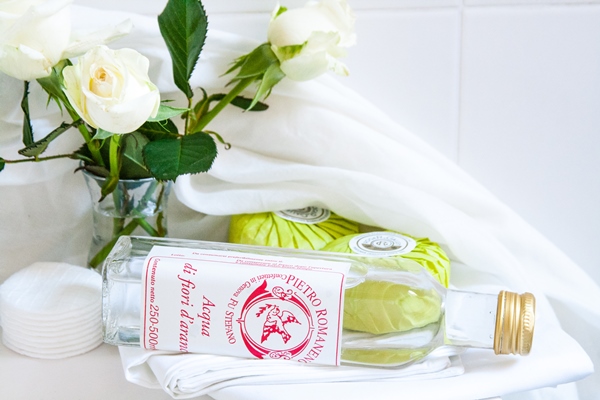
I don’t often think of Marie-Antoinette whenever I use orange blossom water, but perhaps I should. By the time the French queen was playing shepherdess in Versailles, the cultivation of bitter orange trees in France was a long standing tradition solely for the purpose of producing this perfumed liquid.  The aromatic distillation of fresh blossoms scented the linens of the nobility. It found its way into Marie Antoinette’s beauty preparations. It flavored madeleines, little French butter cakes that Marcel Proust immortalized in The Search for Lost Time. Relaxing with a cup of Café Blanc or Orange Blossom and Mint Lemonade is a luxury but thank heavens it’s no longer reserved for the royalty.

orange-blossom-water

If you’ve never used floral waters, it might seem that they are best suited for pink girly desserts and incurable romantics. But while I admit to being a romantic, rose and orange blossom waters are remarkably versatile. A mere hint can give a familiar dish a new, haunting flavor, and you only need take a page from traditional cuisines–from Provence to Morocco, to see how diverse the use of floral waters can be. Once you start experimenting, I have no doubt that you’ll invent new recipes.

Continue reading →

Orange Blossom and Mint Lemonade

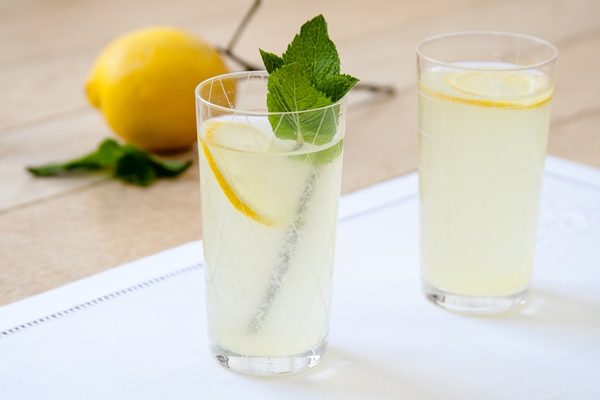
“It’s like drinking sunshine,” said my 11 year old cousin when she tried my orange blossom scented lemonade. Although her unexpected and poetic compliment made my day, I can’t take any credit. First of all, the idea comes from my friend Muna (whom you’ve met before). Second, it’s all in the lemon and orange blossom pairing.

lemonade-orangeblossom

Some combinations in perfumery are considered absolutely perfect. There are classical ones like coumarin and lavender, personal innovations like Jacques Guerlain’s bergamot and vanilla in Shalimar, or modern discoveries like cotton candy and patchouli in Thierry Mugler Angel. And then, you have natural marriages like orange blossom and citrus that are so harmonious than after you try it once, you know that these two are meant to be together.

Continue reading →

As Seen On

Design by cre8d
© Copyright 2005-2026 Bois de Jasmin. All rights reserved. Privacy Policy