Food & Fragrance: 176 posts

Articles about the gourmand pleasures, flavorful cooking, scent and taste experiments and tested recipe ideas

Guerlain Shalimar Tea

One of my  favorite Christmas gifts last year turned out to be Guerlain teas. My friend thoughtfully selected Shalimar and Habit Rouge blends, aware of my fondness for these perfumes. The intense aroma of vanilla and bergamot greeted me as soon as I opened the black tin container of Shalimar. Habit Rouge, on the other hand, was not deliberately scented; the natural aroma of Yunnan tea was meant to capture the leather and citrus nuances of the perfume.
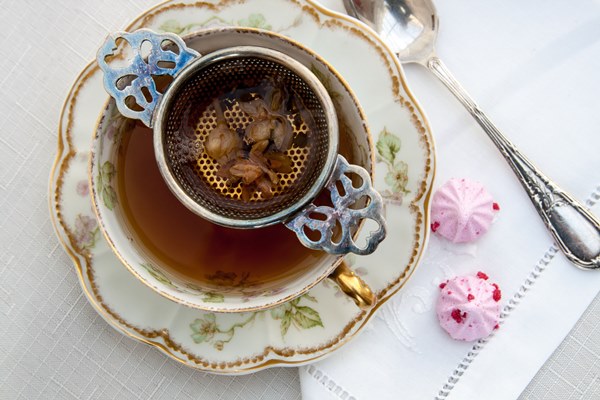
guerlain-shalimar-tea

The collection of fragrant teas was created for the perfume house by Constance Braud, the founder of Thés de Constance, and I’ve shared the descriptions in my Guerlain Flavored Tea Collection article. The line is currently exclusive to the Guerlain flagship store on the Avenue des Champs-Élysées in Paris, where it can also be enjoyed at the new restaurant.

Continue reading →

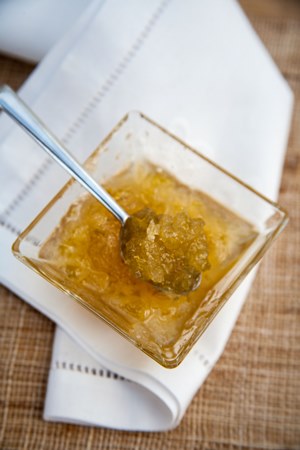
Bergamot (or Orange) Marmalade

When you watch snowflakes swirling outside your window on a grey November afternoon, it’s hard to imagine that somewhere else there are flowers blooming and citrus trees laden with golden orbs. On the southern coast of Italy, Calabrian bergamot farmers are preparing to collect fruit, and for most of the month, the air in Reggio Calabria will be thickly perfumed with a peppery citrus essence as bergamot rinds are processed into essential oil.

bergamotsbergamot-jam1

Although we usually encounter bergamot as essence perfuming our cologne or Earl Grey tea, the fruit itself is a marvel. It has a heady aroma, and it tastes exactly the same way it smells–spicy, acidic, with a hint of green jasmine. It’s much sharper than lemon but also more complex and fragrant.

Bergamot juice can be substituted for lemon in marinades, sauces or dressings. Imagine poached salmon with bergamot mayonnaise or bergamot-basil pesto rubbed over pork chops. The juicy flesh can be tossed with salad greens, onions, and parsley to accompany grilled meat or seafood.  But in Calabria and much of southern Italy, bergamot usually ends up candied or in a jam. Bergamot jam is one of my most vivid memories of southern Italy, and whenever I get a chance, I recreate it at home.

Continue reading →

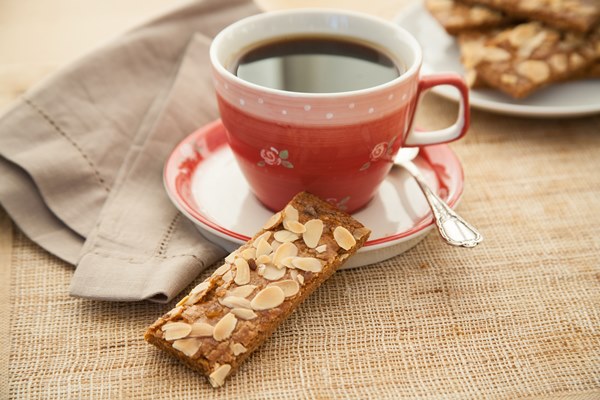
Jan Hagel Dutch Cinnamon and Almond Cookie

Are the American Santa Claus and Belgian St Nicholas (or Dutch Sinterklaas) related? When I casually mentioned that they must be, a Belgian friend vehemently denied that there is any relation. “Santa Claus lives with his reindeer on the North Pole, and St Nicholas lives in Spain,” she reasoned. Well, the Saint Nicholas I know from the Russian Orthodox tradition protects sailors and looks like neither the jolly Santa nor the regal Sinterklaas.

janhagel1

Whoever St Nicholas is, his birthday is celebrated on December 5th in the Netherlands and on the 6th in Belgium, and it’s the main day for exchanging gifts around here. I simply go along with the flow. An extra holiday in the year? Why not celebrate it too!

Baking is a part of any celebration, and the pastry shops in both Belgium and Holland work overtime to produce speculoos, rice flan tarts, gingerbreads and other treats. This year my baking has a distinctive Dutch accent, and for St Nicholas Day, I made Jan Hagel (pronounced as yon hah ghel), a delicate cookie with a crunchy layer of almond flakes and sugar crystals.

Continue reading →

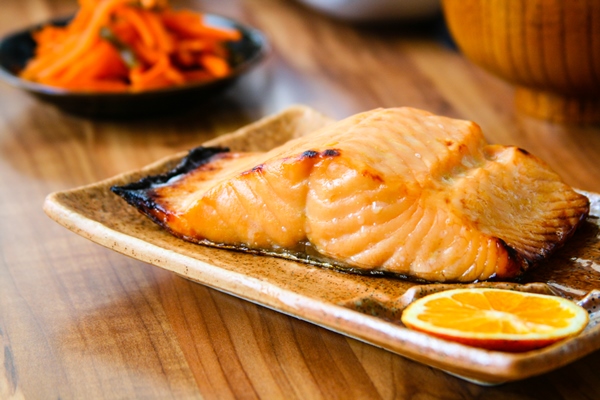
Miso Grilled Salmon with Honey and Orange

As much as I love experimenting with new foods, there are times when all I want is comfort. If I’ve had a tough day and need a hug, I make a bowl of mashed potatoes with a side of cucumber salad. Or I whip up lacy crepes and eat them with plenty of sour cream and cherry jam.  These dishes are old childhood favorites, and they always make me feel better. But over the years, I’ve added a new set of comfort foods to my repertoire. They range from my mother-in-law’s Indian sour lentil soups and vegetable stews to Vietnamese grilled pork on rice. And anything made with miso immediately qualifies as comfort food.


salmon-miso1

What is it about miso that makes it so comforting? It might be its intensely savory flavor or the velvety, suave aftertaste; I’m not quite sure. All I know is that I love it. Miso paste is made by fermenting soybeans and/or other grains with salt and koji, a special starter. The result is the unique vitamin and protein rich condiment that has been used in Japan for centuries. The proportions of soybeans to other grains in the miso recipe will determine its flavor and color. There are numerous miso types, but the white (shiro) and red (aka) varieties are the most common. White miso, which is really golden yellow in hue, contains more rice than soybeans and has a mild, sweet flavor. By contrast, the soybean rich red miso is meaty, bold and salty.

Continue reading →

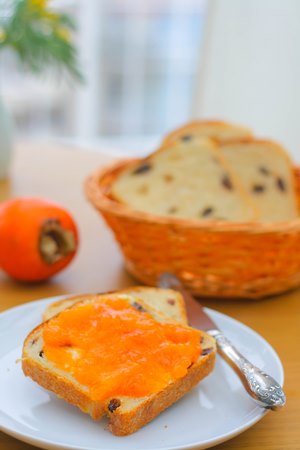
Persimmon Toast

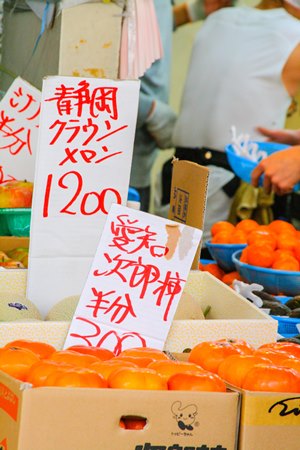
My husband first encountered a persimmon during his first visit to my family home. My stepfather handed it to him and simply said, “Just eat it like an apple.”  For some strange reason, my stepfather prefers persimmons unripe and hard. But my husband wasn’t convinced, as the hard flesh was unyielding and his mouth felt coated with sticky cotton.  It took him a few hours to get rid of the bitter, tannic sensation. The same willingness to please his new in-laws also left my husband unable to refuse yet another shot of vodka, but the consequences of that lasted into the next day. Imagine his surprise when he finally tried a ripe persimmon and discovered that it was a juicy fruit with a delicate perfume.

persimmons-market-japanpersimmon toast2a

There are thousands varieties of persimmons, but Fuyu and Hachiya are the most common ones. Fuyu (top left photo) looks like a squat orange tomato, and it can be eaten when it’s hard. It’s sweet and crunchy, with a distinctive flavor of dates and plums. The Hachiya variety (in the photos below) is pointy and elongated, and it’s the kind that tormented my poor husband. As he will tell you, when hard and unripe it tastes even worse than a green banana–bitter and chalky. But give it a few days to soften and it turns sweet and luscious.

Continue reading →

As Seen On

Design by cre8d
© Copyright 2005-2026 Bois de Jasmin. All rights reserved. Privacy Policy