Food & Fragrance: 176 posts

Articles about the gourmand pleasures, flavorful cooking, scent and taste experiments and tested recipe ideas

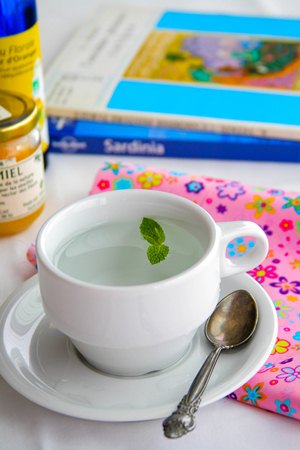
White Teas : Perfume in Your Cup

Please give a warm welcome to Andy Gerber, who will be joining Bois de Jasmin’s team. Andy is a student with a love of reading, writing, cooking, collecting and drinking tea, and growing plants of all kinds. At a young age, he has developed a natural affinity to everything botanical, and his fascination with scents has never waned since. As Andy says, “I will always remember the day when I fell in love with the amazing world of fragrance, which happened, coincidentally, in a greenhouse. As I stood, sniffing, among a collection of scented herbs, violets, and roses, I felt an unexpected wave of euphoria–I came to a sudden realization of how moving and joyful fragrance is.” He will be sharing his knowledge of teas, fragrant beauty care, and aromatic plants with us.

If any edible could be deemed the closest link between food and fragrance, it would have to be tea. Teas display aromatic profiles that often rival perfumes in complexity, containing many of the same volatile compounds as a bottle of fragrance. Notes of honeysuckle and peach might sound more fitting in a fragrance description, but in the world of tea, recognizable floral, woody, and fruity notes like these occur naturally and add interest and subtle depth. It comes as no surprise that perfumers like Jean-Claude Ellena of Hermès and Mathilde Laurent of Cartier are self-admitted tea enthusiasts, who reach for tea as both a satisfying beverage and as an artistic inspiration.
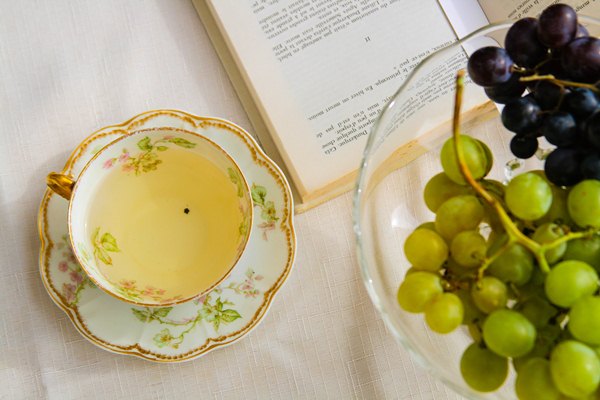
Of all teas, though, white teas are one of the most interesting options available on the market. White teas, grown primarily in China’s Fujian province, are made from the downy leaf buds of Camellia sinensis plants, the same plant used to make black, oolong, and green teas. The leaf buds emerge early in the harvesting season and must be plucked within only a few days before they unfurl into new leaves. After plucking, the buds are allowed to wither for a few days in the sun before they are dried. After drying, the processing is finished and the final product is a long, thin and silvery bud covered with fuzzy hairs. The handling of white tea is delicate and very minimal, in order to preserve the gentle flavors of the tea and keep the leaves intact. The plant material allowed in the production of white tea is thus chosen with the utmost care and attention to quality, as no broken, blemished, or mature leaves are used.
Continue reading →

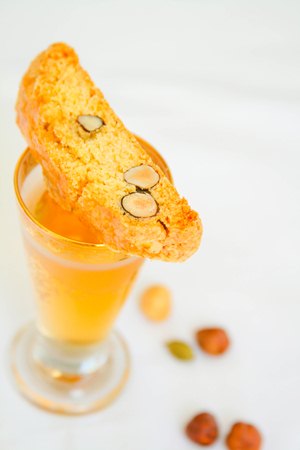
Dreaming Florence : Hazelnut, Orange and Cardamom Biscotti

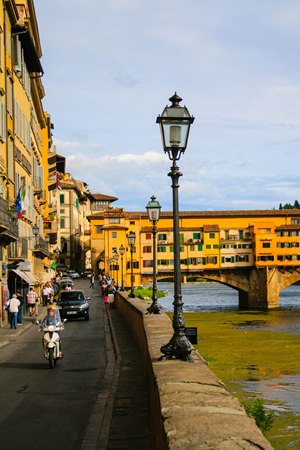
The airplane landed with a slight bump on the tarmac in Florence, and I stepped out into the Italian summer of swaying palm trees, blue skies, and soft, but naughty breeze that kept trying to lift my skirt. Belgium is only a few hours away from Italy, but culturally it might as well be on a different planet. The rainy Belgian autumn was behind me. I checked into my hotel, turned off my cell phone and went out to walk along the Arno. Perhaps, it’s a sign of my fragile emotional state over the past few months, but as I ate my pistachio gelato, I felt something close to absolute happiness.

The last time I visited Florence was almost 10 years ago, and while I have grown obviously older, she is still the same–voluptuous, ravishing, beautiful to the point of overwhelming. How could such simple things be so perfect, I kept wondering as I smelled the late summer roses blooming in profusion inside enclosed gardens or bit into the golden biscotti perfumed with anise and orange zest. A few days later I was back in Brussels, walking through the park and kicking tawny chestnuts with the tip of my boot. I missed the languid beauty of Italy. I may not have been able to infuse Brussels with the generous Italian sun, but I could conjure up Italian scents and tastes in my own home.

Continue reading →

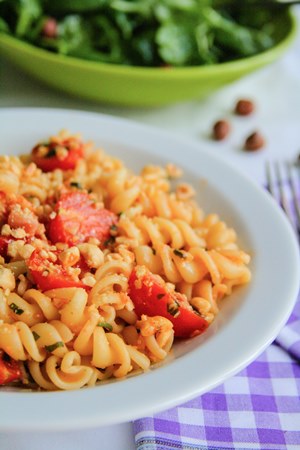
Autumn Perfumes : Pasta with Roasted Hazelnuts and Pancetta

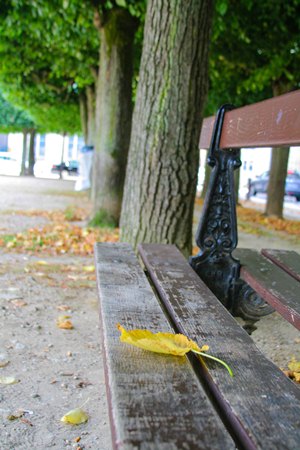
Even before I saw the leaves turning golden in the park, I smelled autumn in the air. The sun may have been generous and warm, and the summer visitors still packed the squares in Brussels, but the autumnal perfume was unmistakable–a nutty-musty melange of decaying leaves and wilting flowers. The anticipation of long dark evenings and bitter cold is enough to make anyone dread fall in the northern countries, but as the Russian poet Aleksandr Pushkin wrote, “Autumn attracts me like a neglected girl among her sisters.” Of course, then in the course of his poem he goes on to compare the beauty of fall to that of a girl dying from consumption, but that’s the complex Slavic soul for you. For my part, I love fall for its golden light and serenity as well as for its seasonal tastes.pasta-hazelnuts2

A big pile of feathery green leaves and tawny shells at the Friday market last week caught my attention. “Noisettes Fraîches,” said the chalk drawn sign, and it took me a moment to realize that I was looking at green hazelnuts. Pushkin taps into my nostalgia for my childhood days and green hazelnuts are another reminder. I pillaged many a hazelnut shrub in my grandmother’s garden in search of tasty, not quite ripe nuts and have fallen many a time trying to get to the higher branches.

Continue reading →

Brussels Flower Carpet and Cafe Blanc : Lebanese Orange Blossom Drink

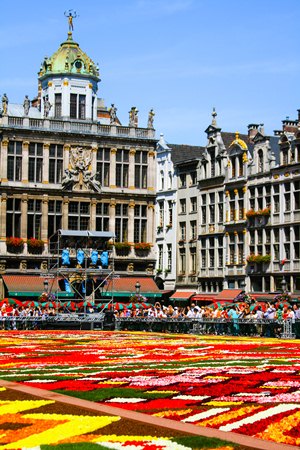
750,000! That’s how many flowers it takes to cover Brussels’s central square, the Grand Place. Every other year a carpet of colorful begonias is laid out in the historic city centre, the vibrant and extraordinary spectacle that turns the plaza into a fairy tale vision. It’s not hard to embellish the Grand Place, which is often voted as the most beautiful square in Europe. Ornate Baroque guild houses and Gothic town hall buildings line its periphery, and side streets bearing names like ‘butter’, ‘cheese’, ‘herring’, etc. reflect its origins as the main marketplace of old Brussels. Today the shops are still around, although most of them hawk chocolates and tacky souvenirs. But the Grand Place retains its majestic aura, and it’s easy to understand why this place is still one of the busiest tourist sites in the city.

I first visited the Grand Place on a cold winter day when the square was all but empty. Like much of Brussels, its beauty left a strange impression on me of something grandiose, but aloof. It took the flower carpet for me to see Brussels in a different light–more colorful and more joyful. What a delightful thing it is to block the main square for several days just to decorate it with thousands of petals! All this for a few evanescent moments of beauty.

Continue reading →

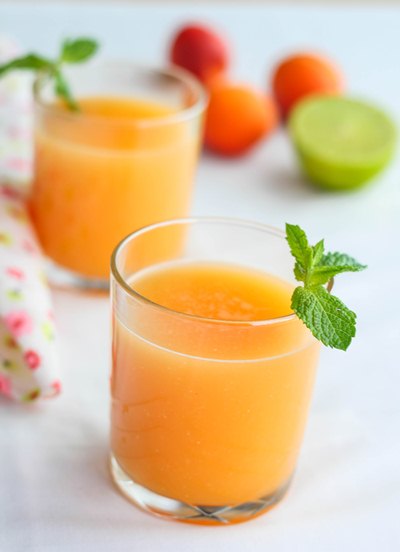
Melon Heaven: Melon Seed and Lime Horchata

August is usually tinted melon for me. Inspired by the heady perfume of ripe melons at the market, I rediscover the sultry beauty of Frédéric Malle Le Parfum de Thérèse and Parfums DelRae Emotionnelle. On sunny mornings that promise to turn into steamy days, I create my own versions of Сhandlеr Вurr’s “scent dinners.” Except that mine are usually breakfasts and I skip the lecturing part. I cut ripe cantaloupe into medium cubes and mix it with thick Greek yogurt. A drizzle of honey (or a splash of rosewater, depending on my mood), and it’s ready. Perfumed with Hermès Un Jardin Après La Mousson–a melon and rose perfume, I’m too ready to start my day.

When Brussels unexpectedly turned steamy–here it means a mere 80F, I discovered that without the air conditioning, even this relatively comfortable temperature can turn an apartment with large windows and transparent blinds into a sauna. Working from home, all I could do was to wear a bikini top and a thick layer of sunscreen. The other solution to staying cool was to drink horchata. True to my summer theme, I made a melon flavored  variation.

Continue reading →

As Seen On

Design by cre8d
© Copyright 2005-2026 Bois de Jasmin. All rights reserved. Privacy Policy