Patchouli: 49 posts

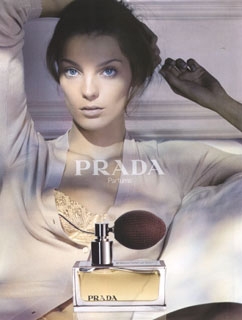
Prada Eau de Parfum and Eau de Parfum Intense : Perfume Review

33333

Prada_ad

Star rating: 5 stars–outstanding/potential classic, 4 stars–very good, 3 stars–adequate, 2 stars–disappointing, 1 star–poor.

Thierry Mugler Angel (1992) demonstrated the unique ability of patchouli to embrace other notes as well as its affinity with gourmand compositions. The dark earthiness of patchouli contains a full bodied luscious element that can be intensified by judicious additions of vanilla and sweet balsamic notes. The next chapter of perfume history would include various fragrances that attempted to exploit the same accord that made Olivier Cresp’s Angel unique. Prada Eau de Parfum was created in 2004 by Carlos Benaïm, Clement Gavarry and Max Gavarry of IFF. Notes include bergamot oil, orange oil, bitter orange oil, mandarin flower, mimosa, rose absolute, schinus molle absolute, Peru balsam, Indonesian patchouli oil, raspberry flower, labdanum, tonka bean absolute, vanilla absolute, musk, sandalwood oil.

The Eau de Parfum opens up with a citrusy bouquet, with the orange note being most prominent. The sheer basenotes are hinted at from the first inhale, as their ambery warmth swirls underneath a sparkling lemon-orange glitter of the top notes. A watery floral cocktail underscored by a pale rose spills into an airy combination of sweet translucent amber and soft patchouli. The base is laced with orange sweetness that runs through like a bright ribbon. Pale gentle patchouli joined by a whisper of vanilla and soft musk creates an impression of blanched Angel’s accord. It is redolent of sweet soap shavings and milk chocolates, both very expensive and very elegant. If one has found Angel to be too brash and overwhelming, gentle and soft Prada might be an option to consider.

Prada Eau de Parfum Intense is not merely stronger than the original Eau de Parfum, it has a rather different character. It is darker, earthier, less pretty than the regular EdP. It has a particularly interesting development, whereas dark earthy patchouli swells rapidly on the skin before exploding in a golden cloud laced with cocoa powder and orange peel. Musty darkness redolent of bitter black chocolate and dark rye bread is shot through with the scintillating sweetness of orange, which lightens the dusky heart of the composition. Hot amber dust softens the earthy element of patchouli, which fades into the background, providing a gilded foil for the vanillic powderiness of coumarin and caramelized undertone of bourbon. Elegant balsamic sweetness resting upon dark sandalwood base conjures visions of heavy brocaded silk, incense ashes and warm skin.

In case you are wondering: Schinus molle is a California pepper tree (or Peruvian pepper tree), a member of sumac family. This evergreen tree originates from South America and is primarily used for its berries, which have a sweet licorice scent.

Parfums de Rosine Une Folie de Rose : Perfume Review

33333

Rene_gruau

Star rating: 5 stars–outstanding/potential classic, 4 stars–very good, 3 stars–adequate, 2 stars–disappointing, 1 star–poor.

Rose is one of my favorite notes, however it is difficult to encounter a rose focused fragrance that can still pique my interest.  A combination of rose and patchouli is a successful marriage, which first was explored in depth by L’Artisan Parfumeur Voleur de Roses.  Une Folie de Rose was released by Les Parfums de Rosine in 2005. Unlike a much more avant-garde Voleur de Roses, Une Folie de Rose is a classically composed rose chypre, featuring notes of coriander, bergamot, tea rose, ylang-ylang, jasmine, sandalwood, amber, oakmoss, vetiver, and patchouli.

The impression upon inhaling the top notes is similar to smelling a tea rose on a hot summer afternoon. The hot and dizzying radiance of the sun and the transparent sweetness of silky petals combine to create a multifaceted sensory wave. Radiant rose is clouded by lemony spiciness of coriander, with sparks of bergamot contributing to the effect.

Intense floral heart, weaving in sweetness of rose and opulent sharpness of ylang-ylang sends forth a shower of red and white petals.  Once the petals settle, an earthy darkness of patchouli rises up, layering the flowers with the currents of golden shimmer and earthy richness. A gentle sweetness of amber is like a scattering of cinders glowing softly in the dark.  A base resting on a cold powdery sweetness of oakmoss sets a stage for an interplay of sensations that makes chypre genre so fascinating.  The outcome is an elegant and interesting rose fragrance, steering clear both of the sentimentality associated with rose and of the aloof austerity attributed to chypre.  While Voleur de Roses is a more innovative take on rose, Une Folie de Rose might be a more wearable option for those who found patchouli in L’Artisan to be too dark and earthy.

Available at Aedes, First-in-Fragrance, and Barneys New York.

Picture: Advertisement by René Gruau from www.renegruau.com.

Serge Lutens Borneo 1834 : Fragrance Review

44444

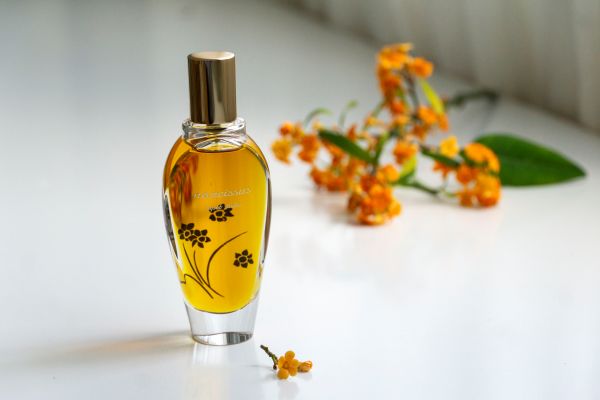
Borneo_bottle

Star rating: 5 stars–outstanding/potential classic, 4 stars–very good, 3 stars–adequate, 2 stars–disappointing, 1 star–poor.

Serge Lutens Borneo 1834 proves once again that the genius of  Serge Lutens and Chris Sheldrake lies in the interpretations of particular notes by exaggerating their qualities and ornamenting them in such a way as to reveal the most unexpected and arresting element. By way of example, the odd camphorous note serving as a prelude for the sensual floral heart of Tubéreuse Criminelle is a note present in tuberose absolute, a hot rubbery darkness that suffuses white floral opulence. Smooth cinnamony sweetness of Cèdre intensified by tuberose recalls a caramelized floral note present in certain types of cedarwood oils, particular Himalayan cedar.

Borneo 1834 takes the sweet winey effervescence of patchouli and layers it with silkiness of chocolate and darkness of resinous woods. The top notes shock like vapors from a glass of rum. The hot wind that stuns senses upon the first inhale whips up a scintillating cloud of patchouli, which settles slowly in swirling patterns—one moment, it is a sweet golden (not earthy) patchouli, the next, it is a dark balsamic resin. The intoxicating warmth is interspersed with sweet incense smoke, which segues into the bitter chocolate. It is not a sweet luscious gourmand note of chocolate that made Angel a success, but a dark mélange of cocoa powder, bits of rubber and rosewood dust. The end result is a composition of remarkable contrasts—weightless darkness, smoky sweetness and eerie sensuality of patchouli.

Borneo 1834 is a newest Salons du Palais Royal exclusive fragrance. Wax samples of this fragrance seem to be more representative of the drydown. However, the best aspect of the fragrance is a fascinating interplay between almost palpable gradations of heat, which are revealed best in the liquid perfume. The notes include Indonesian patchouli, white flowers, cardamom, camphor, cistus, galbanum, cannabis resin, cocoa accord. The name refers to the place and the year marking the period when patchouli first entered the West.

Photo: Borneo 1834 limited edition bottle from Serge Lutens’ fan site (thank you, C!).

Patchouli : Perfume Note

If there are smells that have an aura of particular time and place indelibly ingrained in their olfactory image, patchouli is certainly one of them. For many, especially those who grew up in the sixties, it is a smell of headshops, its earthy darkness masking the smell of marijuana. It is a smell that shows up in any blend bearing a reference to India. It is deemed as too earthy, too heavy, too overwhelming, too inappropriate for haute parfumerie. It is a misunderstanding, of course, because patchouli is one of the most unique scents and the basic building block of the many perfumery genres.

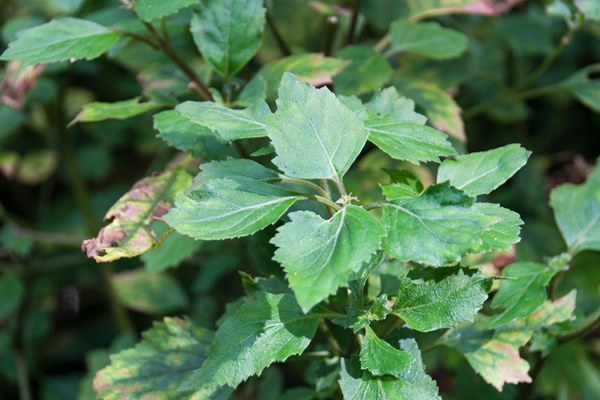
Patchouli (Pogostemon patchouli) is a two-three foot perennial bush with purple flowers, a member of the mint family native to the East and West Indies. The name patchouli originates from a word in Tamil, the southern Indian language, paccilai, which means “green leaf.” Leaves contain the oil, which is steam distilled either from fresh or dried leaves.

The scent of patchouli contains the same earthy element that is also present in vetiver, making it a dark and rich scent. It has an interesting structure, comprised of sweet herbaceous top notes, rich winey heart and balsamic woodsy base. The quality of oil will determine whether it will uphold its negative stereotype of musty and mossy or whether it will envelop one in an almost tangible cloud of sweet golden dust. The oil is often aged, which changes its olfactory profile, with a rich fruity note mellowing the spicy dryness. Experiencing a high quality patchouli oil is something a true fragrance lover should undertake, because it is one of the most fascinating essences. It is hardly a conventionally polite and elegant scent, however it is very haunting. The first rush of effervescent sweetness paired with the dark balsamic spiciness is quite memorable.

The usage of patchouli in perfume has been increasing since the 19th century. Recognizing its insect-repellant properties, the traders of silk and cashmere used patchouli leaves to fold inside their wares. Upon receipt of the products in Europe, the scent of patchouli would have permeated the fabric, thus adding an additional layer of allure to the precious and exotic items. Indeed, in the 19th century, patchouli become an integral part of various Indian fabrics made for export, which led producers of unauthentic paisley shawls to layer them with patchouli leaves, thus being able to pass them off as genuine. Empress Eugenie, the wife of Napoleon III was among the first to favour shawls to protect her against chill, without obscuring the beauty of the gowns designed for her by Worth. Soon, patchouli redolent shawls become fashionable in the 19th century France, paralleling the rise of patchouli as a fragrance ingredient.

In perfumery, patchouli is often used a base note in chypre, oriental and powdery fragrances, marrying particularly successfully with sweet floral tartness of bergamot, chilly sweetness of lavender, voluptuousness of rose and smoothness of sandalwood (Morris 1984, 242). In aromatherapy, it is often employed to treat stress and fatigue.

Fragrances dominated by patchouli: Byblos Patchouli, Bond No.9 Nuits de Noho, Caswell-Massey Aura of Patchouli, Dana Tabu, Etro Patchouly, Gobin Daudé parfums Jardins Ottomans, Jalaine Patchouli, Keiko Mecheri Patchoulissme, L’Artisan Parfumeur Voleur de Roses, L’Artisan Patchouli, L’Artisan Fragrances Patchouli Patch, Lorenzo Villoresi Patchouli, Lush Karma, Mazzolari Patchouly, Molinard Les Scenteurs Patchouli, Montale Patchouli Leaves, Santa Maria Novella Patchouli, Serge Lutens Borneo 1834, Thierry Mugler Angel.

Some fragrances containing patchouli: Azzaro Pour Homme, Balenciaga Homme, Bond No. 9 Bleecker Street, Caron French Cancan, Caron Tabac Blond, Chanel Coco Mademoiselle, Christian Dior Dune, Christian Dior Miss Dior, Christian Dior Miss Dior Cherie, Clinique Aromatics Elixir, Coty Chypre, Givenchy Gentleman, Guerlain Jicky, Guerlain L’Instant Pour Homme, Guerlain Quand Vient l’Eté, Jean Patou Câline, Jean Patou Enjoy, Lalique Eau de Lalique, L’Artisan Timbuktu, Maître Parfumeur et Gantier Parfum d’Habit, Miller Harris Terre de Bois, Montale Aoud Lime, Parfums de Nicolaï Maharadhah, Prada, Rochas Lui, Serge Lutens Fumerie Turque, Serge Lutens Muscs Koublaï Khän, Serge Lutens Un Bois Sepia, Thierry Mugler A*Men, Viktor&Rolf Flowerbomb, Yves Saint Laurent Rive Gauche Pour Homme, Yves Saint Laurent Kouros.

References: Morris, Edwin T. 1984. Fragrance: The Story of Perfume from Cleopatra to Chanel. E.T. Morris and Co., New York.

As Seen On

Design by cre8d
© Copyright 2005-2026 Bois de Jasmin. All rights reserved. Privacy Policy