Why Perfume Doesn’t Last and what to do about it

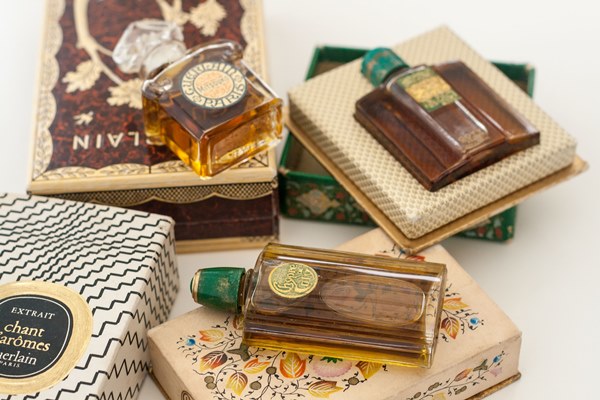
You have found a perfume that seems perfect – the first few moments post-application are enjoyable but then, over the course of the day, you find the scent has disappeared. You might as well not have worn anything. Fragrance that doesn’t last is one of the most frustrating occurrences for a perfume lover, and I’m often asked to explain why it happens. And that’s what I do in my FT column, The Long and The Short of It: making perfume last.
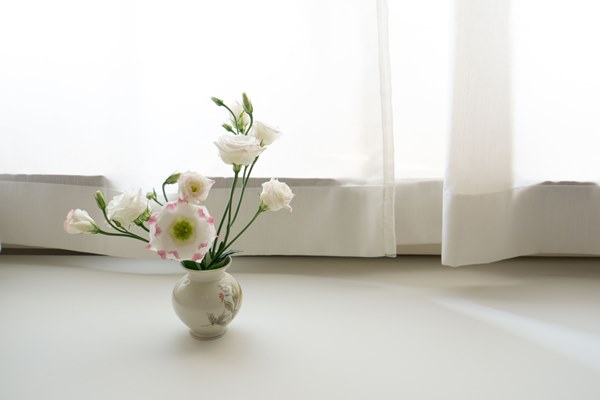
I explain why some fragrances have a fleeting presence, how to test for it, how to correct for it and give examples of perfumes with different types of presence. You can also read my article, One Perfume, Four Ways to Wear It, with other tips on making perfumes last.

One of the reasons a perfume doesn’t last is because of our physiology. To put it another way, your perfume is still present, but you stop smelling it and hence it seems as if it has disappeared. This phenomenon is called olfactory fatigue, or olfactory adaptation, and it happens when odour receptors are saturated with an aroma to the point that they stop sending a signal to the brain about it. If you wear the same perfume every day, such an olfactory adaptation is likely to happen. Also, some materials are more likely to cause an olfactory fatigue, such as ambers, sandalwood and other heavy, enveloping woods. To continue reading, please click here.

As I was writing the article, I became curious to find out from you if longevity is the most important characteristic in a perfume? If you find a perfume you love but that doesn’t last, will you still buy it?

Photography by Bois de Jasmin

Bulgaria Travel Reading List

Bulgaria, like so many places that fell on the other side of the Iron Curtain, remains terra incognita. Yet, it has an ancient history, delicious food, beautiful music, picturesque churches, incredible biodiversity, and of course, roses. Despite its small size, Bulgaria supplies 50% of the world’s rose essence.

I’ve decided to put together a list of non-fiction and fiction books. These novels and travel accounts present a fascinating and rich land, a place where many different cultures, influences and traditions meet.

Continue reading →

My Article about The Shalimar Gardens in Oh Comely

Paradise comes from the ancient Persian word pairidaēza, meaning ‘an enclosed garden,’ and in arid land, the idea of an orchard filled with the sound of water, the glow of ripening fruit and the perfume of flowers was indeed a vision from the celestial realm. Persians perfected the art of gardening and their ideas influenced the way orchards were designed around the world. To see one such garden, I traveled to Karachi, a bustling port city in the south of Pakistan, continued my journey along the Indus River, and navigated the mad traffic of Lahore. An orchard may not be worth such an effort, but the Shalimar Gardens were no ordinary place.

I have a new article in the magazine Oh Comely. It follows me on my travels through southern Pakistan to reach the fabled Shalimar Gardens. They were created in the 17th century by the emperor Shah Jahan and while many changes have befallen them, they’re still one of the reasons to visit Lahore, the city that was the jewel of the Mughal Empire. My article is in Issue 48. The spring issue has fruit as its leitmotif, and if you read my article, you’ll see what the Shalimar Gardens, the founder of the Mughal Empire, emperor Babur, and fragrant mangoes have in common. And the Shalimar perfume, of course.

Continue reading →

How to Learn A Language by Reading and Listening

In my first two articles outlining my methods for studying languages, I mentioned that I rely on reading both to learn new languages and to maintain the ones I already speak. However, I wanted to explain what I do in more detail, because my strategy differs from the more usual ones found in language books and classrooms. Generally, we’re told that we should just start reading, look up the words we don’t know and just slough through the book despite the difficulties. In the same vein, we’re advised to watch foreign films and listen to music.

The problem with this approach is that it takes a long time to learn a language in such a passive way. Of course, we should plunge into books we want to read as soon as we feel that we have enough of the basics and we should watch films and songs. The latter is especially important to get used to the rhythm and melodies of the language you’re learning and to create your own language bubble. (Watching films with subtitles, by the way, is not particularly effective, since our brains use the path of least resistance and effectively tune out the incomprehensible by focusing on the familiar.) I often tune into German, Portuguese or Japanese radio stations and listen to them as I cook or edit photos.  However, if your goal is to learn to speak the language, then you have to follow a different strategy when reading and listening.

Continue reading →

What to Look for When Selecting a Perfume

Selecting a perfume remains an ever popular topic among the questions you send me, and in my recent FT Magazine column, The Subtle Art of Selecting a Perfume, I offer a few recommendations for finding the right fragrance. As always, the right fragrance is not the one recommended by sales staff or the one that smells good on someone else. It’s not even the one that has a pleasant scent. Rather, the perfume that you’ll enjoy wearing for a long time is the one that triggers an emotion, unlocks something in your memories and makes you feel uplifted.

As such, the quest for a perfume is an intimate one, and my number one piece of advice is not to rush it. Also, don’t be swayed by the opinion of others as you test.

Whenever I’m asked by friends and readers for recommendations, instead of simply listing fragrances I begin by trying to determine which scents make them feel good. Or, to use Kondo’s phrase, which perfumes spark joy for them. One such composition for me is Serge Lutens’ Iris Silver Mist. It’s a cool, polished fragrance based around the scent of iris root, and when I wear it, I feel as if I’ve stepped into a secret garden filled with pearly light and the soft rustle of leaves. To continue reading The Subtle Art of Selecting a Perfume, please click here.

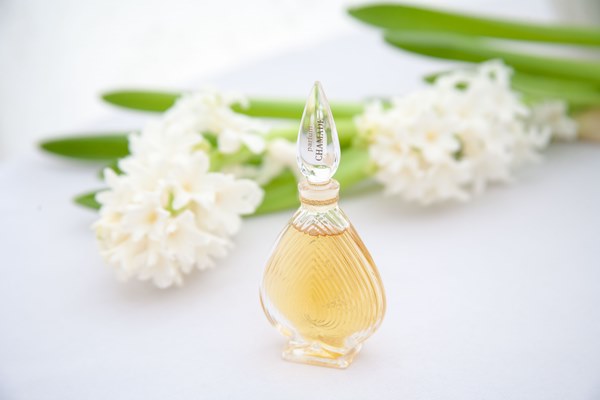
What fragrances spark joy for you these days? For me, it’s Guerlain’s Chamade. Of course, if you have your own tips on selecting a perfume, please share. 

As Seen On

Design by cre8d
© Copyright 2005-2026 Bois de Jasmin. All rights reserved. Privacy Policy