Scented Garden : Osmanthus or Tea Olive

by Elise Pearlstine

osmanthus

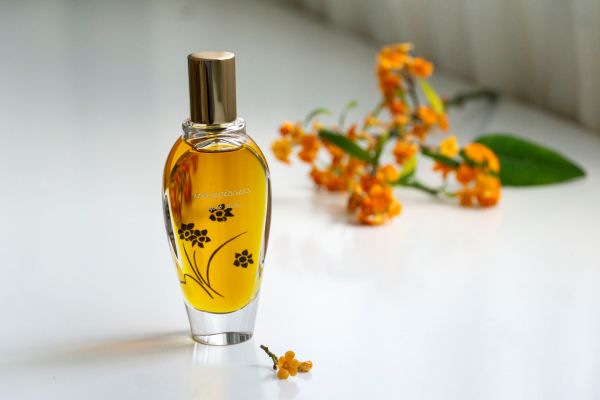
I moved to the southeastern United States in 1997 after living nearly everywhere else. My profession took me to South Carolina where I was to work for 5 years documenting its biodiversity. Three things stay with me from my time in that lovely state: a fondness for grits, the husband who found me there, and a deep and abiding passion for a certain small tree – the Tea Olive or Osmanthus fragrans. The scent of osmanthus blossoms is elusively sweet and rich, floral yet reminiscent of sunripened apricots, very slightly earthy while at the same time ethereal; a scent that warms with the sun. Mostly it defies description. I was to smell that fragrance for nearly three years before finally determining its source. It floated out at me from the strangest places, a parking garage with a narrow planting of spindly shrubs or a front yard with an ordinary-looking hedge. I kept looking for the source but did not find anything spectacular enough to give off such an amazing scent. The answer finally came from the botanist with whom I worked. She showed me this small, tough-leaved shrub growing next to my parking garage. Certainly those tiny white blooms growing out of the axils and gray twigs of the shrub were not the source!

Continue reading →

Annick Goutal Le Mimosa : Fragrance Review

33333

Le mimosa

Star rating: 5 stars–outstanding/potential classic, 4 stars–very good, 3 stars–adequate, 2 stars–disappointing, 1 star–poor.

To me few scents evoke spring more than the honey and cucumber fragrance of mimosa. Even before the snow melted on the streets of Kiev, sidewalk vendors would suddenly appear with large baskets of fluffy mimosa branches wrapped in wet newspaper. I could never resist the sunny yellow color nor the warm, sweet fragrance, and I happily traded my school lunch allowance for a smell of spring. Today I would gladly exchange the most precious perfume in my collection for the utter joy of burying my face in a soft cloud of fragrant mimosa orbs, staining my fingers with indelible newspaper ink and feeling my pulse quicken at the thought of spring being near. Therefore, I simply could not wait for Annick Goutal Le Mimosa to arrive on our shores, even if the real mimosa rarely does. Launched this month as a part of the soliflores collection, Néroli, Des Lys, La Violette, Le Muguet and Le Chèvrefeuille, Le Mimosa is Camille Goutal and Isabelle Doyen’s ode to spring.

Continue reading →

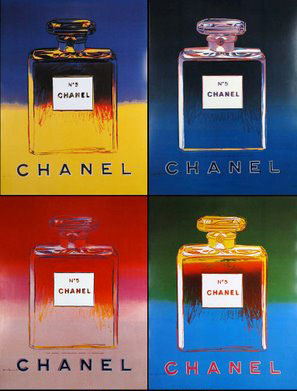
Chanel No 5 : Perfume, EDT, EDP Review and Fragrance Poll

55555

No5ad1920s

Star rating: 5 stars–outstanding/potential classic, 4 stars–very good, 3 stars–adequate, 2 stars–disappointing, 1 star–poor.

According to an oft repeated story, the iconic Chanel No 5 fails miserably in fragrance market tests, with the derived conclusion that the success of this great fragrance is based on the clever marketing strategy and carefully maintained brand image. Considering that today’s market tests have produced some of the worst excuses for perfumes, I do not find this to be the logical inference. Although an elegant brand image is an important part of the story, it is not enough to explain the mystery, the draw and the timeless beauty of Chanel No 5. I realize that trying to write a post of reasonable length on this topic is an ambitious task; after all, Tilar Mazzeo wrote a whole book on No 5 and yet many felt that she missed some important elements. Instead, I would like to describe Chanel No 5 in its different forms as it exists today and to hear your thoughts. I am convinced that the reason for its iconic status, is above all, the impeccable quality and allure of the fragrance itself.

Continue reading →

Aldehydes : Perfume Vocabulary & Fragrance Notes

Aldehydes are organic compounds present in many natural materials (eg. orange rind, rose, cinnamon bark). Various aldehydes can also be synthesized artificially. There is hardly a fragrance without some type of aldehyde in it; however, it is the vividness of aliphatic aldehydes (a specific subgroup of the aldehydes family) that gives Chanel No 5, Lanvin Arpège, Yves Saint Laurent Rive Gauche and other floral-aldehydic fragrances their characteristic impressionist sparkle.

Their scent ranges from metallic, starchy and citrusy to green, fatty and waxy (for instance, aldehyde C-11 commonly found in rose and cilantro smells like metal and dirty hair to me, but in tiny quantities it adds an impressive lift and freshness to fragrances.) Aldehydes were used previously by Robert Bienaimé in Houbigant Quelques Fleurs (1912) and by Henri Alméras in Rosine Le Fruit Défendu (1914), Chanel No 5 became famous for its unprecedented overdose of several different aldehydes (a total of almost 1%.)

Guerlain Idylle : Perfume Review

33333

Idylle

Star rating: 5 stars–outstanding/potential classic, 4 stars–very good, 3 stars–adequate, 2 stars–disappointing, 1 star–poor.

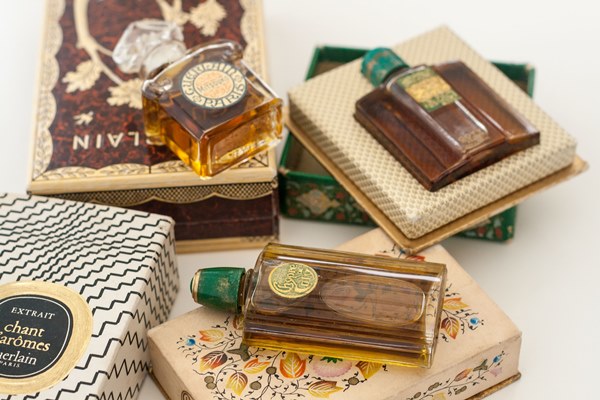
The spirit of Guerlain haunts many fragrance houses today, from L’Occitane to Cartier, and the refrains of Shalimar, Samsara and other great Guerlain classics show up in the most unexpected places. The house of Guerlain itself, however, seems to have taken another direction, leaving the decadent and plush to the exclusive L’Art et la Matière collection. The new widely distributed fragrance launches stake out the modern, trendy category exploring sheer orientals, luminous florals or crisp, musky chypres. This by itself is not a criticism, because Guerlain is a unique house in many respects. It is a prominent prestige fragrance brand with strong niche appeal which is trying to expand its audience. Moreover, breaking new ground and trying new genres is what fuses life into the fragrance houses and allows them to grow and build new loyalties. Idylle, which was launched in 2009, is the first feminine fragrance by Guerlain in-house perfumer Thierry Wasser and a much anticipated release.

Continue reading →

As Seen On

Design by cre8d
© Copyright 2005-2026 Bois de Jasmin. All rights reserved. Privacy Policy