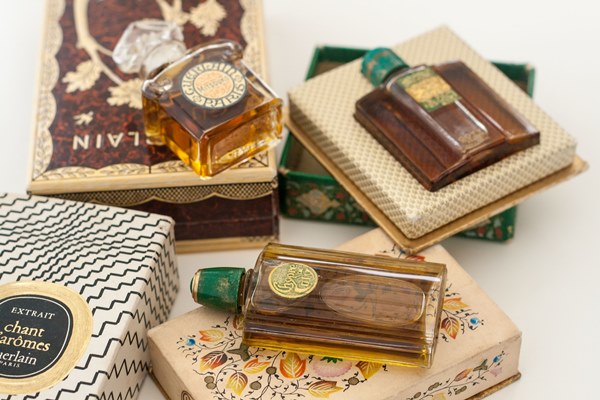
100 Fragrances That Influenced Perfume History E-Book

Many of you have been asking me to continue the series 100 Fragrances That Influenced Perfume History. These articles still remain among the most visited ones on Bois de Jasmin for the behind-the-scenes information they offer, stories and the connections between famous fragrances and contemporary launches. Since Bois de Jasmin is going to turn 17 years old next year, I decided to put the series into an e-book, which I will make available to my readers as a gift. Your participation and support mean a lot to me, and I would have been able to maintain Bois de Jasmin over almost two decades without it. It would be my pleasure to share something special with you.
How to receive the e-book

To receive the e-book, please subscribe to my newsletter. When the book will be available, I will send it to you in the pdf format.

If you’re a current subscriber and would like the newsletter, then when you enter your email address into the box below, you’ll have a chance to update your preferences.


If you’ve subscribed, but you don’t receive any emails from me, please check your spam filter and add my email address to your contact list.

The 100 Fragrances That Influenced Perfume History e-book will be available in fall-winter 2021, date TBD.

Any questions or requests? Please ask them in the comments below. Also, please let me know what would be your preferred format for the book.

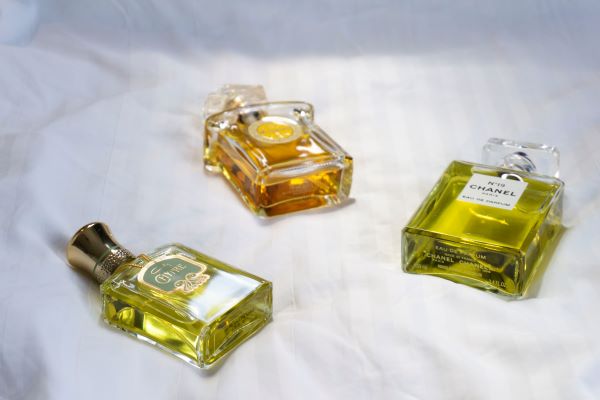
Photography by Bois de Jasmin
Recommend Me a Perfume : July 2021

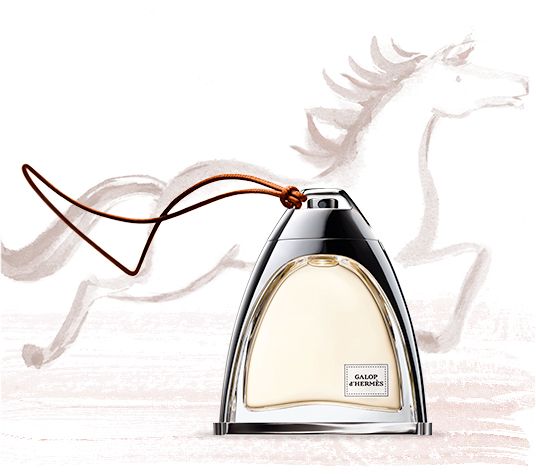
Our “Recommend Me a Perfume” thread is open this week. You can use this space to find perfume recommendations, to share your discoveries and favorite scents, and to ask any questions about scents, aromas and flavors. Or you can just tell us what perfume you are wearing and what book you are reading.

How does it work: 1. Please post your requests or questions as comments here. You can also use this space to ask any fragrance related questions. To receive recommendations that are better tailored to your tastes, you can include details on what you like and don’t like, your signature perfumes, and your budget. And please let us know what you end up sampling. 2. Then please check the thread to see if there are other requests you can answer. Your responses are really valuable for navigating the big and sometimes confusing world of perfume, so let’s help each other!

To make this thread easier to read, when you reply to someone, please click on the blue “reply” link under their comment.

Photography by Bois de Jasmin
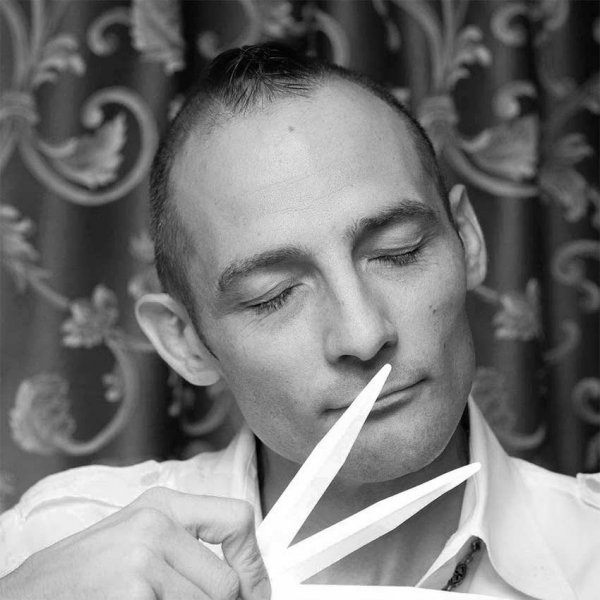
Blending History and Architecture : Arquiste Parfumeur

I first came across Arquiste Parfumeur when I was looking for an original gourmand fragrance. Most of the dessert-inspired blends crossing my path were of the cotton candy and crème brûlée variety, and I wanted bitter chocolate. “Why not try Anima Dulcis?” suggested a friend, and gave me a small sample of cognac-colored liquid. It turned out to be the treat I was craving—dark, smoky, spicy, and properly indulgent.

Arquiste Parfumeur is a niche line conceived by architect Carlos Huber in 2012. In his original métier Huber specialized in the historical preservation of buildings, and his proclivities are obvious in the way he interprets history through scents. In Fleur de Louis, a graceful blend of jasmine, orange blossom and iris, he paints a picture of the engagement between Louis XIV and Infanta Maria Teresa of Spain. The citrusy L’Etrog promises to show me the 12th century Calabria, while my favorite Anima Dulcis is a glimpse of the Royal Convent of Jesus Maria in Mexico. Helping to realize Huber’s vision are perfumers Rodrigo Flores-Roux and Yann Vasnier. Flores-Roux and Vasnier teamed up on Anima Dulcis and L’Etrog, while Fleur de Louis is a solo project by Flores-Roux, a perfumer who shares Mexican origins with Arquiste’s founder.


Continue reading →

Three Crisp and Bright Incense Perfumes

Frankincense, the subject of my recent article and video, is on my mind again. Today I would like to reply to a request for fresh and bright incense fragrances that can be worn during warm weather.

Frankincense is a chameleon of a note, and it can evoke different impressions depending on what other ingredients are used in a composition. In general, if you’re looking for a fresh incense blend, consider fragrances with green, leafy and citrus notes. If you’re after a dark, smoky incense, search for notes like benzoin, tonka bean, Peru balsam, amber and guaiacwood.

Fragrances mentioned in the video:

Aedes de Venustas Copal Azur

Comme des Garçons Zagorsk

Hermès Un Jardin sur le Nil

More on the subject of incense: why the supplies of frankincense are fragile and which brands source sustainably.

What unconventional fragrances do you prefer during summer? What are your favorite incense perfumes?

On the Rose Trail: The Art of Distilling Rosewater

The 10th century Persian philosopher and scientist Avicenna is credited with many contributions to astronomy, geography, psychology, logic, mathematics, and physics. He also found time to delve into perfumery and devised methods to extract essential oils, experimenting on roses. If Avicenna were to step into a fragrance lab today, he would orient himself quickly enough–modern perfumery is a curious amalgam of state-of-the-art science and traditional techniques. For instance, rose oil is prepared in much the way as in Avicenna’s time through the process of steam distillation.

Even older than rose oil is rosewater, an ingredient with a history predating Avicenna. Lebanese food writer Barbara Abdeni Massaad, whose award winning cookbook Mouneh explores the traditions of preserving fruit, vegetables and flowers, includes a section on making rosewater. “Yes, the distillates from roses and orange flowers continue to be made in villages,” she commented on the vitality of the tradition. “Older people still believe that homemade is best.”

Continue reading →

As Seen On

Design by cre8d
© Copyright 2005-2026 Bois de Jasmin. All rights reserved. Privacy Policy